

What considerations should be taken into account when selecting an epoxy primer for stainless steel?
When selecting an epoxy primer for stainless steel, assess its adhesion to the prepared surface, corrosion resistance, compatibility with the planned powder coating and suitability for the component’s operating environment. The primer should also match the application method and curing requirements, while meeting the required finish, durability and production specifications.
Selecting an epoxy primer for stainless steel is a systems decision rather than a choice based on the product name alone. The correct primer must suit the stainless-steel grade and surface condition, provide the required barrier function, fit the coating specification and integrate with the powder-coating process without creating defects or unnecessary rework.
Start with the stainless-steel substrate
Stainless steel is not a single material. Austenitic grades such as 304 and 316 behave differently from ferritic or martensitic grades, while welded areas, heat-affected zones and machined sections may present different surface conditions on the same component. Ask the primer manufacturer for confirmation that the product has been assessed for the specific grade and condition involved, rather than relying on advice intended for mild steel.
The condition of the metal is equally important. Oil, handling residues, polishing compounds, weld discolouration, embedded iron and remnants of previous treatments can affect the result. A suitable primer should be selected alongside a defined cleaning and surface-conditioning procedure. Where components contain welds, recesses, folded edges or mixed finishes, check that the proposed system is appropriate for these variations rather than only for a flat test coupon.
Define the primer’s role in the coating system
Epoxy primers can serve different purposes. Some are intended mainly as a tie coat between prepared metal and a subsequent coating, while others are formulated to provide a more substantial barrier layer. These functions are not interchangeable. Establish whether the project requires a thin bonding layer, additional protection at vulnerable areas, filling of minor surface irregularities or compliance with a particular specification.
Do not choose solely by colour or nominal resin type. Review the technical data sheet for recommended dry-film thickness, surface requirements, recoat limitations, mixing instructions and approved topcoats. A primer applied outside its specified thickness range may influence powder appearance, edge definition, curing behaviour or dimensional tolerances.
Check the full curing and overcoating sequence
The primer must be suitable for the actual production sequence. Confirm whether it is intended to be fully cured before powder application or whether the powder is applied within a specified overcoating window. The relevant limits may relate to elapsed time, surface condition or maximum permitted contamination between stages.
Review the complete thermal cycle rather than considering the primer cure in isolation. The component’s mass, profile and material thickness can affect how it reaches the required temperature. The powder coating also has its own cure requirements, so the combined system should be assessed for possible changes in gloss, colour, surface texture, solvent release or intercoat defects.
Consider geometry and film control
Complex stainless-steel parts require more than a primer that performs well on a smooth panel. Inspect the design for sharp edges, drilled holes, internal corners, overlapping joints, threaded areas and enclosed sections. Ask how the selected product behaves at edges and whether its specified film build can be achieved consistently in less accessible areas.
Film thickness can also affect assembly tolerances, drainage paths and the fit of mating components. If the coated part includes close-fitting interfaces or threaded connections, define masking and dimensional requirements before approving the primer. The selected product should support the required level of control without relying on excessive application thickness.
Assess handling, mixing and production controls
For two-component epoxy products, check the mixing ratio, induction requirements, pot life and storage conditions stated by the manufacturer. These details affect repeatability between batches. A product with a short usable working life may be unsuitable for a large or interrupted production sequence, even if its cured properties are appropriate.
Also consider transfer efficiency, overspray management, access to the component and the controls needed to prevent dust or debris becoming trapped between coats. The choice should be practical for the equipment and quality-control arrangements used by the coating operation, not just technically suitable in laboratory conditions.
Review documentation and testing requirements
A sound selection process includes the current technical data sheet, safety information, batch traceability details and any application restrictions. Where a project has a customer specification, identify the required test methods and acceptance criteria before choosing the product. These may cover coating thickness, visual appearance, adhesion testing, corrosion-related testing or resistance to particular chemicals.
For unfamiliar stainless grades, unusual fabrication methods or demanding service conditions, a representative trial is advisable. The sample should include the actual substrate, preparation method, primer thickness, powder coating and curing sequence. Inspecting a complete system exposes issues that may not be apparent when the primer is tested alone, including intercoat defects, edge coverage and changes after curing.
Finally, record the approved primer, preparation standard, application parameters and curing conditions as part of the job specification. This makes the selection reproducible across batches and gives the coating provider clear information when assessing stainless-steel components for industrial powder coating.
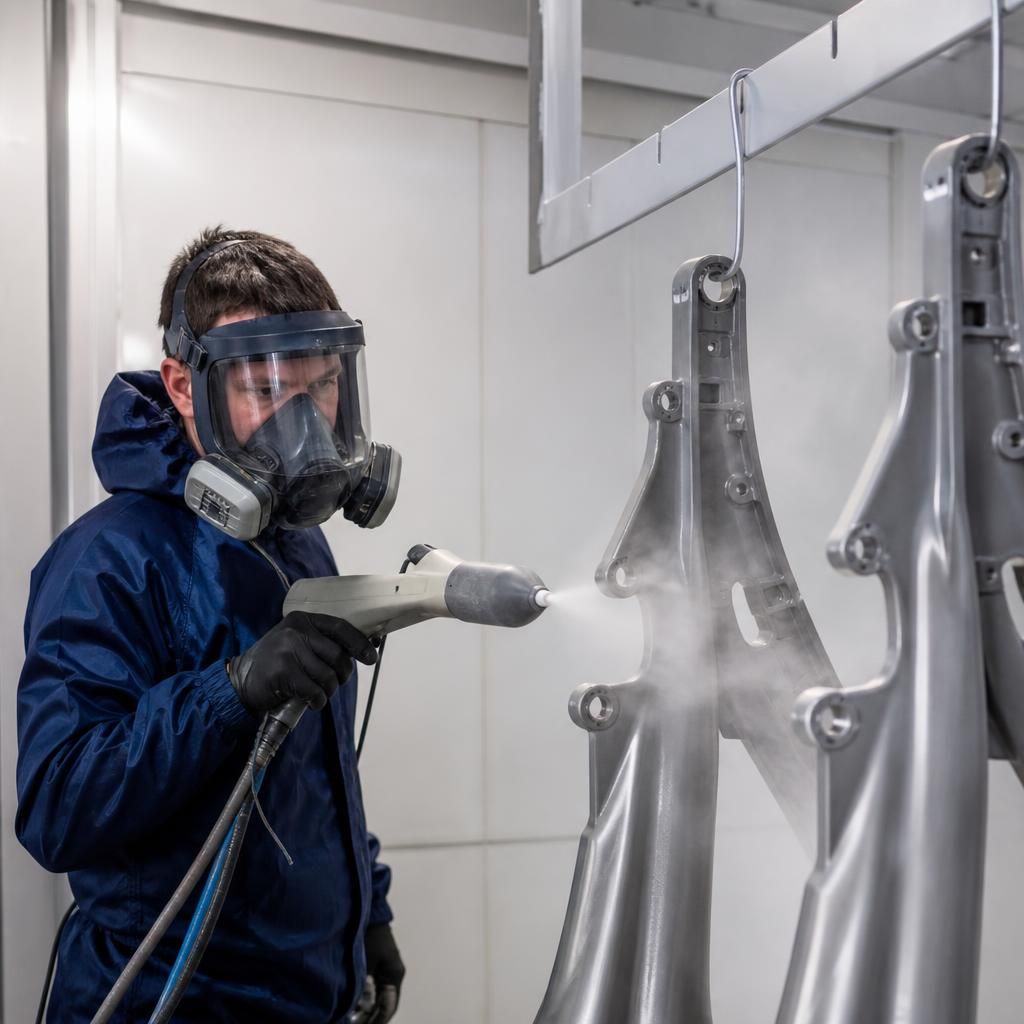
Service conditions should influence the primer specification, not just the appearance of the finished coating. Consider whether the stainless-steel component will be exposed to persistent moisture, condensation, salts, process chemicals, cleaning agents, abrasion or elevated temperatures. These factors determine the required resistance of the complete primer and powder-coating system.
Ultraviolet exposure also matters. Epoxy primers are commonly selected for adhesion and corrosion protection, but an epoxy layer may not be the appropriate exposed finish where colour and gloss retention are important. In such cases, confirm that the powder topcoat provides the necessary outdoor durability and that the primer will remain protected throughout the system’s service life. Where the component is subject to thermal cycling, flexing or impact, check that the cured coating system can accommodate those stresses without cracking or losing adhesion.
Discuss Your Stainless Steel Epoxy Primer Requirements
Discuss your stainless-steel component, operating conditions and powder-coating specification with the team before approving an epoxy primer. This allows the complete coating system and preparation requirements to be assessed against your application.