

How does the choice of epoxy primer influence the maintenance requirements of powder coated stainless steel in industrial settings?
An epoxy primer can reduce maintenance requirements by improving adhesion and adding an extra barrier against corrosion beneath the powder coating. The required maintenance still depends on the industrial environment, coating compatibility and the condition of the finish, so regular inspection, cleaning and prompt repair of damage remain necessary.
The choice of epoxy primer influences maintenance by determining how well the complete coating system withstands its working environment, how damage develops and how repairs can be carried out. A primer selected for chemical exposure, moisture, temperature changes and the chosen powder topcoat is less likely to create avoidable maintenance issues than a general-purpose product used outside its intended conditions.
Maintenance implications of primer compatibility
Epoxy primer and powder coating must be treated as one coating system. The primer should be chemically and mechanically compatible with the powder topcoat, including its curing temperature and application process. Poor compatibility can lead to defects such as loss of intercoat adhesion, blistering, wrinkling or premature separation. These defects usually require more than simple surface cleaning: affected areas may need to be removed, prepared again and recoated.
A compatible system also makes future repairs more predictable. Product identification, application records and the specified topcoat should therefore be retained. This helps ensure that a damaged area is repaired with materials that adhere properly to the existing coating rather than with an incompatible touch-up product.
Resistance to the service environment
The primer formulation should reflect the conditions surrounding the stainless steel component. Moisture, condensation, industrial pollutants, cleaning chemicals, salts, oils and process fluids can all influence the maintenance burden. Where chemical contact is expected, the primer and powder coating should be checked against the relevant substances and their likely concentration, temperature and contact duration.
In a damp or corrosive setting, a suitable primer can help maintain the integrity of the coating system at small defects and vulnerable areas. It does not make the finish immune to corrosion, however. If moisture reaches the stainless steel through a scratch, pinhole, cut edge or damaged area, the location should be assessed and repaired before contamination spreads beneath the coating.
Temperature cycling is another selection factor. Components that repeatedly heat and cool may experience movement between the stainless steel, primer and powder coating. A system with unsuitable flexibility or thermal performance can develop cracking or loss of adhesion, creating additional repair work. The primer specification should consequently account for the component’s operating temperature and any heat exposure during service.
Surface condition and film build
Primer performance depends on the condition and preparation of the stainless steel. Oils, handling residue, weld contamination, embedded iron and unsuitable surface treatments can interfere with adhesion. If these issues are not removed before coating, maintenance problems may appear to be failures of the primer when the underlying cause is inadequate preparation.
Consistent film build is also important. An excessively thin area may provide less protection at edges and around complex geometry, while excessive build can contribute to runs, solvent retention, cracking or poor topcoat appearance. Edges, recesses, welds, fixings and drainage points deserve particular attention because they may be more difficult to coat uniformly and can be harder to inspect or repair.
Effects on cleaning and inspection
The primer is beneath the powder coating, so it does not normally determine the surface appearance by itself. It can nevertheless affect how well the overall system tolerates cleaning and handling. A sound, compatible system is better placed to withstand appropriate washing, rinsing and drying without softening, lifting or exposing the substrate.
Cleaning methods should be appropriate for the powder coating and the contaminants involved. Abrasive pads, aggressive solvents or highly alkaline and acidic products can damage the finish even when the primer is correctly selected. Maintenance personnel should look for changes such as dulling, staining, swelling, cracking, lifting at edges and exposed metal rather than relying only on visible rust.
Repair requirements when damage occurs
The selected primer affects the repair sequence. Local damage normally needs to be cleaned, decontaminated and keyed or otherwise prepared to provide a sound edge. Any corrosion or loose coating must be removed, and the repair should overlap firmly bonded surrounding material without leaving a sharp step. Where the substrate is exposed, a compatible primer may be needed before applying the approved repair coating.
Small cosmetic marks and deep damage should not be treated in the same way. A superficial mark may require monitoring or local treatment, whereas a chip that exposes stainless steel, a blister, or lifting around a fastener may indicate moisture ingress or a loss of adhesion beneath the visible defect. In the latter cases, simply covering the surface can conceal the problem and lead to repeat maintenance.
Selection points for reducing long-term maintenance
- Match the epoxy primer to the expected moisture, chemical, temperature and mechanical conditions.
- Confirm compatibility with the powder topcoat, curing schedule and intended repair materials.
- Check the recommended preparation method for stainless steel and apply the system consistently across edges, welds and recesses.
- Use the specified film build rather than treating additional thickness as a substitute for correct preparation.
- Keep the coating specification and product details available for inspection and future repairs.
- Consider component design, drainage and access, since trapped moisture and inaccessible surfaces can increase maintenance independently of primer selection.
Epoxy primer therefore influences maintenance most effectively as part of a properly specified system. It can make defects easier to control and repairs more straightforward when the primer, stainless steel preparation and powder topcoat are matched to the service conditions. It cannot compensate for poor preparation, unsuitable exposure assumptions, mechanical damage or a coating design that allows moisture and contaminants to remain trapped.
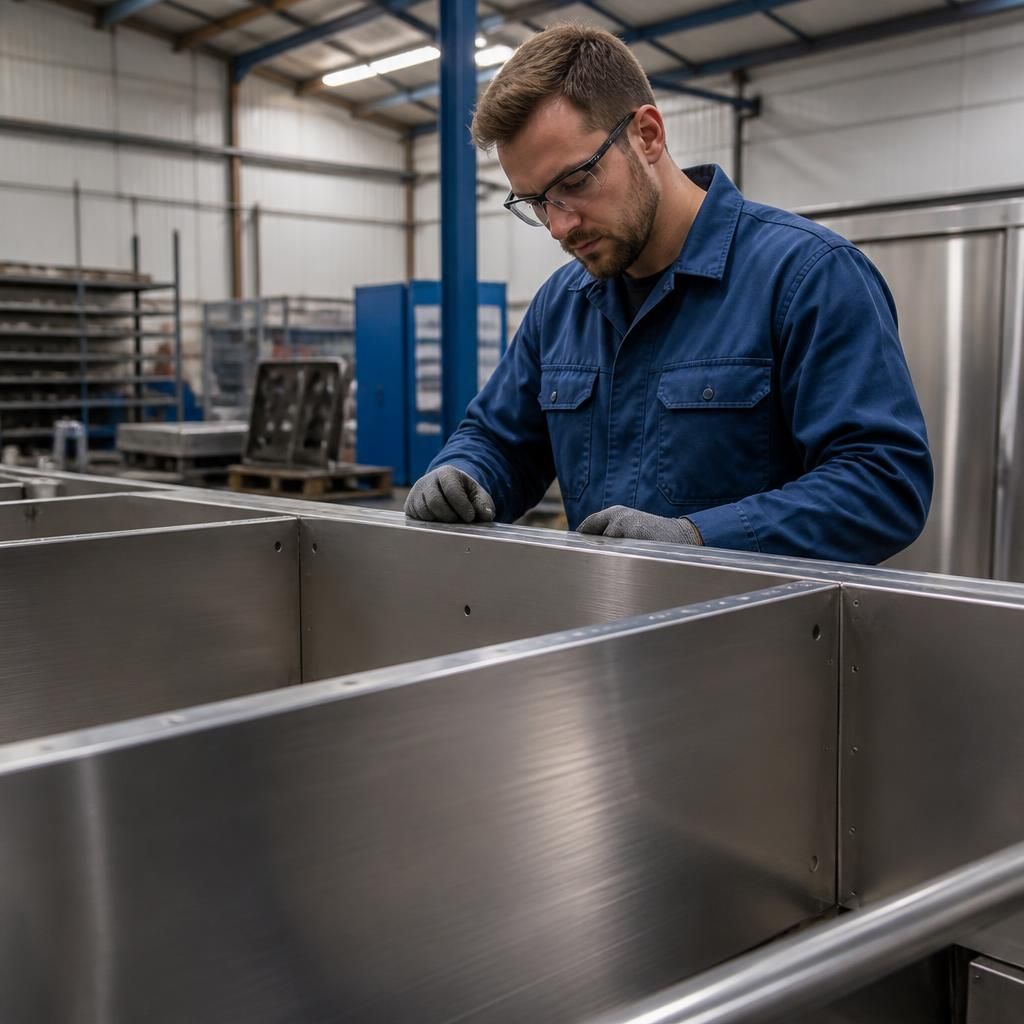
Epoxy primer mainly influences maintenance beneath the visible finish rather than the surface appearance itself. In a properly covered system, the powder coating protects the primer from direct ultraviolet exposure, while the primer provides additional support if the topcoat is locally breached. This means surface fading, loss of gloss or staining should not automatically be attributed to the primer; they may indicate that the powder topcoat or cleaning regime needs attention.
For maintenance planning, the coating specification should identify which layer is responsible for each type of protection. The powder topcoat must be suitable for the component’s external exposure and appearance requirements, while the epoxy primer should remain sound beneath it and support adhesion at vulnerable areas. This distinction helps inspectors decide whether a defect requires cleaning, cosmetic treatment or removal and rebuilding of the affected coating system.