

How does applying an epoxy primer affect the longevity of powder-coated stainless steel?
Applying a compatible epoxy primer beneath powder coating can extend the service life of stainless steel by improving intercoat adhesion and adding an additional barrier against corrosion and moisture. Its effect depends on thorough surface preparation, correct application and compatibility with the powder coating system; poor preparation or an unsuitable primer can reduce durability rather than improve it.
An epoxy primer can increase the service life of powder-coated stainless steel when it forms part of a correctly designed coating system. Its main contribution is not simply adding another coat, but improving the stability of the complete film during exposure to moisture, chemicals, temperature changes, abrasion and mechanical damage. The actual improvement depends on the primer, powder coating and stainless-steel substrate working together as one system.
Longevity is affected by how the primer manages stresses within the coating film. Stainless steel expands and contracts as temperatures change, while metal components may also flex during handling or service. A suitable epoxy primer can provide a stable intermediate layer between the substrate and powder coating, helping the layers accommodate these stresses without premature lifting, cracking or loss of protection. This is particularly relevant for fabricated parts with joints, edges, folds or varying section thicknesses.
The primer also gives the system greater tolerance of small defects in the outer powder coating. A scratch or impact that reaches the primer does not expose the stainless steel as directly as damage to a single-layer finish would. However, this should not be interpreted as making the coating immune to damage. Deep gouges, poorly protected edges and areas where water remains trapped can still become points of deterioration, especially in aggressive environments.
Environmental exposure has a major influence on the extent of any service-life benefit. A coating system used indoors in a dry manufacturing environment faces different demands from one exposed to road salt, condensation, industrial chemicals, cleaning agents or persistent humidity. The primer must therefore be selected for the expected exposure rather than treated as a universal solution. Chemical resistance, flexibility, adhesion characteristics and curing requirements all need to be considered alongside the specification for the powder topcoat.
Epoxy materials have good resistance to many forms of chemical and moisture exposure, but conventional epoxy coatings are not generally intended to remain exposed to direct sunlight as the final finish. Ultraviolet radiation can cause chalking, colour change and loss of surface appearance over time. When the epoxy is beneath a compatible powder coating, the topcoat provides the visible and weathering-resistant surface. For external stainless-steel components, the durability assessment should therefore include the UV and weathering performance of the powder coating, not just the properties of the primer.
Correct curing is another important factor. An under-cured primer may retain solvents or fail to develop its intended film properties, while excessive or unsuitable heating can affect the substrate, primer or powder layer. The application process must allow the primer and powder coating to cure within their specified conditions. Where the component has substantial mass or complex geometry, the relevant consideration is the metal temperature reached by the part, rather than simply the time that it spends in an oven.
Primer thickness also needs control. Too little material may provide incomplete coverage, particularly around edges and difficult geometry. Excessive thickness can increase the risk of solvent retention, cracking, loss of flexibility or problems during powder application. A consistent film is normally more valuable than simply applying a heavier film, and the target should be established as part of the coating system specification.
For industrial work, the likely failure modes should be considered before selecting the system:
- Corrosion beneath damaged areas: the primer may slow the spread of deterioration, but exposed damage still requires assessment and repair.
- Blistering or lifting: this can indicate moisture, contamination, trapped solvent or incompatibility between layers.
- Cracking and flaking: these may result from excessive film build, poor flexibility, impact or thermal movement.
- Surface chalking or fading: this is more closely associated with the weathering performance of the exposed powder coating.
- Edge breakdown: sharp edges and recessed areas may receive less consistent coating coverage and should be addressed in the design and process specification.
Maintenance still has a role in preserving the expected life of the finish. Regular inspection should look for scratches, impact marks, blistering, lifting, staining and changes around joints or edges. Deposits of salt, dust or chemicals should be removed using a cleaning method suitable for the powder coating; aggressive abrasives or incompatible solvents can damage the surface and shorten its life. Prompt attention to local damage is preferable to allowing moisture and contaminants to remain at the defect.
In summary, epoxy primer can extend the practical life of powder-coated stainless steel by strengthening the coating system’s resistance to environmental and mechanical stresses. It is most effective when the primer and powder are specified as a compatible system, cured correctly and matched to the service environment. It should be viewed as one part of a durability strategy that also includes component design, edge treatment, coating inspection, suitable maintenance and the correct powder topcoat for the exposure.
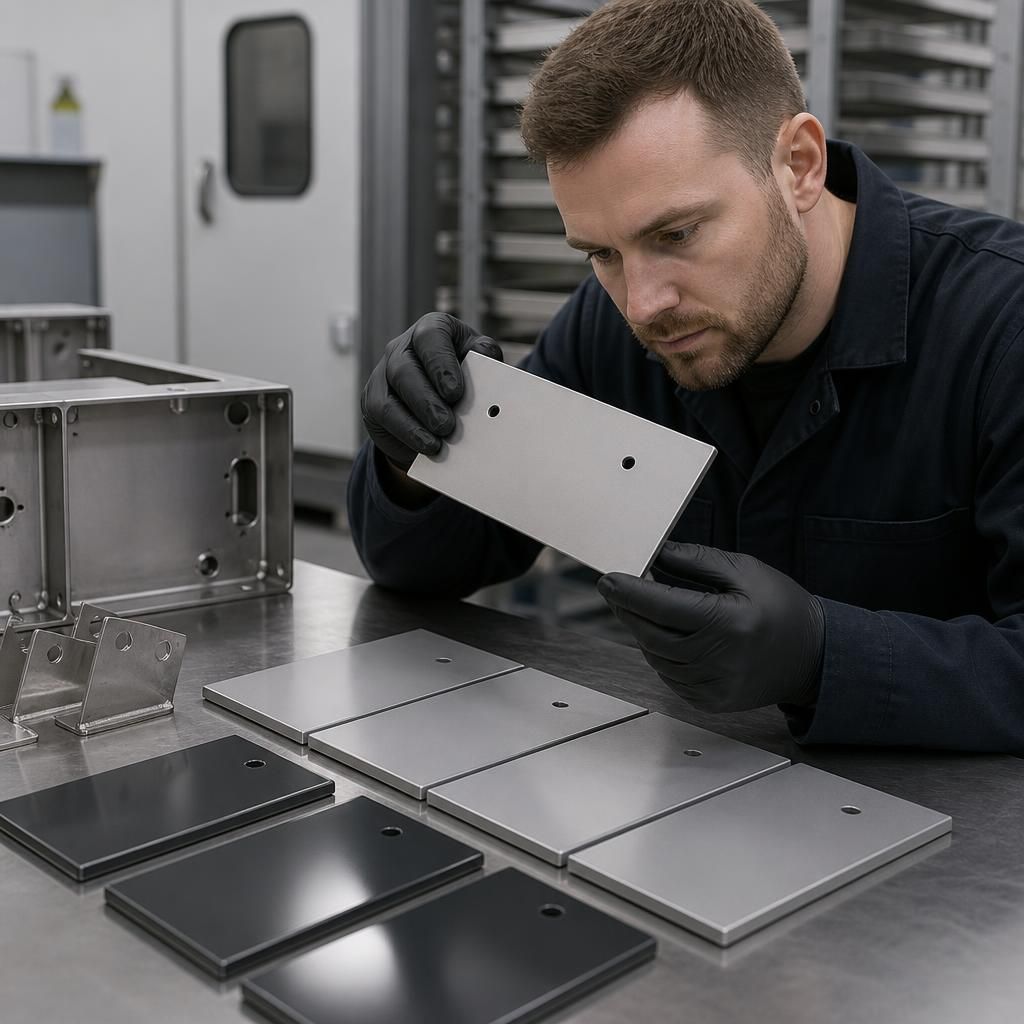
The longevity benefit of an epoxy primer is best established by assessing the complete coating system before production, rather than judging the primer in isolation. A representative stainless-steel sample should use the same surface condition, preparation method, primer, powder coating and curing process intended for the finished components.
This type of trial can reveal problems that may not be apparent from product data alone, including poor bonding at welds or formed sections, uneven coverage around complex geometry, changes in appearance and incompatibility between the primer and powder layer. The sample can then be inspected and tested for adhesion, film continuity and resistance to the conditions expected in service.
For repeat industrial work, recording the approved preparation, film-build range, application method and curing conditions helps keep subsequent batches consistent. This process does not provide a fixed service-life guarantee, but it reduces the risk of selecting a primer system that performs well on paper yet fails to provide the intended durability on the actual stainless-steel components.
Discuss your epoxy primer and powder coating requirements
Discuss your stainless-steel components, expected exposure and powder-coating requirements with the team to identify a suitable epoxy primer system. Providing details of the component design and service conditions helps inform the preparation, application and curing specification.