

What specific benefits does epoxy primer for metal provide over other protective coatings?
Epoxy primer for metal provides strong adhesion, a dense barrier against moisture and corrosive contaminants, and a sound foundation for subsequent protective coatings. Compared with many single-layer or less adhesive coatings, it can improve the overall durability of the coating system, particularly where metal components face demanding industrial conditions.
Epoxy primer for metal provides a more chemically resistant, cohesive and controllable base than many conventional single-pack primers. Its main advantages are improved resistance to oils, fuels, solvents and industrial contaminants, stronger retention under mechanical stress, and better compatibility with engineered multi-coat systems. The exact performance depends on the resin, curing agent, surface preparation, film thickness and specified topcoat.
Key benefits over other protective coatings include:
- Greater chemical resistance: Once fully cured, epoxy forms a cross-linked film that generally withstands chemical exposure better than many basic alkyd or general-purpose primers. This is relevant to components exposed to oils, cleaning chemicals, fuels, process fluids or contaminated atmospheres. The product data sheet should be checked for the specific chemical, concentration, temperature and exposure time.
- Stronger film cohesion: The cured coating has a tightly linked structure rather than relying only on a soft or physically drying film. This can help the primer remain intact where components experience handling, vibration, abrasion or contact with other parts. It is not a substitute for an abrasion-resistant topcoat where severe wear is expected, but it can provide a more robust base for that system.
- Better control of a coating system: Epoxy primers are available in formulations designed for particular substrates, service conditions and overcoating requirements. This allows the primer, intermediate coat and finish to be selected as a compatible system rather than using one general-purpose product for every application. For powder-coated components, compatibility and the specified curing schedule must be confirmed before production.
- Suitability for demanding industrial environments: Compared with less specialised primers, epoxy systems are often selected where metal parts face a combination of handling, contamination, humidity and chemical exposure. They are therefore common in coating specifications for fabricated components, machinery, plant equipment and structural metalwork, provided the formulation matches the service environment.
- Consistent two-component curing: Two-pack epoxy primers cure through a reaction between resin and hardener. When the components are mixed accurately and applied within the stated pot life, this gives a defined curing mechanism and measurable application requirements. That is useful for industrial quality control because mixing ratios, recoat intervals, curing conditions and film thickness can be documented.
- Useful range of substrate and finish options: Suitable epoxy formulations can be specified for prepared mild steel and, where the manufacturer permits it, other metals or previously treated surfaces. They can also be selected beneath different finishing systems, including compatible liquid or powder finishes. Surface condition remains decisive: oil, mill scale, flash rust, salts and poorly bonded old coatings can undermine the result regardless of the primer chosen.
Epoxy is not automatically superior in every situation. Unlike a zinc-rich primer, it does not normally provide sacrificial protection; it protects mainly through the integrity of its coating film. It can also lose colour or chalk when exposed directly to ultraviolet light, and some formulations may be less suitable where constant flexibility or high-temperature cycling is required. A compatible topcoat is therefore important for exterior appearance and for service conditions that exceed the primer’s limits.
Selection should compare the intended epoxy primer with the alternatives against the actual exposure rather than relying on the word “epoxy” alone. Review chemical-resistance data, operating temperature, expected abrasion, substrate preparation, curing requirements, recoat window and compatibility with the final finish. For industrial metal components, the most meaningful benefit is usually the ability to specify a complete, documented coating system with properties matched to the component’s environment, rather than treating the primer as an isolated layer.
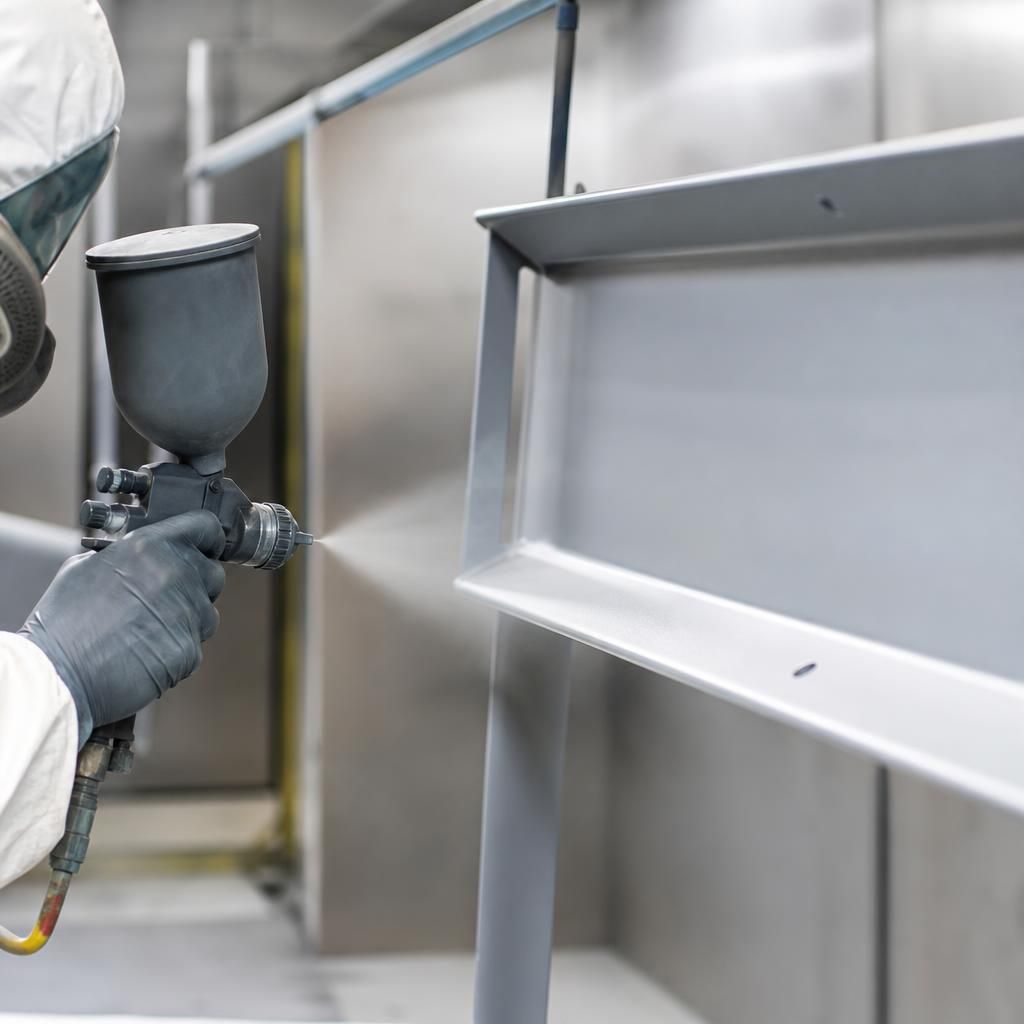
Electrical isolation can be an additional advantage. A cured epoxy primer is generally electrically insulating, so it can separate the metal substrate from moisture and reduce the conductive paths that support electrochemical corrosion. This may be useful on components exposed to damp conditions or where contact between dissimilar metals needs to be limited. The effect depends on the formulation, film continuity and service conditions, so the product data sheet should confirm whether the primer is suitable for the required electrical and corrosion-control performance.