

What are the maintenance considerations for ensuring the durability of an epoxy primer application on metal surfaces?
Maintaining an epoxy primer application requires regular inspection for abrasion, impact damage, blistering, cracking and areas of exposed metal. Keep the surface clean, address defects promptly by removing unsound coating and reapplying a compatible repair system, and review the finish after any significant exposure to moisture, chemicals or mechanical wear.
Durability of an epoxy primer depends on maintaining the complete coating system, controlling the conditions around the metal and preventing damage to the primer or its topcoat. Good maintenance therefore involves using suitable cleaning methods, managing chemical and ultraviolet exposure, checking vulnerable design details and keeping records that show how the coating is performing over time.
Confirm the coating system before maintenance begins. An epoxy primer is often designed to sit beneath a compatible topcoat rather than remain exposed as the final finish. The topcoat may provide additional resistance to sunlight, weathering, abrasion or chemicals. Maintenance procedures should therefore be based on the full specification, including the primer type, topcoat, intended film thickness, curing requirements and any restrictions issued by the coating manufacturer. Applying an incompatible product over the primer can reduce adhesion or trap contaminants between layers.
Use a controlled cleaning method. Remove deposits using soft cloths, sponges or non-abrasive equipment and a mild, compatible detergent. Strongly alkaline or acidic cleaners, aggressive solvents, wire brushes and abrasive blasting should not be used as routine maintenance unless the coating specification permits them. Cleaning equipment must not cut through the finish at corners, edges, welds or fixing points. After washing, residues should be rinsed away and the surface allowed to dry fully, particularly around overlaps, joints and recessed areas where retained moisture can affect the metal beneath the coating.
Manage exposure to chemicals and contaminants. Oils, salts, process residues and chemicals can gradually soften, stain or undermine a coating if they remain in contact with it. Sites should identify the substances that may reach the coated component and confirm that the selected epoxy system is suitable for those exposures. Where a spill occurs, follow the relevant chemical-handling procedure and clean it using a method known to be compatible with the coating. Repeated contact with a substance that was not considered during specification may require a technical review rather than a change to the cleaning routine alone.
Protect the coating from ultraviolet exposure where necessary. Epoxy materials can lose colour or develop a chalky surface when exposed to prolonged sunlight. This cosmetic change does not automatically mean that the primer has failed, but it can indicate that an exposed epoxy finish is unsuitable for the environment. For outdoor or strongly lit applications, maintenance should include checking whether the protective topcoat remains intact and whether it needs renewal under the original coating specification. A suitable UV-resistant finish is normally considered during system selection rather than added as an improvised maintenance measure.
Pay particular attention to vulnerable construction details. Coating performance can be affected by sharp edges, weld profiles, crevices, overlapping sections, drainage points and areas beneath clamps or fasteners. These locations can receive less consistent coverage or retain moisture and contaminants. Maintenance planning should identify them as separate risk points, especially on assemblies exposed to weather, vibration or wash-down processes. Design changes, improved drainage or replacement of damaged seals may be more effective than repeatedly treating the visible coating alone.
Control handling and operational damage. Components should be lifted, stacked and transported with clean supports that will not gouge or rub the finish. Avoid dragging coated parts across benches, placing sharp metal directly against them or tightening fixings in a way that crushes the coating. Where components are subject to repeated impact, movement or vibration, investigate the cause and consider whether the coating system, component design or handling process needs to change. Maintenance is more effective when avoidable mechanical damage is removed at source.
Monitor the surrounding environment. Record changes in temperature, humidity, condensation, salt contamination, chemical use and process conditions where these may affect the coated metal. Pay attention to areas with poor ventilation, intermittent wetting or large temperature changes, since condensation can form even when the surface appears dry during a later check. For equipment used in demanding conditions, compare the actual service environment with the assumptions made when the primer and topcoat were selected.
Keep coating records. A useful maintenance record includes:
- the primer and topcoat specifications;
- application and curing information where available;
- the component location and service environment;
- cleaning products and methods used;
- locations and types of deterioration;
- any alterations, repairs or replacement components; and
- the person responsible for approving maintenance materials.
Photographs, coating-condition notes and measurements made with appropriate inspection equipment can help distinguish superficial changes from loss of protection. Records also make it easier to identify recurring problems, such as deterioration concentrated around a particular joint or process area.
Maintenance materials should be tested for compatibility in an inconspicuous area or on a representative sample before wider use. If the primer is part of a powder-coated or multi-layer system, repairs and overcoating should follow the specified preparation and curing method for that system. Where deterioration is widespread, the metal has been exposed beneath the coating, or the service environment has changed, a coating specialist should reassess the system rather than treating isolated symptoms.
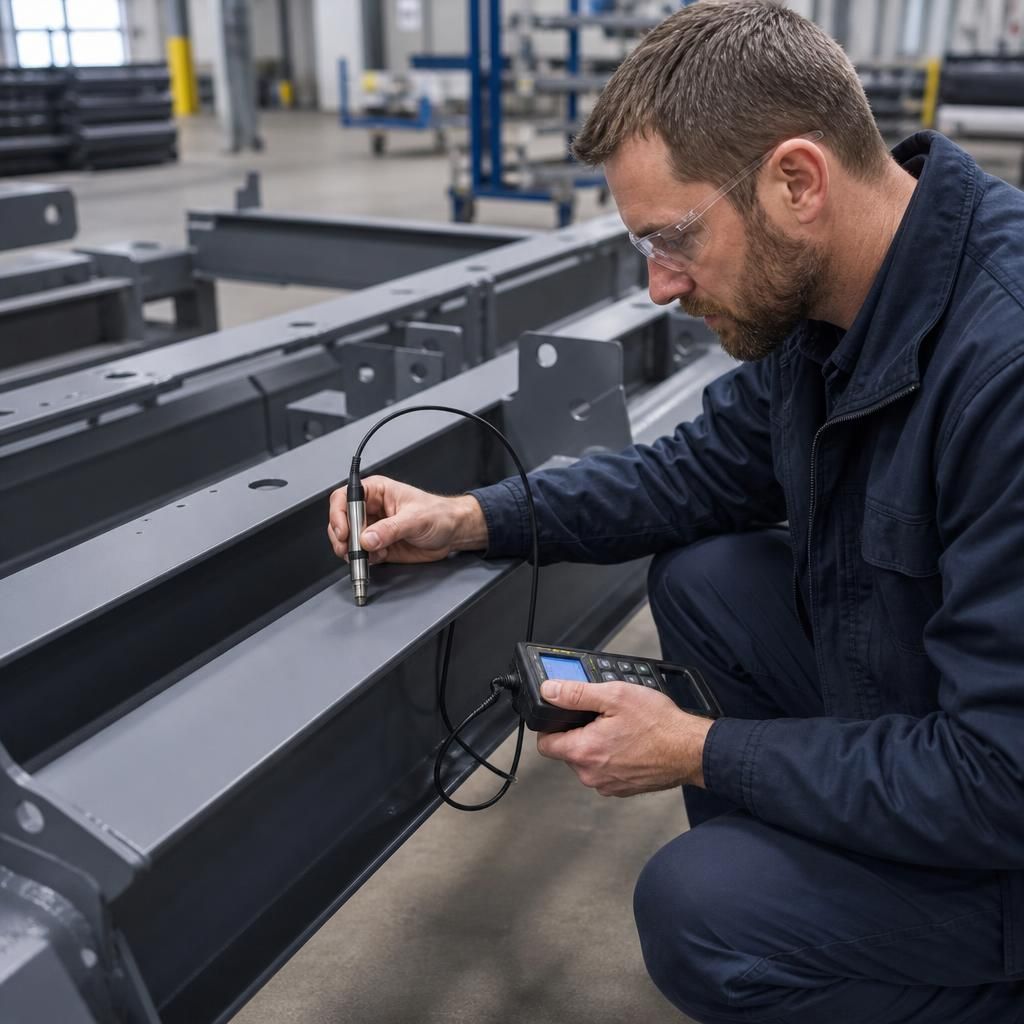
Maintenance intervals for epoxy-primed metal should be based on the coating’s service environment and the consequences of failure, rather than a fixed calendar date alone. Components exposed to continuous moisture, chemical vapour, salt contamination, abrasion or frequent handling warrant closer condition checks than items kept in a stable, enclosed environment. Inspections should also be brought forward after an impact, process change, prolonged wetting event or alteration to nearby equipment.
Assess the coating in a consistent way so that gradual deterioration is not overlooked. Visual checks can be supported by suitable tests such as dry-film-thickness measurements, adhesion testing or holiday detection, where the coating specification and component geometry make these appropriate. Test areas should be selected to include edges, joints, welds and other locations likely to deteriorate first. Any test that damages the coating should be followed by a compatible repair.
Set clear criteria for escalation. Isolated cosmetic changes may require monitoring, while loss of adhesion, corrosion beneath the film, exposed substrate or repeated failure in the same location normally calls for technical assessment of the complete coating system. This approach prevents unsuitable spot repairs from masking a wider problem and helps determine whether local refurbishment, full recoating or a change in system specification is appropriate.