

What are the best practices for applying epoxy primer to metal surfaces to ensure maximum adhesion and protection?
For maximum adhesion and protection, remove oil, rust, mill scale and other contaminants, prepare the metal with a suitable mechanical or chemical treatment, and ensure the surface is clean and completely dry before application. Mix the two-part epoxy primer accurately, apply an even coat within the manufacturer’s specified thickness and recoat window, then allow it to cure fully under the stated environmental conditions before applying further coating.
The best practice for applying epoxy primer to metal is to treat it as a controlled coating system rather than as a standalone paint operation. Maximum adhesion and protection depend on selecting a primer compatible with the specific metal and intended topcoat, controlling the application environment, managing the mixed material correctly, and verifying the finished film before the component enters service.
Define the coating system first. Confirm the metal type, the service environment, the expected exposure to moisture or chemicals, and whether the primer will be overcoated with paint or powder coating. Carbon steel, galvanised steel, aluminium and previously coated metal can require different pretreatment and primer specifications. The technical data sheet should confirm suitability for the substrate, compatible topcoats, application equipment, film-build requirements, pot life, recoat limits and curing conditions.
Inspect the prepared surface before priming. Preparation should be assessed rather than assumed. Check for remaining residues, embedded abrasive, sharp burrs, laminations, weld spatter and areas where the surface profile is inconsistent. Pay particular attention to welds, corners, folded sections, drilled holes and crevices, as these locations commonly receive less coating than broad flat areas. Any defect that could prevent continuous film formation should be corrected before the primer is applied.
Control the application environment. Record the metal temperature, air temperature, relative humidity and dew point where relevant. The substrate must remain sufficiently above the dew point to prevent invisible condensation forming during application. Excessive humidity, low temperatures and poor ventilation can affect flow, solvent release, curing and intercoat adhesion. Conversely, high temperatures can shorten the working life of the mixed primer and cause poor wetting or dry spray. Application should therefore follow the product manufacturer’s stated environmental limits, not simply the general conditions in the workshop.
Use disciplined mixing and handling practices. For a two-pack epoxy, use the specified components and mixing ratio, introduce them in the required order, and mix thoroughly without whipping excessive air into the material. Observe any induction period and do not extend the usable life by adding unauthorised thinner or fresh material to an ageing mix. Keep the container covered where appropriate, label mixed material clearly, and discard primer that has exceeded its pot life, developed lumps or begun to gel. These controls help prevent inconsistent curing across a batch.
Choose equipment and technique for the component. Spray application can provide an even film on complex industrial parts, but gun settings, nozzle selection, atomisation and operator distance must be adjusted to the primer’s characteristics. Brushing or rolling may be suitable for small areas, repairs or intricate sections, although excessive working can leave marks, pinholes or uneven build. Apply deliberate passes with suitable overlap, avoid concentrating material at edges and corners, and check that recessed areas and weld zones are properly covered without creating runs or curtains.
Give special attention to edges and discontinuities. Sharp edges tend to lose coating coverage as the film flows away from the crest, while porous welds and rough profiles can trap air. Edge rounding, weld finishing and stripe coating may be specified for demanding service conditions. A stripe coat is a controlled preliminary application to vulnerable details before the main coat; it should only be used where the coating specification permits it, since excessive build can create solvent entrapment or interfere with overcoating.
Measure the applied film rather than relying on appearance. Use an appropriate wet-film check during application and verify dry-film thickness after the primer has cured sufficiently for measurement. Readings should be taken across representative flat areas and difficult details, with the inspection method suitable for the metal and coating. Excessive thickness can be as problematic as insufficient thickness: it may increase curing time, retain solvent, crack or reduce intercoat adhesion. Record readings and identify areas requiring correction before the next coating stage.
Coordinate the recoat and topcoat stages. The primer must be protected from contamination and handled carefully between coats. If the specified recoat interval is missed, follow the product instructions for any additional conditioning or preparation rather than applying the next coat automatically. Where epoxy primer is used beneath a powder-coated finish, confirm that the primer can withstand the powder-coating process and that its cure, film build and surface condition are compatible with the powder system. A primer that is suitable beneath liquid paint is not automatically suitable beneath powder coating.
Inspect the completed coating. Look for pinholes, holidays, craters, fisheyes, dry spray, runs, blisters, exposed metal and visible contamination. For critical components, additional checks such as adhesion testing, porosity detection or cure assessment may be appropriate, provided the test method does not damage a finished part unnecessarily. Keep batch details, environmental records, equipment settings, thickness readings and repair information with the job documentation so that any issue can be traced to a process stage.
Apply suitable safety controls throughout. Follow the product safety data sheet, use the specified respiratory, skin and eye protection, control ignition sources where flammable materials are involved, and provide effective ventilation and waste handling. Industrial application should be carried out by trained personnel using equipment maintained for the coating system. These controls protect operators while also reducing the contamination and process variation that can undermine the final finish.
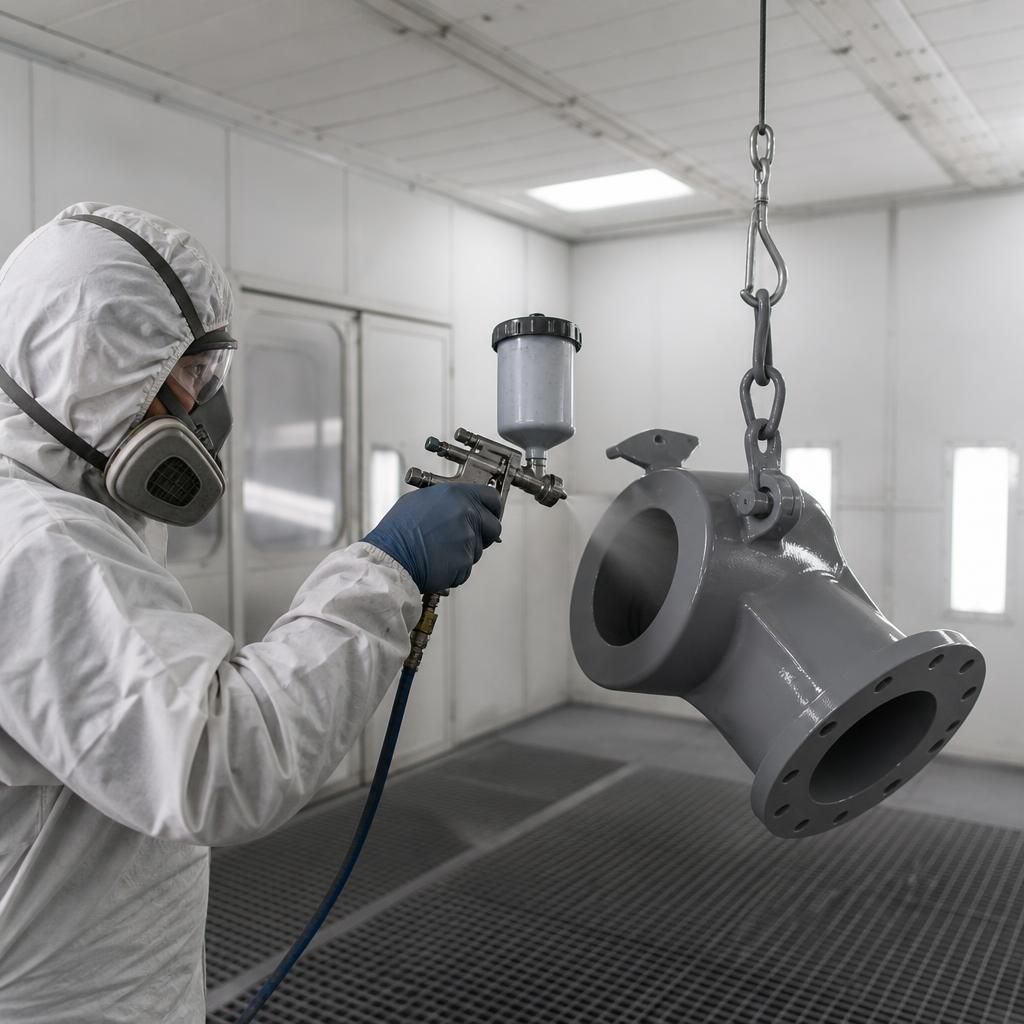
Part positioning during application is an important factor in achieving continuous epoxy primer coverage. Components should be supported so the applicator can reach edges, recesses, underside surfaces, welds and other areas that may fall outside the direct spray path. Where the process allows, rotate the part between passes rather than trying to build the full film from one angle.
Plan hanging points, masking and drainage before coating begins. Mask threads, machined faces, electrical contact points and other areas that must remain free of primer, using a method compatible with the product and subsequent coating stages. Avoid positions that allow primer to collect in pockets or run onto critical faces. This approach reduces missed areas, excessive local film build and corrective work after curing.