

Can epoxy primer be used for powder coating on aluminium and how does it affect the finish quality?
Yes, epoxy primer can be used beneath powder coating on aluminium when the surface is correctly prepared and the primer is compatible with the powder system. It can improve adhesion and corrosion resistance, but poor cleaning, inadequate pretreatment, incorrect curing or incompatibility may cause defects such as poor adhesion, uneven appearance or blistering.
Epoxy primer can be used beneath powder coating on aluminium, but it must be a powder-compatible system rather than a standard primer selected solely for its adhesion to metal. On aluminium, the primer becomes part of the complete coating system: its chemistry, cured film, thickness and surface condition can all influence the appearance and performance of the powder topcoat.
Aluminium forms a tenacious oxide layer almost immediately after exposure to air. Any oil, machining residue, handling contamination or unstable oxide left on the surface can interfere with the primer bond. Preparation may therefore include cleaning, abrasion or a suitable chemical pretreatment, followed by careful handling before priming. The exact process depends on the alloy, the component’s previous use and the level of corrosion protection required.
Primer compatibility is the first technical check. The primer supplier’s data should confirm that the product is suitable for aluminium, can withstand the powder coating cure cycle and is intended to be overcoated with the selected powder. A liquid epoxy that performs well under conventional paint may soften, blister, discolour or lose adhesion when exposed to powder-bake temperatures. The primer and powder should also be assessed as a complete system rather than as separate products.
The primer must normally be allowed to cure to the condition specified for overcoating. If it is still releasing solvents or has not developed sufficient hardness, the subsequent heating cycle can produce pinholes, bubbles, blistering or loss of intercoat adhesion. Excessive primer thickness can create similar problems and may also soften edges, obscure fine detail or contribute to an uneven texture.
When the system is correctly selected and applied, the primer can improve the finished coating in several ways:
- It can provide an additional barrier between the aluminium and moisture or contaminants.
- It can help maintain adhesion where the component’s service conditions demand more than a direct-to-metal powder system.
- It can reduce the effect of minor surface variations when the primer is applied evenly.
- It can support more consistent coverage around edges, formed areas and other locations that are difficult to coat uniformly.
These benefits do not automatically make the visible finish better. A primer can alter the final colour, gloss level and texture, particularly with light or bright powder colours. Variations in primer film thickness may show through as shade differences, clouding or changes in gloss. Excess material on edges, welds, recesses and corners can produce a visibly different profile after the powder is applied.
The powder topcoat should be applied to a clean, sound and suitably prepared primer surface. Dust, abrasive residue, fingerprints and silicone contamination can create craters, fisheyes or localised adhesion loss. Powder application also needs to account for the shape and electrical conductivity of the aluminium component, as recesses and shielded areas may receive less powder than exposed faces. Uneven deposition can affect both protection and appearance.
Aluminium components can also contain pores, casting defects, trapped moisture or machining fluids. During the powder cure, heat may drive these materials towards the surface and cause outgassing. This can appear as pinholes or small bubbles in the finish. Where the component is cast, porous or heavily machined, the preparation and heating process may need to be adapted, and a trial piece can be useful before processing a production batch.
For many aluminium parts, direct powder coating over a suitable pretreatment is an appropriate option. An epoxy primer is more likely to be considered where additional corrosion resistance, enhanced intercoat adhesion or coverage of a challenging substrate is required. It is not a substitute for removing contamination or correcting poor surface condition, and it cannot compensate for a primer that is incompatible with the powder.
Before production coating, the proposed system should be checked against the component’s alloy, intended environment, required appearance and curing conditions. A representative test panel or sample part can help assess colour, gloss, texture, edge coverage and adhesion. It should be examined after the complete primer and powder process, because a primer that looks acceptable on its own may produce a different result once the topcoat has been cured.
In practical terms, epoxy primer can support a high-quality powder-coated finish on aluminium when the coating system is designed as a whole. The main factors are controlled preparation, a compatible primer, the correct film build, adequate primer cure, suitable powder application and a cure schedule appropriate for the complete assembly.
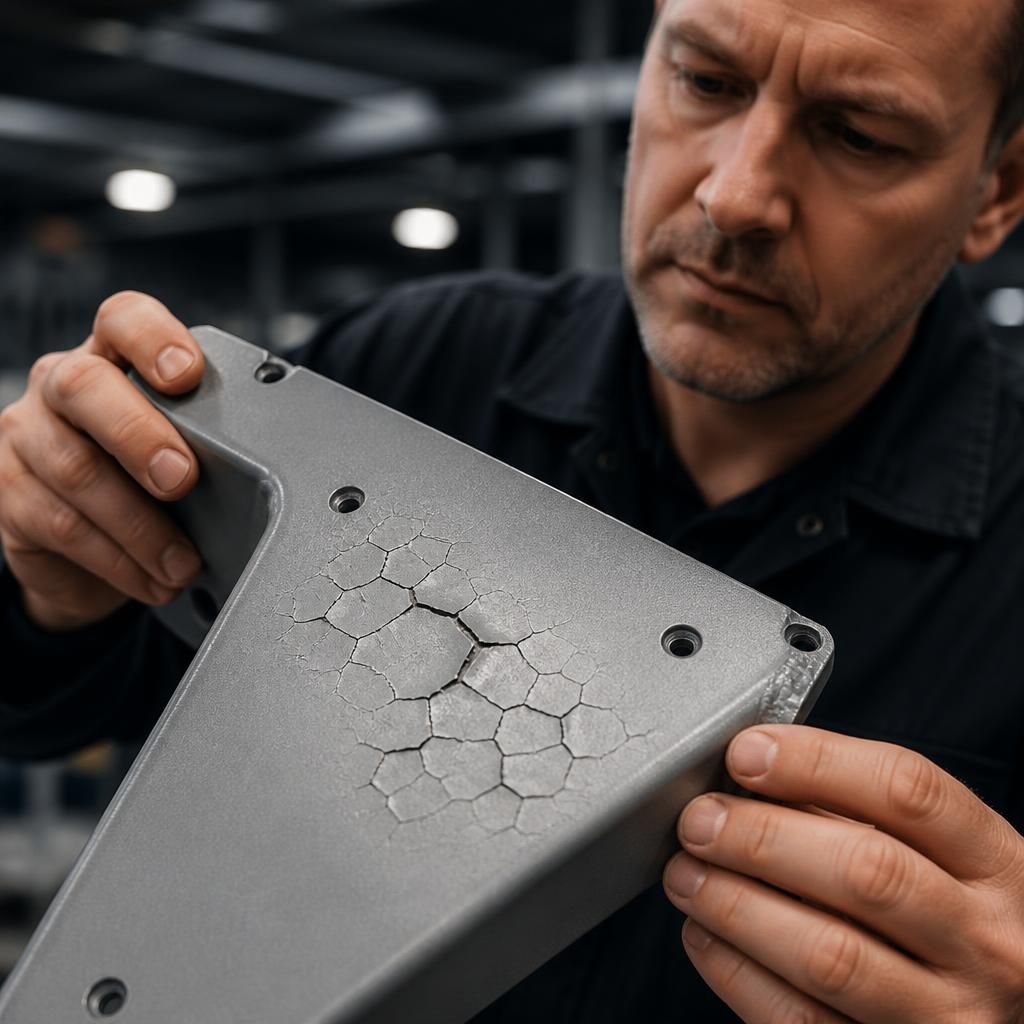
Aluminium expands and contracts noticeably as the coated component is heated during curing and later exposed to changing service temperatures. An epoxy primer that is too rigid, poorly bonded or unsuitable for this movement can contribute to microcracking, edge lifting or a fractured-looking topcoat. These defects may begin at corners, drilled holes and other areas where stresses are concentrated.
For that reason, finish quality depends not only on the primer’s initial appearance but also on how the complete coating system behaves through heating, cooling and use. The selected primer should be specified for aluminium and assessed for the component’s geometry and operating environment. A test piece can help reveal cracking, lifting or loss of appearance before production parts are processed.