

What types of protective coatings are suitable for my industry-specific requirements?
The most suitable protective coating depends on the metal component’s exposure to weather, chemicals, heat, abrasion and impact. Polyester powder coats are commonly suited to exterior and construction applications, epoxy systems to chemically demanding indoor environments, and nylon or specialist high-temperature coatings to components requiring enhanced wear, impact or heat resistance.
The right protective coating is determined by the component’s operating environment, substrate, required service life and appearance, rather than by the industry name alone. A suitable specification should consider exposure to moisture, salt, chemicals, UV light, temperature cycling, abrasion, impact and cleaning processes, alongside dimensional tolerances and the required surface finish.
Manufacturing and engineering
Manufactured components often need a coating that combines corrosion protection with consistent appearance across repeated batches. Polyester, epoxy-polyester hybrid and epoxy systems may all be considered, depending on whether the part is used indoors, outdoors or in a chemically demanding area. Machinery guards, enclosures, brackets, frames, cabinets and fabricated assemblies can generally be specified with a smooth, textured or other agreed finish.
For production parts, the coating specification should also define masking points, acceptable film build, colour, gloss level and the areas that must remain free from coating. These details are important where components assemble tightly, require electrical earthing or contain threaded holes, bearings, hinges or moving interfaces.
Fabrication and structural metalwork
Fabricated steel and aluminium items used in buildings, plant rooms and external installations require particular attention to preparation and corrosion resistance. Welds, cut edges, crevices and areas contaminated by fabrication products can become weak points if they are not properly cleaned and treated before coating. The design should allow water to drain and should avoid enclosed sections that can trap moisture during preparation or curing.
Where the component will be exposed to weather, the coating system should be selected with UV stability and moisture resistance in mind. For more severe environments, a compatible primer and topcoat arrangement may be more appropriate than a single decorative layer. The exact system depends on the base metal, contamination risk, exposure category and the required appearance.
Construction and architectural components
Construction products such as railings, brackets, façade items, frames and external metalwork need a specification that accounts for long-term exposure to rain, sunlight, dirt and handling during installation. Colour consistency is particularly important where separate batches are fitted together, so the same substrate preparation, coating type and curing conditions should be maintained throughout a project.
Aluminium, galvanised steel and mild steel do not behave identically during powder coating. Galvanised surfaces may need specialised preparation to promote adhesion and reduce the risk of pinholing, while aluminium requires removal of oils and surface contamination without damaging the substrate. Steel normally needs effective cleaning and corrosion control before the powder is applied.
Automotive and transport-related parts
Automotive components are often exposed to road debris, oils, cleaning chemicals, water and repeated temperature changes. Suitable coating selection therefore depends on the location and function of the part. Chassis brackets, guards, frames, housings and other non-friction components may require a robust finish that remains bonded when subjected to handling and vibration.
Parts close to engines, exhaust systems or braking equipment need a coating whose service temperature is compatible with the component’s actual operating conditions. The curing temperature used during manufacture must also be safe for the substrate and any attached components. Powder coating is not automatically suitable for every automotive part: friction surfaces, precision interfaces, heat-sensitive assemblies and areas where coating thickness would affect operation may need to be masked or treated by another method.
When specialist coatings are appropriate
- Epoxy-based systems: useful where adhesion and resistance to many indoor chemicals are more important than long-term colour retention in direct sunlight. They may be suitable for plant, equipment and components located inside controlled environments.
- Polyester systems: commonly selected where a durable decorative finish must tolerate outdoor exposure. The formulation and preparation still need to match the substrate and environmental conditions.
- Nylon coatings: considered for components requiring a thicker, resilient surface with resistance to repeated contact, sliding, knocks or particular chemicals. The design must allow for the additional coating build and any changes to fit.
- High-temperature systems: appropriate only where the coating’s continuous and peak service-temperature capability matches the application. Heat exposure, thermal cycling and nearby contaminants should all be assessed rather than relying on a general “heat resistant” description.
- Protective primer and multi-layer systems: useful where corrosion risk is elevated or where the substrate and environment justify additional protection. Compatibility between layers is essential; an unsuitable combination can affect adhesion, curing or appearance.
Questions to settle before specifying a coating
- What metal is the component made from, and has it previously been painted, galvanised, repaired or exposed to contamination?
- Will it be installed indoors, outdoors, underground, near the coast, in a wash-down area or near industrial chemicals?
- What temperatures, impact, abrasion, vibration and cleaning methods will it experience?
- Are there areas where coating must be excluded, or tolerances that limit the permitted build?
- Is the priority corrosion protection, colour retention, electrical insulation, low friction, chemical resistance, wear resistance or a combination?
- Does the component need a particular colour, gloss, texture or visual match across multiple production batches?
Preparation is as important as powder selection. Degreasing, abrasive preparation, chemical pre-treatment and suitable curing establish the conditions needed for adhesion and consistent performance. Components should be designed or reviewed for masking, drainage, racking and access so that all required surfaces can be treated evenly.
For projects across the Midlands and surrounding areas, powder-coating.co.uk provides industrial powder coating with collection and delivery options for business customers. Supplying drawings, substrate details, operating conditions, required finish and any areas to be masked allows the coating system to be assessed against the component’s actual industry use.
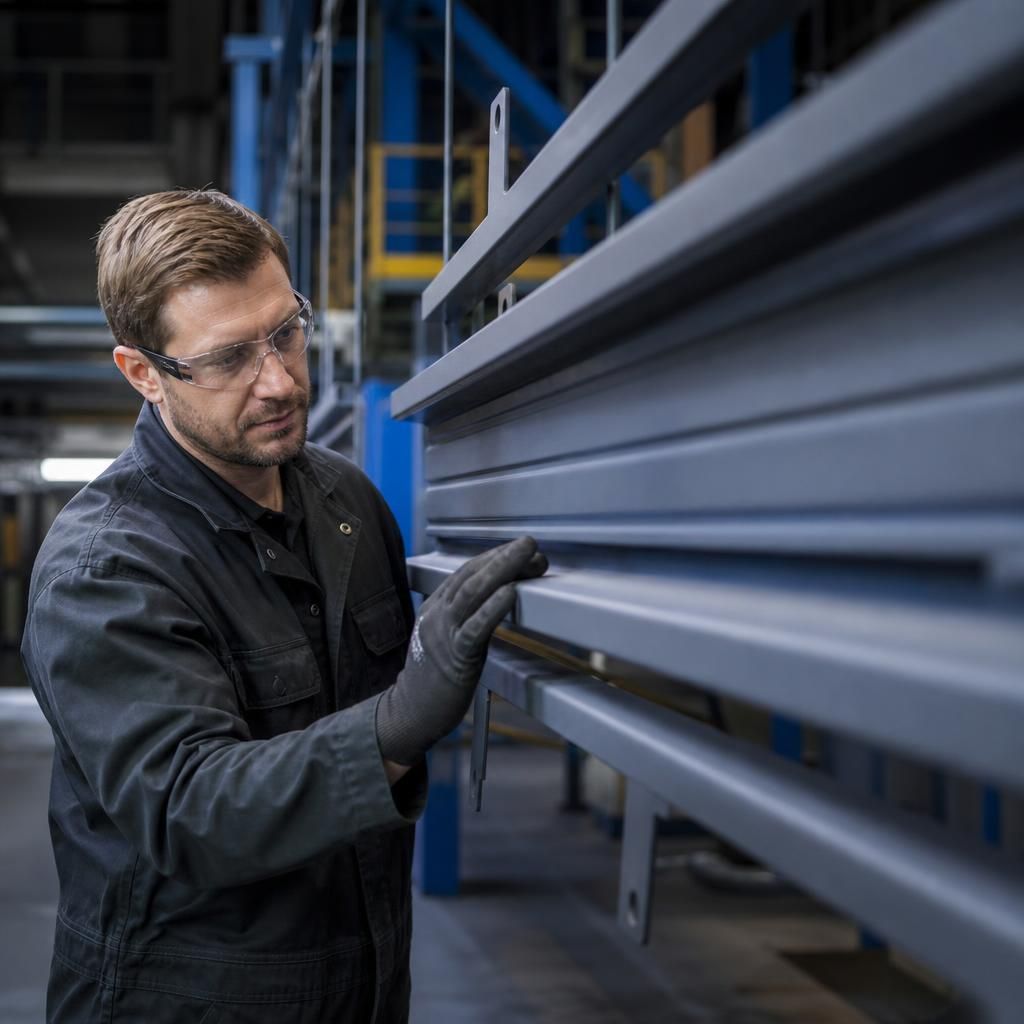
A protective coating should be specified as a complete system rather than as a powder type in isolation. Surface preparation establishes adhesion, any primer provides an additional barrier or corrosion-control function, and the topcoat supplies the required resistance to weathering, chemicals, wear or impact. The layers must be chemically compatible and cured according to the system requirements; a more complex specification is not automatically better if the component’s environment does not justify it.
Assess the likely failure mode before selecting the system. Corrosion-prone steel may need additional barrier protection, while a component subject to sliding contact may benefit more from a resilient wear-resistant coating. Where appearance is the main requirement, colour and gloss retention may take priority. This approach links the coating specification to the part’s actual duty and avoids choosing a finish solely because it is commonly used in a particular industry.