

What types of metal surfaces are suitable for powder coating and are there any limitations?
Powder coating is suitable for electrically conductive metal surfaces, including steel, stainless steel, aluminium, cast iron and many galvanised components, provided they can withstand the preparation and curing process. Limitations include non-conductive materials, heat-sensitive assemblies, heavily contaminated or corroded surfaces, and designs that prevent thorough cleaning, powder coverage or drainage during curing.
Suitability for powder coating depends on more than the metal itself. The substrate must accept the specified pretreatment, provide a reliable electrical path for powder application, and tolerate the heat of the curing cycle without distortion or damage. Its condition, shape, thickness, finish and intended use also determine whether powder coating is appropriate and which coating system should be selected.
Common metal substrates and their considerations
- Mild and carbon steel: These are widely used for powder-coated brackets, frames, panels, enclosures, fabricated assemblies and general industrial components. The required preparation depends on whether the steel is clean, previously coated, lightly oxidised or affected by mill scale, weld residues or fabrication oils.
- Stainless steel: Stainless components can be coated, but their relatively stable surface requires suitable preparation to promote adhesion. Weld discolouration, polishing compounds and handling contamination may need particular attention before coating.
- Aluminium: Aluminium is commonly powder coated for architectural, transport, electrical and industrial applications. Its oxide layer and softer surface make cleaning and pretreatment important, while thin sections and complex profiles need checking for movement or distortion during curing.
- Cast iron: Castings may be suitable where the surface is sound and sufficiently clean. Porosity can retain oil, moisture or cleaning residues, which may later cause pinholes, bubbling or other coating defects. Castings therefore require careful inspection and preparation.
- Galvanised or zinc-coated steel: These materials can often be coated, but the existing zinc layer must be prepared without unnecessarily damaging its corrosion protection. Surface condition, zinc chemistry and the risk of trapped gases need to be considered when selecting the powder and curing approach.
Previously painted or coated parts are not automatically unsuitable. The existing layer must be assessed for adhesion, compatibility and contamination. In many cases it needs to be removed so that the new system bonds to a stable surface. Residues from oil, silicone, release agents, cutting fluids, labels and protective films can interfere with adhesion even when the metal appears visually clean.
Fabricated components also need a design review before coating. Welds should be continuous where appropriate and free from spatter, sharp projections and residues. Crevices, overlapping plates and enclosed sections can retain pretreatment chemicals or moisture. Drain and vent holes may be needed in hollow fabrications, while enclosed cavities may require a different protection strategy from the external faces.
Component dimensions and tolerances are another practical limitation. Powder adds a measurable coating thickness to the surface, so close-fitting interfaces, bearing seats, threaded holes, hinge points and electrical contact areas may need masking or machining allowances. Masking can preserve these areas, but the masking method must be compatible with the curing temperature and the required edge definition.
Assemblies require particular care. Hinges, fasteners, seals, bearings, springs, magnets, plastics and electronic parts may not tolerate the preparation or curing stages. Where possible, vulnerable items are removed before coating. If an assembly cannot be dismantled, the complete item should be reviewed to determine whether every material can withstand the process and whether powder can reach the required surfaces.
Metal condition affects the result as much as metal type. Deep corrosion, embedded dirt, weld slag, sharp edges and old coating remnants can remain visible through the new finish or create weak points. Powder coating improves the surface protection of a suitable component; it is not a substitute for repairing severe pitting, correcting poor fabrication or sealing a defect that allows water into the part.
Very thin sheet, lightweight sections and thermally sensitive components may need a different coating route or process controls. Excessive heat can cause distortion, affect previously applied treatments or alter the dimensions of accurately made parts. Material thickness and mass influence how the component heats and cools, so the specification should be based on the complete part rather than the nominal metal grade alone.
For corrosive environments, the metal substrate, preparation standard, pretreatment and powder formulation should be considered as one system. A finish intended for indoor equipment may not be appropriate for external exposure, high humidity, chemicals, road salts or frequent abrasion. Edges, welds, joints and concealed faces deserve particular attention because these areas can become the first points of coating breakdown.
A coating specialist will normally need details of the substrate, component dimensions, previous finishes, service environment, appearance requirements and any areas that must remain uncoated. Photographs or a sample part can help identify preparation issues, but an inspection is more reliable where there is corrosion, porosity, mixed materials or a complex fabricated design. This assessment determines whether powder coating is suitable, what preparation is required and whether any limitations should be addressed before production.
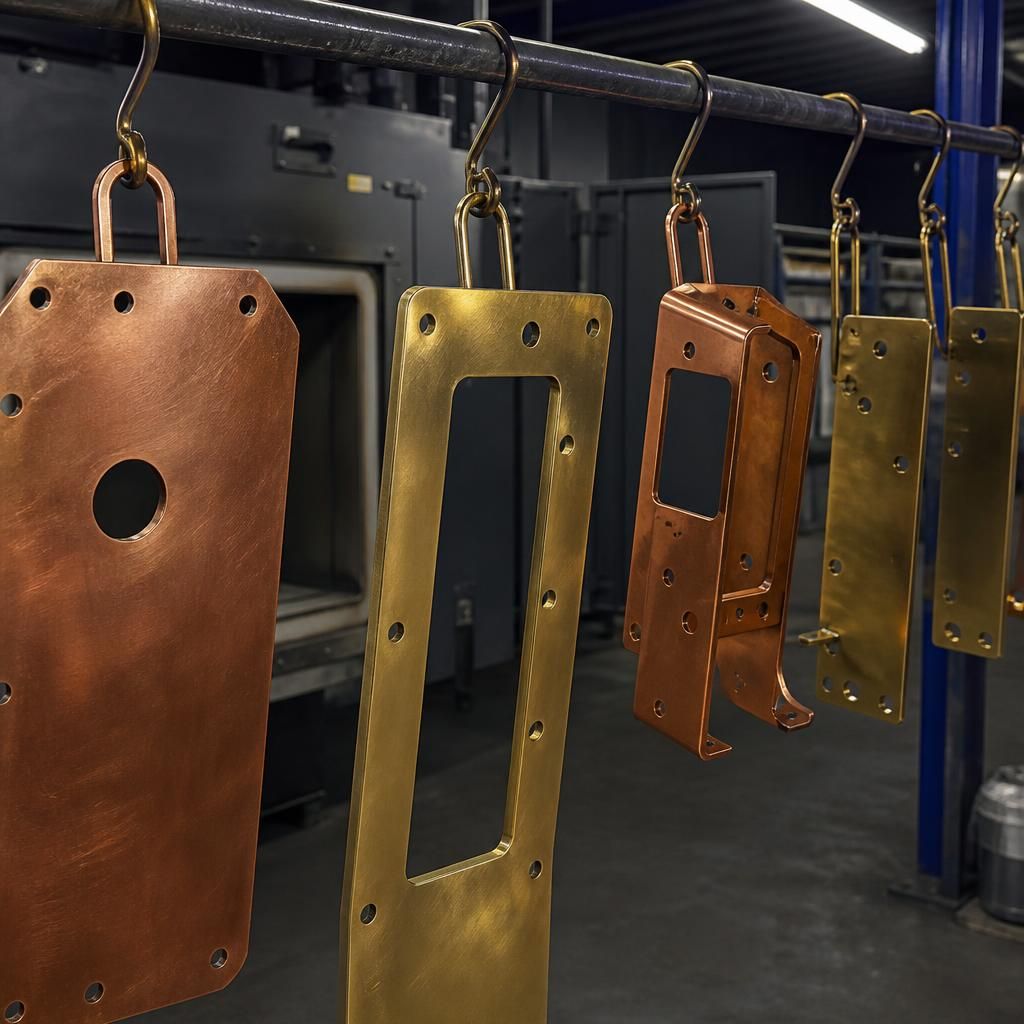
Copper and brass can also be suitable for powder coating when the surface is properly prepared and the component can tolerate the curing cycle. Tarnish, oxidation, polishing compounds and handling residues must be removed because they can interfere with adhesion. Their high thermal conductivity can also affect how quickly the part heats and cools, so the coating specification should account for the component’s size, thickness and design.
These metals are often selected for components where appearance and surface protection matter, but areas intended for electrical contact may need to remain uncoated. A review of the finished part helps establish whether masking, a specialist pretreatment or an alternative coating system is appropriate.