

What technologies or innovations do you employ to enhance the efficiency and quality of your powder coating process?
We use controlled powder application, curing and inspection processes, supported by efficient batch handling, to improve finish consistency and production efficiency. This approach is suitable for large-scale industrial work as well as specialist nylon and protective coatings.
Our powder coating process uses controlled electrostatic application, carefully managed curing and structured inspection to improve finish quality while making batch production more consistent. These technologies help control the variables that most affect a coating: powder coverage, film thickness, metal temperature, cure time, surface condition and handling.
Electrostatic powder application
Powder is applied using electrostatic spray technology. The coating particles are electrically charged as they leave the spray equipment, while the metal component is suitably earthed. This creates an attraction between the powder and the part, helping the coating reach edges, faces and shaped areas before curing.
Application settings can be adjusted to suit the component, geometry and powder system. Controlling the spray pattern, powder flow and electrical charge helps avoid common defects such as light coverage, excessive build-up, powder back-ionisation and uneven edges. Correct earthing is also important because poor grounding can reduce transfer efficiency and lead to an inconsistent finish.
For components with complex profiles, application technique is as important as the equipment itself. Operators need to consider recesses, corners, apertures and areas where parts are suspended from the rack. This allows the coating to be applied evenly without relying on excessive powder build, which can affect appearance and curing performance.
Controlled curing technology
After application, the powder must be heated until it flows and chemically cross-links to form a continuous coating. Curing is controlled through the oven temperature, airflow, dwell time and the time needed for the metal itself to reach the required temperature. Monitoring the part temperature is more meaningful than considering oven air temperature alone, particularly when coating heavy or thick components.
Consistent oven conditions help prevent under-cured and over-cured finishes. Under-curing can leave the coating short of its intended performance, while excessive heat or time can affect colour, gloss and appearance. Batch planning and suitable loading also help maintain airflow around the components so that the cure is not compromised by overcrowding or poor positioning.
Efficient batch and component handling
Production efficiency is improved by organising components according to their size, coating specification, colour and handling requirements. Suitable racking and suspension points keep parts stable during spraying and curing, while reducing unnecessary repositioning. This is particularly relevant to larger components and repeat batches, where consistent presentation of the parts helps produce repeatable coverage.
Handling methods must also protect the finish after curing. Contact points, lifting equipment and storage arrangements are selected to reduce the risk of marking, impact damage or contamination before the coated components are ready for collection or delivery.
Measurement and inspection
Inspection technology is used to check whether the finished coating meets the agreed requirements. Depending on the component and specification, this can include visual examination, dry-film thickness measurement, checks for missed areas and review of defects such as runs, pinholes, orange peel or contamination.
Inspection is most effective when it is linked to process control rather than treated as a final pass or fail step. If a variation is identified, the application settings, preparation, racking, powder condition or curing conditions can be reviewed to help establish the cause. This supports more consistent results across repeat work and helps identify issues before components proceed further through production.
Powder management and process control
Efficient powder use depends on applying the correct material for the required finish and controlling contamination between batches. Where recovery is appropriate, unused powder can be managed carefully; however, reclaimed material is not suitable for every specification or colour and must be controlled to protect finish consistency. Clean equipment, organised changeovers and correct storage also help preserve powder quality.
For industrial work, technology is therefore most effective when combined with disciplined operating procedures. Electrostatic application provides controlled transfer, curing technology develops the coating’s performance, and measurement and inspection provide evidence that the finished component has been processed consistently. This combination supports large-scale batch work as well as specialist nylon and protective coating requirements without treating every metal component as if it had the same process needs.
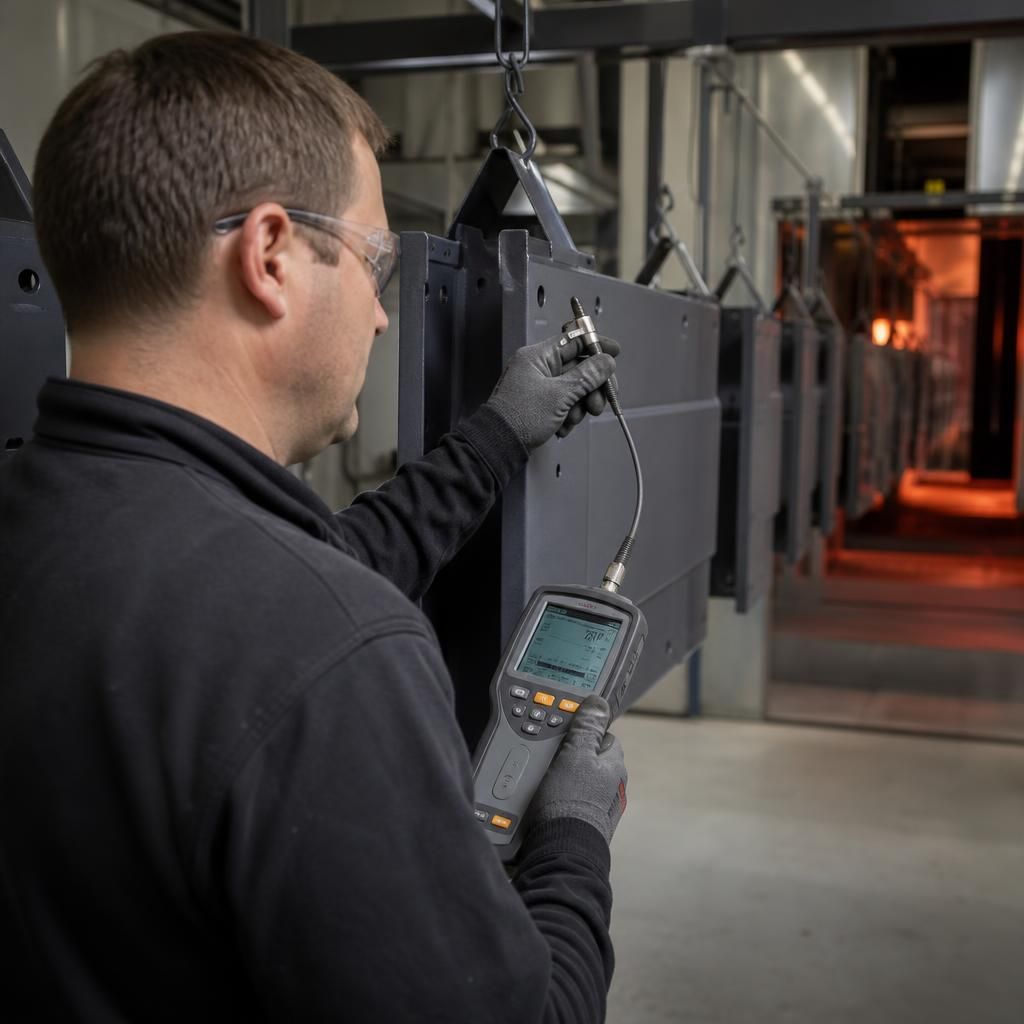
Part-temperature monitoring improves curing control
One important technology in powder coating is thermal profiling: measuring the temperature reached by the metal component during the curing cycle, rather than relying only on the oven’s air-temperature display. This helps confirm that the coating has received the heat required to flow and cross-link properly, including on thick or heavy sections that heat more slowly.
Recorded temperature data can also help compare repeat batches and investigate variations in finish quality. Used alongside the agreed powder specification and component requirements, this provides a more reliable basis for adjusting the curing cycle than visual judgement alone. The result is better control of coating performance without unnecessarily extending the process or exposing the finish to excessive heat.