

What specific pretreatment processes do you offer to ensure optimal adhesion and corrosion resistance in your powder coating services?
Our pretreatment processes include thorough degreasing and cleaning, followed where appropriate by abrasive blasting to remove rust, scale, old coatings and other contaminants from metal surfaces. This creates a clean, suitably keyed surface that helps powder adhere consistently and provides a sound foundation for corrosion-resistant protection.
Pretreatment is the controlled preparation of a metal component before powder application, with the aim of creating a stable surface for the coating to bond to and reducing conditions that can allow corrosion to develop beneath the finish. The correct route depends on the base metal, its previous use, the condition of the surface, the intended environment and the specification for the finished component.
Substrate assessment: Each job should be assessed for the type of metal, existing oxidation, welds, sharp edges, joints, recesses and areas that may retain contamination. Steel, galvanised items and aluminium can require different preparation decisions because their surface chemistry and corrosion behaviour are not the same. This assessment also identifies whether old finishes, processing residues or manufacturing marks could interfere with adhesion.
Preparation of difficult areas: Weld seams, folded edges, drilled holes and enclosed sections need particular attention. Residues trapped around welds or inside joints can cause defects after coating, while sharp edges can leave a thinner film and become more vulnerable to damage. Preparation is therefore considered across the complete component rather than only on its broad, visible faces.
Chemical pretreatment where specified: Some applications require a conversion treatment or another chemical preparation after the surface has been made clean and suitable for coating. These treatments modify the surface to improve the interface between the metal and the powder film and can provide additional support against under-film corrosion. Whether this is appropriate depends on the substrate, coating system and service conditions; it is not a universal substitute for sound mechanical preparation.
Rinsing and residue control: Any preparation stage must leave the component free from residues that could affect the coating. In practice, this means controlling the movement of contaminants between process stages and ensuring that prepared parts are not re-contaminated by dirty supports, unsuitable handling or contact with unprepared surfaces.
Drying and handling: Moisture is particularly important before powder is applied. Components need to be dry, and prepared surfaces should be handled in a way that avoids fingerprints, oil transfer and renewed oxidation. Contact points, hanging locations and areas shielded during processing are checked so that they do not create weak spots in the final coating.
Process selection for corrosion resistance: Powder coating itself forms the protective film, but its performance is influenced by the condition of the metal beneath it. For components exposed to condensation, road contaminants, industrial atmospheres or outdoor conditions, the pretreatment specification should be considered alongside powder type, film coverage, edge condition and curing requirements. A heavier-duty coating cannot compensate for a poorly prepared or contaminated substrate.
Checks before coating: Before powder is applied, the prepared component is reviewed for visible contamination, remaining surface defects, moisture and areas that may need further attention. Any required masking or protection of threads, mating faces and toleranced surfaces is also planned at this stage. These checks help maintain a consistent coating interface and prevent avoidable rework.
For manufacturers, fabricators and other businesses coating batches of metal components, supplying accurate information about the substrate, previous coatings, operating environment and required finish helps determine the appropriate pretreatment route. Where collection and delivery are required, components should also be protected during handling and transport so that the prepared surface reaches the coating stage in the intended condition.
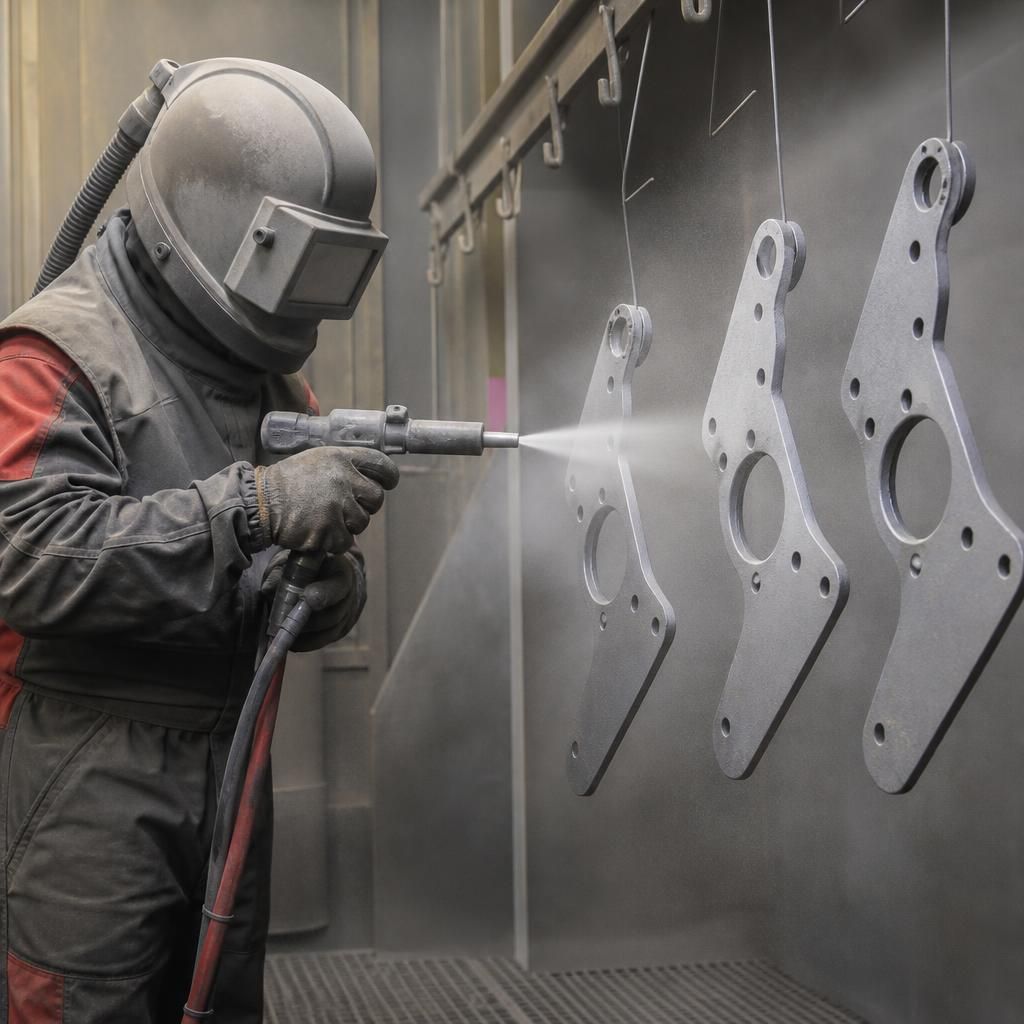
Controlled abrasive blasting is a mechanical pretreatment used to remove firmly attached corrosion, scale and previous coatings while producing a consistent surface profile for the powder film to grip. The objective is not simply to make the metal appear clean: blasting must be suited to the substrate and component geometry so that the surface is prepared without unnecessarily damaging edges, thin sections or detailed features.
After blasting, the component needs to be protected from contamination and renewed oxidation before coating. Dust, spent abrasive and loose residues must be removed, while the prepared surface is checked for missed areas or excessive roughness. This distinction between cleaning and surface profiling is important because a visually clean part can still provide an inconsistent bonding surface if preparation has been uneven or contaminants remain in recesses and around fabricated joints.