

What are the benefits of choosing powder coating over traditional paint solutions for industrial applications?
Powder coating applies a dry powder to prepared metal before curing it into a tough, uniform finish. Compared with traditional liquid paint, it typically offers stronger resistance to wear, impact and corrosion, efficient material use, reduced solvent emissions and lower maintenance requirements for industrial components.
For industrial applications, powder coating can offer advantages over traditional liquid paint in finish consistency, production control, application efficiency, workplace handling and whole-life value. The dry powder is electrostatically applied to prepared metal and then heat-cured, creating a controlled coating system that is well suited to repeat production and batch processing.
More consistent production results
Powder coating is compatible with defined application settings, controlled curing cycles and repeatable inspection procedures. This helps manufacturers and fabricators maintain consistent colour, gloss and film coverage across batches. Unlike liquid paint, the process is not affected by solvent evaporation in the same way, so there is less risk of variations caused by changing viscosity during application.
The cured finish also reduces common liquid-paint defects such as runs, sags and uneven build when the coating system is correctly selected and applied. Consistency is particularly important for components that must match other parts in an assembly or meet an established visual specification.
Efficient application for batch production
Powder can often achieve the required film build in a single controlled application, whereas liquid systems may require several coats with drying or flash-off stages between them. Removing these intermediate coating stages can simplify production planning and reduce the amount of handling required between operations.
Once the coating has been cured and cooled, the component can generally move to inspection, packing or assembly without the extended drying period associated with many liquid paints. The exact process depends on the metal, component design, powder specification and curing requirements, but the absence of a liquid drying stage can be useful for repeat industrial work.
Improved control of the finished appearance
Powder coating is available in a broad range of colours, gloss levels and textures. This allows the finish to be specified according to the component’s visual requirements as well as its service environment. Textured or matt finishes can also help disguise minor surface irregularities that would remain more visible beneath a smooth liquid coating.
For a production run, agreeing the colour reference, gloss level, coating type and acceptance criteria in advance helps avoid disagreements during inspection. Parts should be assessed under suitable lighting and against an agreed sample or specification, particularly where components from different batches need to be used together.
Potentially lower overall processing costs
The comparison should be based on total process cost rather than the price of the coating material alone. Powder coating can reduce costs associated with repeated liquid coats, drying space, extended handling and corrective work caused by coating defects. Its suitability for automated or repeatable application can also make labour and production planning more predictable on suitable components.
Actual cost depends on component size, quantity, preparation requirements, masking, colour changes, coating specification, curing requirements and whether collection or delivery is needed. A technically cheaper paint system may not be the most economical option if it requires more preparation, more coats or more frequent remedial work.
Reduced workplace handling of liquid solvents
Powder coating does not use the liquid solvent carrier found in many conventional paint systems. This can simplify certain aspects of storage, application and waste management, although powder must still be handled responsibly. Extraction, housekeeping and suitable personal protective equipment remain important because airborne powder can create inhalation and dust-control risks.
Traditional paint may remain appropriate where a project requires a particular solvent-based product, an on-site application method or a repair system that can be brushed or sprayed directly into a localised area. Powder coating is normally most practical when components can be prepared, coated and cured in a controlled facility.
Important limitations to consider
- Heat exposure: the curing stage means the substrate must tolerate the specified oven temperature. Heat-sensitive materials or assemblies containing vulnerable components may require an alternative coating system.
- Component dimensions: the part must fit within the available preparation, application and curing equipment. Very large fixed structures may be more suitable for an on-site liquid coating process.
- Surface preparation: powder coating cannot compensate for oil, rust, scale, weld contamination or unsuitable previous coatings. Cleaning, blasting or other pretreatment is selected according to the substrate and required service performance.
- Colour changes and small repairs: changing powder colours requires suitable cleaning and process control. Local repairs may be less straightforward than with liquid paint, particularly where an exact aged or weathered match is required.
- Film thickness: powder is not always the best choice where an exceptionally thin or tightly controlled coating is required. The specification should account for edges, recesses, masking areas and moving interfaces.
Overall, powder coating is generally the stronger option for prepared metal components that can withstand curing and are being processed in batches or repeat production. Traditional paint remains useful for heat-sensitive substrates, large fixed items, on-site work and applications requiring specific thin-film or repair characteristics. The correct choice depends on the metal, component geometry, operating environment, appearance specification, production volume and required preparation system.
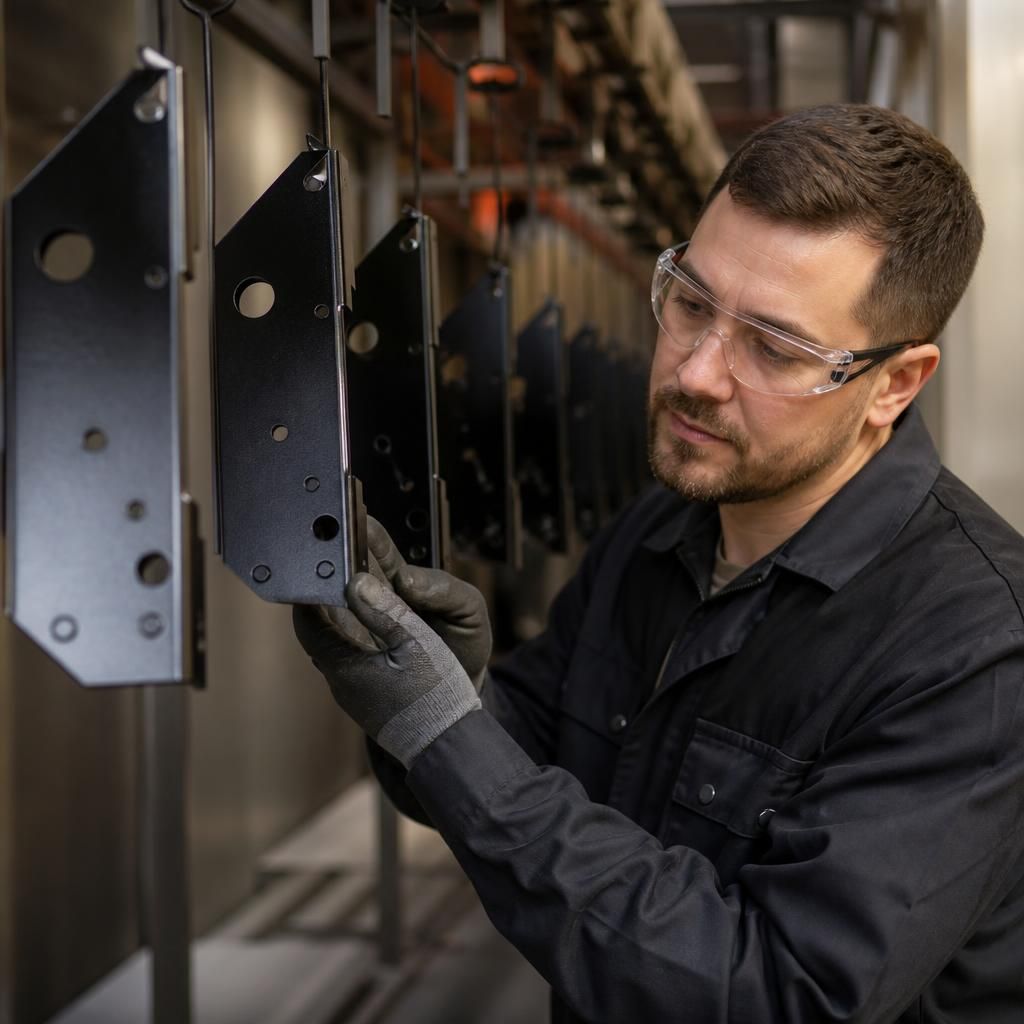
Powder coating can support more predictable product specification across repeated industrial orders. A coating system can be defined by its colour, gloss, texture, film build and performance requirements, then applied against the same agreed criteria for each batch. This gives purchasing, production and inspection teams a clear reference when coated components form part of a larger assembly.
The benefit is not simply a uniform appearance. A documented specification helps identify whether a part needs enhanced corrosion protection, a particular texture for handling, or a finish compatible with its operating environment. Confirming these requirements before coating reduces the risk of selecting a visually suitable finish that does not meet the component’s functional needs.
Discuss Your Industrial Powder Coating Requirements
If you are comparing coating options for a specific component, discuss its substrate, dimensions, operating environment and production requirements with the powder coating team. This can help establish whether powder coating is suitable and identify the preparation and finish specification required.