

What maintenance is required to prolong the lifespan of nylon and protective coatings on metal components?
Prolong the lifespan of nylon and protective coatings by inspecting metal components regularly, cleaning them with a mild detergent, and avoiding abrasive tools or chemicals that could damage the finish. Address chips, scratches, corrosion or coating separation promptly, and follow the coating supplier’s guidance for repairs and any exposure-specific maintenance.
Maintaining nylon and protective coatings requires a planned regime that controls exposure, prevents mechanical damage and checks the coating system at vulnerable points. The appropriate approach depends on the component’s environment, duty, coating specification and the consequences of coating failure, so maintenance should be based on the conditions in which the metal part is used rather than on a one-size-fits-all timetable.
Build the maintenance plan around the operating environment
Identify the factors most likely to affect the coating. These may include moisture, salt, ultraviolet exposure, temperature variation, chemical contact, abrasion, impact and repeated movement. Components used outdoors, in wash-down areas or near industrial chemicals generally require closer control than parts operating in a dry, sheltered environment. Nylon can offer good resistance to wear and impact, while protective systems may be selected primarily for corrosion resistance or chemical durability; the maintenance checks should reflect the main purpose of each coating.
- Record the substances and cleaning agents that may contact the component.
- Note areas exposed to rubbing, sliding, vibration or repeated loading.
- Pay particular attention to joints, edges, recesses, drain points and locations where moisture or residue can collect.
- Review the maintenance regime if the component’s use, location or operating temperature changes.
Protect the coating during handling and installation
Many coating failures occur through handling rather than through normal exposure. Metal parts should not be dragged across hard surfaces, dropped onto edges or stacked in a way that concentrates load on small contact points. Suitable separators, padded supports and clean storage surfaces help prevent abrasion and impact. When coated parts are assembled, avoid forcing fasteners, clamps or brackets against the coating, as excessive local pressure can deform nylon or damage the film at contact points.
Any drilling, cutting, grinding or welding carried out after coating can expose the underlying metal and interrupt the intended protection. Such alterations should therefore be limited, carefully controlled and treated in accordance with the coating system requirements. Exposed areas, cut edges and interfaces should be assessed as part of the repair or finishing process rather than left as untreated metal.
Manage moisture and storage conditions
Good drainage is an important part of coating maintenance. Components should be positioned so that water does not remain trapped in recesses, overlaps or around fixings. During storage, avoid tightly packing damp parts together; restricted airflow can prolong wetting and encourage corrosion at damaged or uncoated interfaces. Protective packaging should also allow moisture to escape rather than sealing condensation against the surface.
For parts that are removed from service, clean, dry storage away from direct environmental exposure can reduce unnecessary ageing. Nylon-coated components should be kept away from conditions that could cause prolonged heat, distortion or contact with incompatible materials.
Use coating-specific condition checks
Maintenance personnel should understand the visible and physical signs associated with the coating type. On nylon-coated components, particular attention should be given to thinning at contact zones, deformation, roughened wear areas and changes in flexibility or surface texture. On corrosion-protection systems, relevant signs can include blistering, under-film corrosion, lifting at edges, chalking, staining or a loss of adhesion. A change in colour alone does not always indicate failure, but it should be assessed alongside the component’s environment and other symptoms.
Where the coating’s condition is uncertain, assessment should include the surrounding metal and the points at which the coating meets fasteners, welds, seals or other materials. A coating can appear intact on an exposed face while deterioration is developing at an edge or interface.
Control repairs and recoating
Repairs should be specified according to the cause and extent of deterioration. A superficial defect may require a different treatment from widespread loss of adhesion, corrosion beneath the coating or wear through a high-contact area. Before recoating, the surface normally needs appropriate preparation, removal of contaminants and confirmation that the remaining coating is sound. Simply applying material over an unstable layer can conceal the problem and lead to premature failure.
Repairs should match the original system where practical, including compatibility between the substrate preparation, primer or barrier layer and finishing material. If a component has been exposed to an unusual chemical, temperature or mechanical load, the repair specification should take that exposure into account rather than relying solely on its original use.
Keep maintenance records
For industrial components, a basic coating record makes future decisions more consistent. Record the coating type, substrate, application specification, installation date, service environment, known exposures and any alterations or repairs. Link observations to the component or batch where possible, and note whether deterioration is localised or recurring in the same locations. Repeated damage at one interface may indicate a design, handling or installation issue that should be corrected instead of repeatedly repairing the coating.
The most effective maintenance programme combines suitable design and storage, careful handling, controlled exposure and documented condition assessment. Where the coating protects safety-critical, corrosion-sensitive or difficult-to-replace equipment, maintenance personnel should obtain a coating specialist’s assessment before deciding whether local repair, full refurbishment or replacement is appropriate.
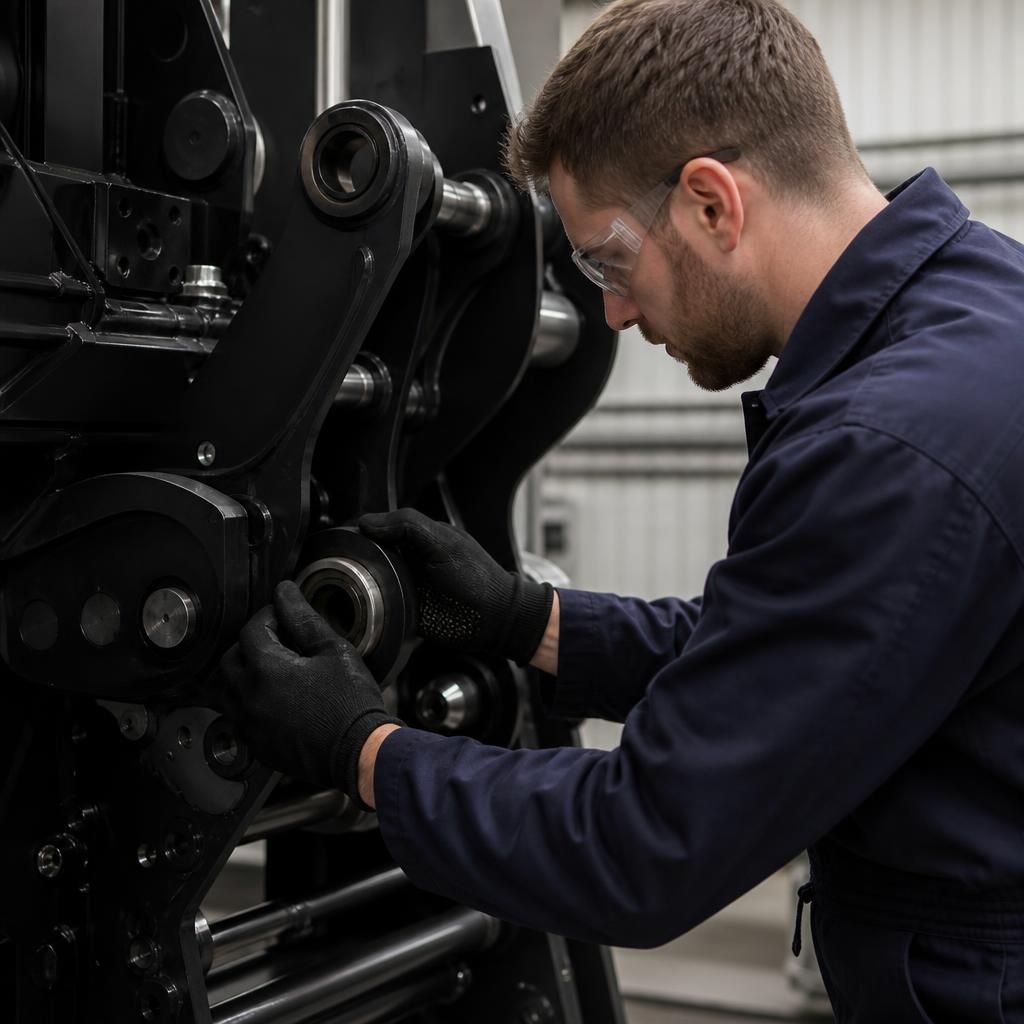
Maintenance should include a functional check after cleaning, inspection or repair, particularly where nylon-coated parts form sliding, rotating or close-fitting interfaces. Coating wear, local deformation or accumulated residue can alter clearances and increase friction before the damage is obvious from a visual inspection.
Reassemble the component according to its specified fit and check that movement, alignment, fastening and sealing remain correct. Do not force parts back into position or remove coating to restore clearance without confirming the engineering requirement. Any change in operating resistance, noise, vibration or fit should be investigated, as it may indicate coating deterioration, substrate damage or an unsuitable interface condition.