

What are the benefits of using nylon and protective coatings over traditional paint for industrial metal components?
Nylon and protective coatings generally provide industrial metal components with greater resistance to abrasion, impact, moisture and chemical exposure than traditional paint. Their tougher, more durable finish can help protect the substrate and maintain performance in demanding manufacturing, construction and automotive applications.
Nylon and other protective coatings can offer advantages over traditional liquid paint through improved film build, more consistent coverage, lower solvent use and additional functional properties. For industrial metal components, the most suitable option depends on the operating environment, required finish, component size and the performance expected from the coating.
More consistent coverage and film formation
Traditional paint is applied as a liquid, so its final performance can be affected by viscosity, spray technique, solvent evaporation, runs, sags and uneven application around corners or recesses. Nylon coatings are commonly applied as a powder or thermoplastic layer that is heated or fused onto the prepared metal. This can produce a more consistent coating thickness across suitable component surfaces, provided the application process, pre-treatment and curing conditions are properly controlled.
A consistent film is important where components have close-fitting interfaces, repeated handling or exposed edges. The required thickness still needs to be specified carefully: an excessively thick coating can affect tolerances, while insufficient coverage may leave vulnerable areas.
Greater resistance to everyday wear
Compared with many conventional paint systems, nylon can provide a resilient surface for components subject to rubbing, sliding or repeated handling. It is therefore considered for items such as guides, guards, chutes, trays, brackets and components where the coating itself may experience regular contact. The precise result depends on the nylon formulation, substrate preparation and application method.
Protective coatings can also be selected for particular functional requirements rather than appearance alone. Depending on the system, these may include improved electrical insulation, reduced friction, easier cleaning or a softer surface that helps limit damage when coated parts contact one another. These properties should be confirmed against the coating specification rather than assumed for every nylon or protective coating.
Fewer solvent-related issues
Many powder and thermoplastic coating processes avoid the liquid solvents used in some traditional paint systems. This can reduce the need to manage solvent-containing materials and can support a cleaner, more controlled coating process. It does not mean that every coating operation has the same environmental profile: pre-treatment, heating, ventilation, cleaning and waste handling still need to be considered.
For manufacturers reviewing a coating method, the relevant comparison is the complete process rather than the coating material alone. Preparation chemicals, masking materials, energy use, rejects and rework can all affect the practical environmental and operational advantages.
Improved suitability for demanding component designs
Nylon may be appropriate where a component needs a functional polymer surface rather than a decorative paint layer. It can be useful on parts that require a defined surface texture, electrical separation or a coating that tolerates repeated contact. Protective systems can also be selected to address a particular exposure or handling condition.
However, coating selection must take account of the component’s geometry. Recesses, internal faces, threaded sections, sharp edges and areas requiring masking may affect how evenly the coating can be applied. Dimensional tolerances are particularly important because a polymer coating may add more material than a conventional paint film.
Potential maintenance and lifecycle benefits
A well-selected coating can reduce the need for frequent cosmetic repairs caused by minor handling and surface wear. A sound, well-adhered finish is also easier to inspect and clean than a coating that is flaking, blistering or repeatedly being touched up. These benefits depend on correct pre-treatment, adequate curing and using a coating that matches the component’s service conditions.
Traditional paint remains useful where local touch-up, on-site application, very small repairs or a particular colour match is the priority. It may also be more practical for large structures that cannot be brought into a coating plant or for substrates that cannot tolerate the heat required by some nylon processes. Nylon and protective coatings are not automatically a replacement for paint; they are a better choice when their specific performance characteristics justify the application requirements.
What should be assessed before choosing?
- Operating conditions: consider contact, temperature, movement, cleaning methods and exposure to substances that could affect the coating.
- Component dimensions: confirm that the part can be processed and that the coating thickness will not interfere with fits, threads or moving interfaces.
- Substrate and preparation: remove contamination and corrosion and specify suitable pre-treatment so the coating can bond reliably to the metal.
- Application method: assess whether electrostatic application, fluidised-bed coating or another process is suitable for the component’s geometry and production volume.
- Appearance and function: distinguish between a coating chosen mainly for appearance and one required to provide insulation, low friction, cleanability or resistance to a particular type of service.
- Inspection requirements: agree how coverage, adhesion, thickness, finish and masked areas will be checked before the components enter service.
In summary, the main advantage over traditional paint is that nylon and protective coatings can combine a controlled, functional surface with a robust application process and reduced reliance on solvent-based materials. The best result comes from matching the coating chemistry and application method to the metal component’s geometry, tolerances and working environment rather than selecting a coating based on appearance alone.
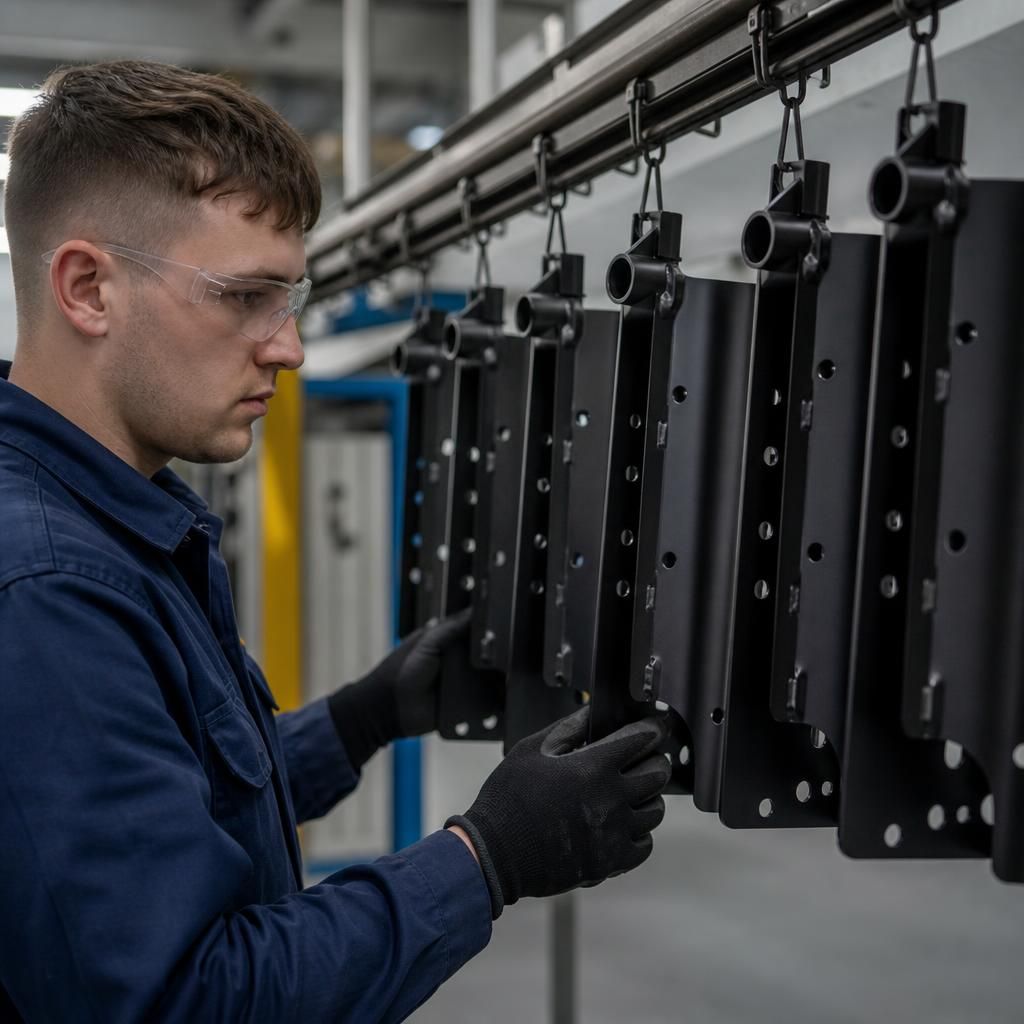
One important advantage of nylon and other protective coatings is that the coating can be specified for the way a component moves or flexes in service, rather than selected mainly for its colour and appearance. Where a metal part experiences minor deformation, vibration or repeated contact, a suitable polymer coating may provide a more compliant barrier than a rigid decorative paint film. The result depends on the coating formulation, substrate preparation and operating conditions, so compatibility should be confirmed before production.
Temperature is also a key consideration. Heat during application can affect the substrate, while service temperatures can alter a polymer coating’s flexibility, hardness and adhesion. Comparing the coating’s operating range with the component’s actual conditions helps determine whether nylon or another protective system offers a practical advantage over traditional paint.