

How do powder coating techniques differ for various metal types, and what considerations should guide their application?
Powder coating techniques vary by metal because each substrate reacts differently to preparation, heat and curing. Steel may require thorough cleaning and corrosion protection, aluminium needs careful pretreatment to support adhesion, and galvanised metal requires preparation suited to its zinc surface; the coating system, film thickness and curing schedule should therefore be selected for the specific metal and component use.
Powder coating techniques differ between metals because the substrate affects electrical grounding, heat transfer, surface preparation, adhesion and the behaviour of the finished film. The correct approach therefore combines the metal type with its alloy, surface condition, component design, intended environment and the powder system being applied.
Carbon and mild steel are generally well suited to conventional powder coating, but the preparation must account for welds, mill scale, oil, fabrication residues and existing corrosion. Abrasive blasting or chemical cleaning may be appropriate, depending on the component and the required finish. Weld spatter, sharp edges and deep surface defects can remain visible through the coating, so these should be removed or corrected before coating. Hollow sections also need suitable drainage and venting to prevent trapped moisture, air or pretreatment chemicals from affecting the finish during curing.
Steel components used externally or in corrosive conditions may require more than a decorative topcoat. A suitable primer or corrosion-resistant base layer can provide additional protection, while the topcoat supplies the required colour, texture and weathering performance. The choice depends on the exposure conditions, edge geometry, expected wear and whether the component will be exposed to water, salts, chemicals or industrial contaminants.
Aluminium conducts heat efficiently and can have a naturally occurring oxide layer that influences coating adhesion. Degreasing, controlled abrasion and an aluminium-compatible pretreatment are important, particularly where the surface has been handled extensively or has been exposed to contamination. Different aluminium alloys can also respond differently to preparation, so the process should be assessed against the specific material rather than treating every aluminium part identically.
Aluminium sections are often thin or complex in shape, making racking and handling especially important. Contact points must provide reliable electrical continuity without creating unacceptable marks on visible surfaces. The coating team may also need to consider the position of drainage holes, seams and enclosed profiles, as these can retain pretreatment fluid or complicate curing. On architectural or external aluminium, the powder should be selected for colour retention and resistance to the expected weathering conditions.
Galvanised and zinc-coated steel requires preparation that preserves the useful zinc layer while creating a sound surface for the powder. Excess zinc, passivation residues, white corrosion products and oils can interfere with adhesion or cause surface defects. The condition of the galvanised coating should be checked before processing, since roughness, runs and local variations may show through a smooth finish. Correct venting is also important where the component is hollow, as heated air and moisture can contribute to pinholing or blistering.
Stainless steel is resistant to corrosion, but its smooth, chemically stable surface may need controlled preparation to support reliable adhesion. Abrasion must be appropriate to the grade and finish, and contamination from carbon-steel processing should be avoided because embedded particles can create later staining or corrosion. The selected powder should reflect the reason for coating: appearance, colour coding, added chemical resistance, wear resistance or a combination of these requirements.
Cast iron and other cast metals can present pores, graphite-rich areas, rough surfaces and residues from machining or casting. These features may release trapped air or contaminants when the component is heated, producing pinholes, bubbles or small craters in the coating. Thorough cleaning, suitable preheating or outgassing procedures and an appropriate coating build can reduce these risks, although deep porosity may remain a limitation. Test pieces or a trial batch are useful when the casting history and surface condition are uncertain.
Regardless of the metal, the powder and curing cycle must be matched to the component rather than selected by colour alone. The required film thickness, the powder’s chemistry, the part’s heaviest section and the temperature reached by the metal all influence the result. A large, dense steel bracket may heat more slowly than a thin aluminium panel, while a complex assembly may have areas that receive different levels of heat. Curing should therefore be based on the metal temperature and the powder manufacturer’s requirements, not simply on the oven air temperature or a fixed time.
Practical considerations should be agreed before production begins:
- Identify the substrate: confirm the metal, alloy, existing finish and any previous treatment, including zinc coatings, primers or oils.
- Define the service environment: distinguish between indoor use, sheltered outdoor use, coastal exposure, industrial atmospheres, chemical contact and high-wear applications.
- Choose the coating system: select the chemistry, primer arrangement, colour, gloss and texture according to corrosion, ultraviolet, chemical and abrasion requirements.
- Review the design: check edges, recesses, threaded holes, mating faces, drainage, venting and areas that must remain uncoated.
- Plan masking and racking: protect tolerances and contact surfaces while maintaining effective electrical contact and consistent powder coverage.
- Control the cure: consider component mass, geometry and heat transfer so that the entire coating reaches the required cure conditions.
- Inspect the result: check coverage, adhesion, colour, gloss, visible defects and film thickness against the agreed specification.
For mixed-metal assemblies, compatibility must be considered at both the coating stage and in service. Dissimilar metals can behave differently during heating, and exposed contact areas may create galvanic corrosion when moisture is present. It may be preferable to coat components separately, mask specific interfaces or use a system that accounts for the assembly’s most demanding exposure. A clear specification covering metal type, preparation, powder system, finish, masking and inspection criteria helps produce repeatable results across batches.
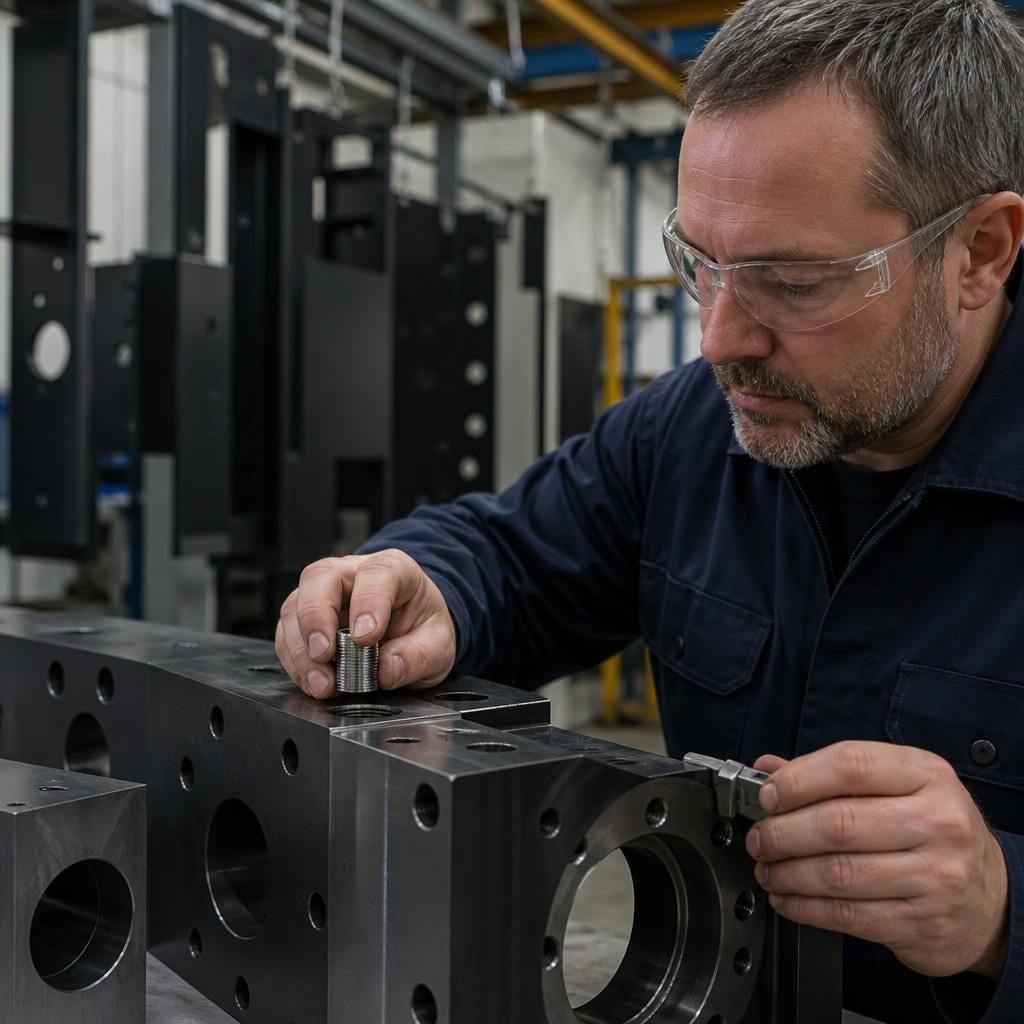
Coating technique must also account for dimensional tolerances. Powder adds a layer to the surface, so threaded holes, bearing seats, sliding faces and close-fitting joints may no longer assemble correctly if they are coated unintentionally. These areas should be identified before processing and protected with suitable masking or plugs. After curing, critical dimensions and mating points should be checked against the component specification, particularly where different metals or part geometries require different coating builds.
Discuss the right powder coating technique for your metal type
Discuss your component drawings, metal types, surface condition and intended service environment with the powder-coating team before processing. This allows the preparation, powder system and curing approach to be assessed against your specification.