

How can businesses ensure the compatibility of protective powder coatings with their existing processes and materials?
Businesses can ensure compatibility by checking the substrate, surface preparation, curing requirements, dimensional tolerances, masking and assembly methods against the proposed protective powder coating. A coating specialist can review technical specifications and assess sample components to identify risks before full production, including adhesion, heat sensitivity and interference with subsequent processes.
Compatibility means that a protective powder coating can be applied, cured and used without adversely affecting the metal, the production process or the component’s intended service conditions. Businesses should assess compatibility as a controlled process rather than selecting a coating by colour or corrosion-resistance rating alone. The assessment should bring together the component specification, manufacturing sequence, coating requirements and conditions the finished part will encounter.
Begin by creating a process record for the component. This should identify the metal grade, previous treatments, joining methods, oils or processing residues, areas that must remain uncoated, and every operation that takes place before and after coating. It should also record whether the component will be welded, machined, bent, assembled, bonded or electrically connected later. This information helps the coater understand whether the proposed coating is suitable for the complete manufacturing route, rather than only for the exposed surface.
The coating specification should then be compared with the part’s operating environment. Important considerations include:
- Exposure to moisture, condensation, salts, chemicals, cleaning agents, fuels or hydraulic fluids.
- Expected contact with abrasion, impact, friction or repeated handling.
- Indoor, outdoor or partially enclosed use, including changes in temperature and humidity.
- Whether the coating must provide electrical insulation, or whether contact points need to remain conductive.
- Requirements for appearance, gloss, texture, colour consistency and resistance to marking.
- Any regulatory, hygiene or sector-specific requirements that apply to the finished component.
Material combinations also need careful review. Steel, galvanised steel, aluminium and other metals can respond differently to pretreatment, heating and the surrounding service environment. Dissimilar metals may require attention to contact areas and the risk of galvanic corrosion. Castings, folded sections, welds and enclosed profiles can also behave differently from simple flat components because they may retain moisture or release gases during heating. These characteristics should be discussed before the coating system is approved.
Compatibility with existing production equipment is another practical consideration. The business should confirm that components can be safely loaded, suspended, transported and positioned through the coating line without damaging critical surfaces. It should also check whether the proposed process creates any issue for jigs, hooks, conveyor points, masking materials or handling equipment already in use. The aim is to identify changes to tooling or part presentation before a production batch is scheduled.
Downstream operations should be assessed in the same way. Cutting, drilling, tapping, pressing, riveting, bonding and mechanical assembly can affect the coating if they are carried out after application. Where possible, the manufacturing sequence should be arranged so that coating is applied after operations likely to damage it. If post-coating work is unavoidable, the specification should state how exposed edges, drilled areas and repaired sections will be protected against corrosion.
Small-scale trials are usually more informative than relying on a product description alone. Representative parts or test panels can be processed using the proposed preparation and coating system, then examined for finish uniformity, coverage, defects and suitability for the next manufacturing stage. Trial parts can also be subjected to the relevant handling, assembly, cleaning or service exposures. Any change to the metal, pretreatment, powder formulation or production sequence should trigger a review rather than being assumed to be interchangeable.
Acceptance criteria should be agreed before the trial begins. These may cover visual quality, coating coverage, adhesion, resistance to the intended environment, acceptable areas of contact or masking, and the condition of the component after assembly. Written criteria reduce uncertainty between the manufacturer and coater and provide a consistent basis for approving repeat batches. Records of the approved powder, pretreatment, process settings and inspection results are particularly useful where components are produced over an extended period.
A powder-coating specialist can support this review by considering the component drawing, material information and production route before full-scale work begins. For manufacturers, fabricators, construction firms and automotive businesses across the Midlands, Powder-coatings.co.uk provides industrial powder coating with collection and delivery options. Early technical discussion is most effective when it includes representative components, details of the existing process and a clear description of the environment in which the coated parts will operate.
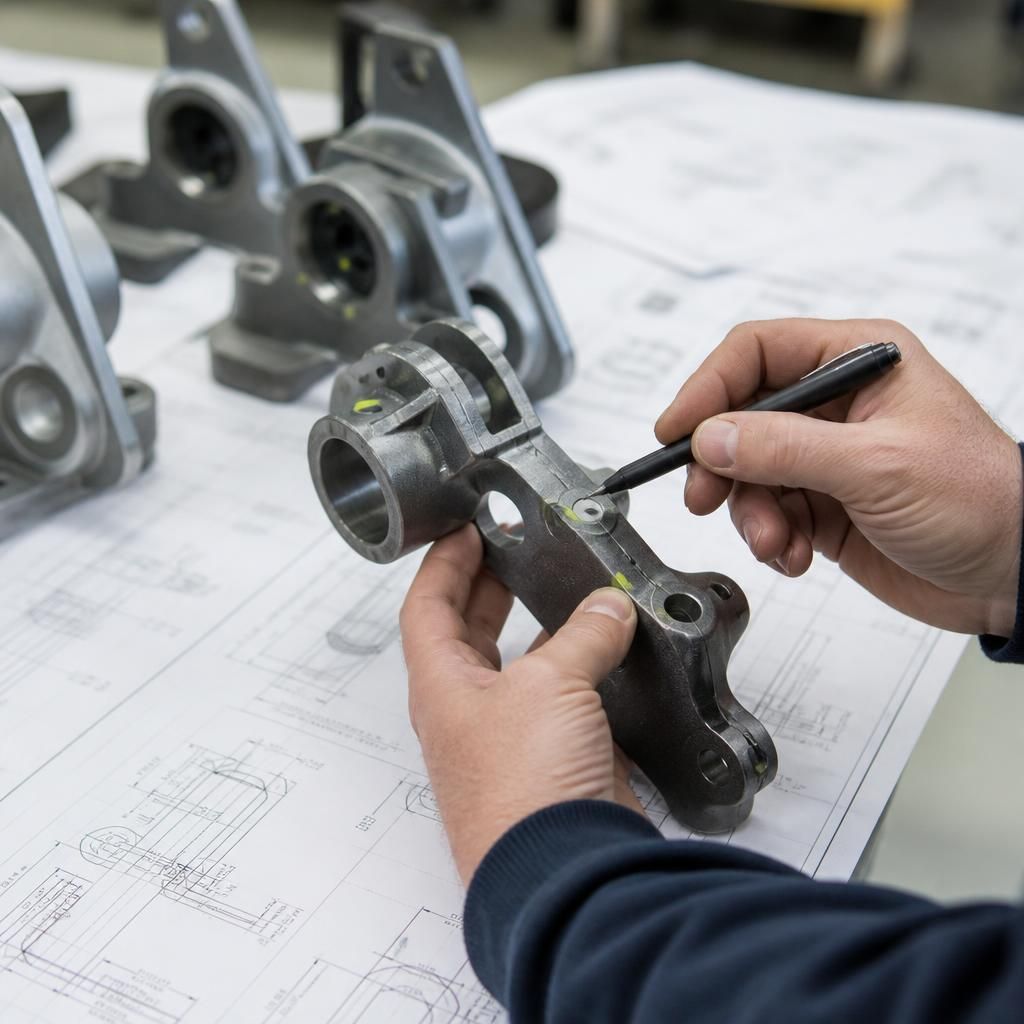
Dimensional compatibility means ensuring the cured coating does not interfere with the component’s fit, movement or function. Powder coating adds a dry film to the surface, which can affect close-fitting parts, threaded holes, press fits, sliding faces, bearing seats and machined interfaces if these areas are not identified before production.
Businesses should mark functional surfaces and critical dimensions on the component drawing, then define which areas require masking or a controlled coating build. Particular attention is needed at edges, recesses and internal threads, where coating accumulation may be greater. A representative coated part should be checked against mating components after curing, not only measured before coating. The agreed inspection record should state acceptable coating on interfaces, thread condition and any areas that must remain free of powder. This gives the coater clear dimensional requirements and helps prevent problems during final assembly.
Discuss Protective Powder Coating Compatibility
Discuss your component drawings, material specifications and production requirements with Powder-coatings.co.uk before approving a protective powder coating system. Sharing this information early helps establish the technical checks and trial requirements for your parts.