

What safety measures should be taken during the blast cleaning process?
Safety during blast cleaning depends on a documented risk assessment, trained operators, controlled access to the blasting area and correctly maintained equipment. Suitable respiratory and protective equipment, effective ventilation or dust extraction, secure blast hoses and regular checks of the work area help control exposure to abrasive media, dust, noise and flying debris.
Blast cleaning should be carried out under a documented system of work that controls stored pressure, hazardous residues, abrasive rebound, noise, static electricity and contamination. The safeguards should cover the equipment, the workpiece, the blasting enclosure and every stage from loading through to waste removal.
Assess the coating and substrate before blasting. Existing paint, corrosion products, plating and previous treatments may contain hazardous substances, including lead or other toxic compounds. Identify the coating where practicable and decide how dust and spent abrasive will be contained and disposed of. A method that is suitable for ordinary steel may be unsuitable for a component with hazardous residues, a thin section or a sensitive alloy.
- Review available safety data and site information before work starts.
- Remove oils, chemicals and loose contamination using an appropriate pre-cleaning method so that blasting does not spread them through the work area.
- Check for enclosed cavities, trapped liquids, sharp edges and fragile sections that could create additional hazards.
- Keep records of the material removed and the waste route selected.
Control the blast equipment itself. Blast pots, air receivers, valves and hoses contain stored energy. The pot must be depressurised before its lid is opened, abrasive is added or an obstruction is cleared. Isolation should prevent accidental pressurisation while maintenance or cleaning is taking place. Operators should not bypass deadman controls, safety valves or interlocks, and worn couplings, gaskets and hose linings should be replaced rather than temporarily repaired.
- Inspect the pot, pressure gauges, valves, couplings and nozzle before use.
- Fit hose restraints or whip checks where appropriate and ensure connections are properly secured.
- Keep the blast hose routed to avoid crushing, sharp bends and trip hazards.
- Use a nozzle holder or support when the gun is not in use; never leave a pressurised nozzle unattended.
- Stop the air supply and release pressure before investigating blockages.
Use controls suited to the abrasive and the component. The media should be selected not only for the required surface profile but also for its dust characteristics, toxicity and potential to damage the metal. Abrasives containing respirable crystalline silica require particularly stringent control and are not suitable for unrestricted use. Recycled or previously used media should be managed so that unknown contamination is not introduced into the work area.
Protect openings, threads, machined faces and other areas that must not be blasted. Components should be supported securely so that they cannot move, topple or become a source of reflected abrasive. Heavy items may require suitable lifting equipment and a planned loading method; do not place hands beneath suspended or unstable workpieces.
Manage noise, visibility and physical strain. Blast cleaning can produce intense noise and vibration, so hearing protection should be selected to suit the equipment and used alongside measures that reduce noise at source. Operators should be able to see the nozzle, component and surrounding area clearly without opening the enclosure or creating a dust escape route. Job rotation, suitable nozzle support and sensible handling arrangements can reduce fatigue, awkward postures and loss of control.
Electrical equipment in the area should be suitable for the conditions and protected from abrasive ingress. Bonding and earthing arrangements may be needed to control static charge, particularly where dry media and compressed air are used. Cables, lights and inspection equipment should be positioned so that they cannot be damaged by the blast stream or obstruct safe movement.
Prepare for abnormal events. The work instruction should state what to do if a hose fails, the nozzle control sticks, visibility is lost, pressure behaves unexpectedly or a person is exposed to dust or a hazardous coating. Emergency arrangements should identify how to stop the air supply, summon assistance, provide first aid and report an incident. Suitable eyewash and first-aid facilities should be accessible without requiring someone to cross the active blast zone.
After blasting, allow airborne contamination to settle or remove it using the specified extraction and cleaning method before anyone enters for inspection. Do not use compressed air to blow dust from clothing, machinery or surfaces, as this can reintroduce fine particles into the breathing zone. Use an industrial vacuum or wet-cleaning method appropriate to the material, collect spent abrasive in closed containers where necessary, and remove contaminated clothing without spreading residue.
Before the component is transferred for powder coating, inspect the enclosure, equipment and workpiece for remaining abrasive, loose debris and coating residue. This final check protects the next process as well as the operator: contamination left on the metal can affect the finish, while uncontrolled waste can expose cleaning and handling staff after blasting has ended.
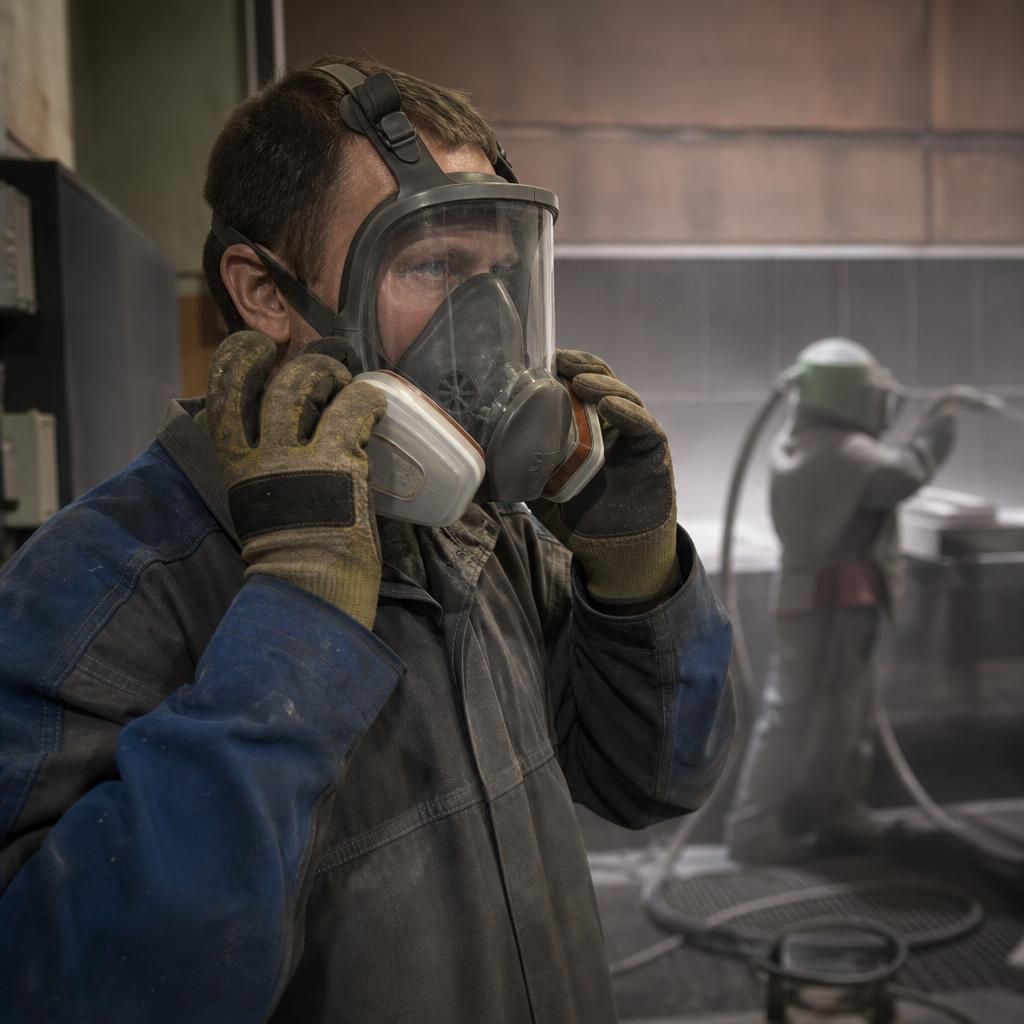
Respiratory protection must be selected for the actual dust and coating hazards identified during the risk assessment, not treated as a standard dust mask requirement. Where blasting creates fine or toxic contamination, the chosen respiratory protective equipment (RPE) should be suitable for the substance, the work method and the expected exposure. Tight-fitting RPE requires face-fit testing and a clean-shaven sealing area; facial hair, spectacles or other equipment can prevent an effective seal.
Blast helmets, protective clothing, gloves and footwear should also be compatible with the equipment and task. Inspect them before use, replace damaged components and prevent contaminated PPE from being taken into clean areas. Operators should know how to put on, remove, clean and store their equipment without transferring abrasive or coating residue to their skin, clothing or breathing zone.