

What are the benefits of blast cleaning before powder coating?
Blast cleaning removes rust, mill scale, old coatings and other contaminants from metal before powder coating. It also creates a controlled surface profile, helping the powder form a consistent bond and reducing the risk of premature peeling, corrosion and coating defects.
Blast cleaning before powder coating provides a controlled, repeatable starting surface for the coating process. Its benefits extend beyond removing visible contamination: it helps establish consistent part condition, exposes defects that may otherwise remain hidden, supports reliable quality control and reduces the likelihood of rework caused by an unsuitable substrate.
Key benefits include:
- More consistent coating results: A uniform preparation method gives the powder coating a more predictable surface across batches of components. This is particularly important where parts must match in colour, texture and overall appearance.
- Earlier identification of metal defects: Blasting can reveal pitting, laminations, sharp edges, weld irregularities and areas of existing damage. These issues can then be assessed before coating rather than being concealed beneath the finished surface.
- Improved coating-system reliability: Powder coating performance depends on the condition of the substrate as well as the powder itself. Preparing the metal correctly helps the chosen coating system perform as intended in its service environment.
- Better coverage of complex components: Correctly selected blast equipment and media can prepare recesses, joints, brackets and other awkward areas more effectively than simple manual abrasion. The process still requires suitable access, masking and inspection, particularly around threaded holes, machined faces and close-fitting components.
- Reduced risk of premature rework: Inadequate preparation can lead to visible inconsistencies or failure during later handling and service. A properly controlled blast-cleaning stage reduces the chance that parts will need stripping and recoating because preparation was incomplete or uneven.
- A suitable basis for inspection: Following blasting, the prepared metal can be checked for cleanliness, surface condition and the required profile before powder is applied. This creates a clear quality-control point between preparation and coating.
- Greater process repeatability for production work: Manufacturers and fabricators often coat similar components in batches. Defined media, pressure, equipment settings and inspection criteria make the preparation stage easier to reproduce from one batch to the next.
The result depends on matching the process to the component. Steel, aluminium, galvanised metal and other substrates can respond differently to abrasive impact, so media type, particle size, air pressure and blasting technique must be selected carefully. Excessive blasting may alter delicate sections, round edges or damage machined areas, while insufficient preparation may leave an inconsistent surface.
Part design also affects the outcome. Components should be assessed for trapped moisture, inaccessible cavities, drainage, masking requirements and areas that must remain uncoated. Welds and fabricated joints may require particular attention because residue or uneven geometry can affect the finished appearance. Where necessary, repairs, edge treatment or additional preparation should be completed before the powder coating stage.
For industrial work, the practical value of blast cleaning is therefore its contribution to a controlled coating process. It helps the applicator understand the condition of the metal, select appropriate preparation and coating parameters, inspect the result before powder is applied and produce a finish that is more consistent across individual parts and production batches. Midlands businesses can use collection and delivery arrangements when sending components for specialist powder coating preparation and finishing.
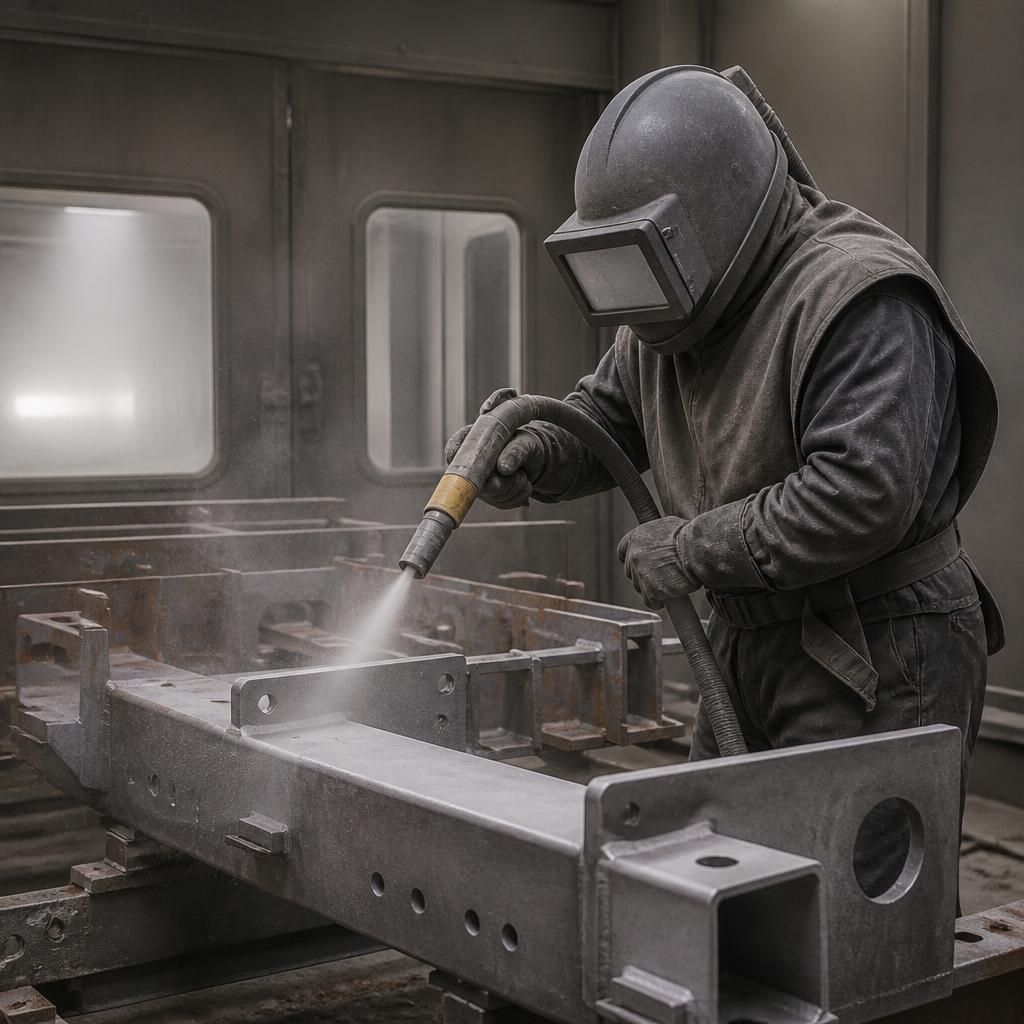
One important benefit of blast cleaning before powder coating is the removal of weak or incompatible material from the substrate. Old paint, loose corrosion products, mill scale and embedded production residue can separate from the metal under service conditions, taking the new powder coating with them or creating local defects.
By exposing sound metal and removing unstable layers, blasting gives the coating system a more dependable foundation. This is particularly useful when components are being refurbished or have been stored, handled or used before recoating. The prepared surface can then be assessed to determine whether further treatment is needed before powder application, rather than relying on the condition of an existing layer that may not be suitable for overcoating.