

What is the ideal temperature for curing powder-coated components?
The ideal curing temperature depends on the powder formulation and is set by the manufacturer’s technical data sheet, rather than by one universal oven temperature. The component must reach the specified metal temperature for the required time; oven air temperature and dwell time alone do not confirm a complete cure.
The ideal curing condition is the specific combination of metal temperature and time validated for the powder formulation and component being coated. Many industrial powders are specified within an approximate metal-temperature range of 160–200°C, but this should be treated only as general context; the powder manufacturer’s technical data sheet remains the controlling reference.
Why the metal temperature matters
Powder coating cures when the resin and curing agent react sufficiently to form a continuous, cross-linked film. The oven may be at the required setting while the component itself is still heating, particularly where the workpiece is thick, dense, or densely loaded. Conversely, thin sections can reach the target temperature quickly and may remain exposed to heat for longer than intended.
This is why cure schedules are normally expressed as a metal-temperature and time combination. For example, a specification may require a particular temperature to be maintained throughout the coating film for a defined period. The relevant duration begins when the coated metal has reached that temperature, not necessarily when the parts enter the oven.
Factors that affect the required setting
- Powder chemistry: epoxy, polyester and hybrid systems can have different cure windows and temperature requirements. Specialist protective or nylon coatings may require their own processing conditions.
- Component thickness: heavy sections absorb more heat and take longer to reach the required temperature than light-gauge parts.
- Part geometry: folded sections, enclosed areas, recesses and assemblies can heat differently from exposed flat surfaces.
- Metal type and mass: steel, aluminium and other substrates transfer heat at different rates, while large batches can alter airflow and heat distribution.
- Film thickness: an excessively heavy or uneven film can affect appearance and may indicate that application or curing conditions need review.
- Oven loading: overloading can restrict airflow and create cooler areas, even where the displayed oven temperature appears stable.
How the cure is verified
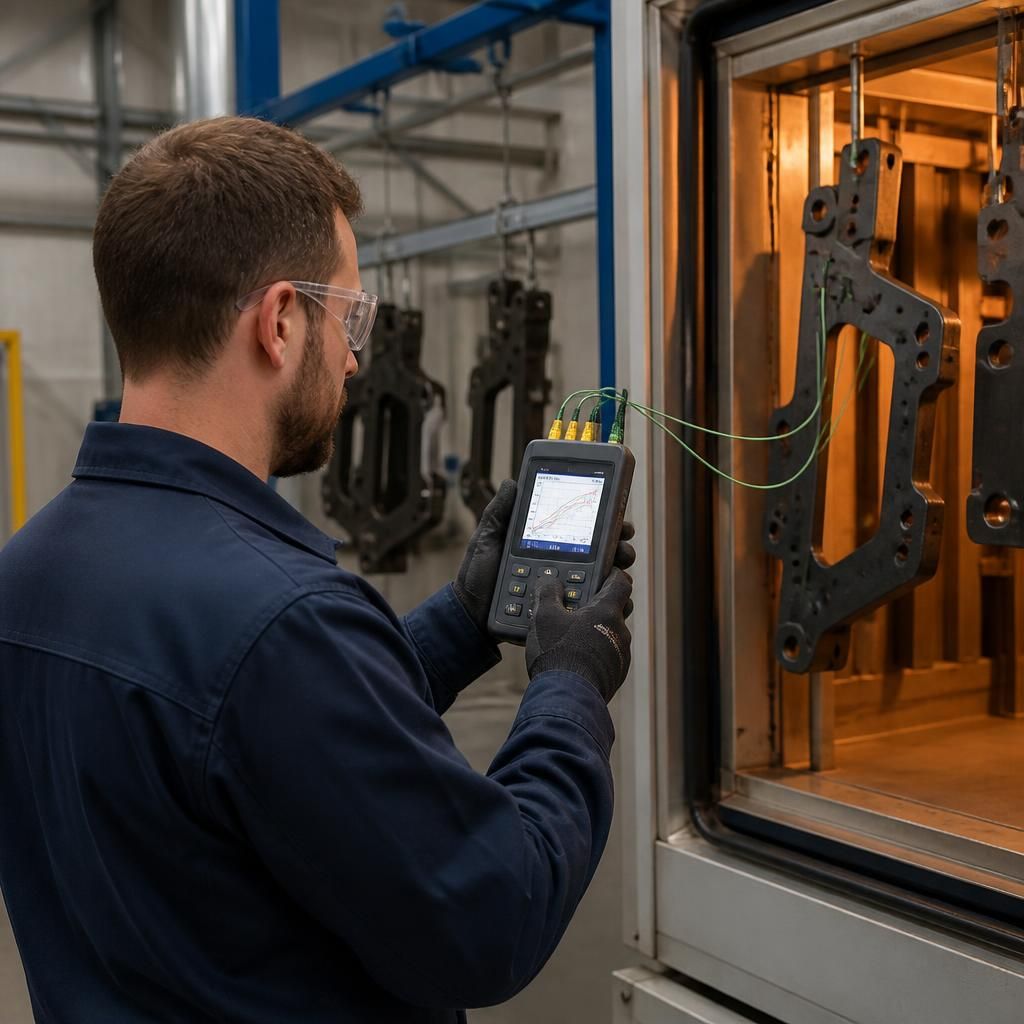
A reliable process uses temperature-recording equipment attached to representative parts or positioned at critical locations. The record should show the heating curve, the point at which the metal reaches the specified temperature, and the time it remains within the required cure range. Parts with the greatest thermal mass and the least favourable position in the oven are particularly important when selecting monitoring points.
Before production coating, a trial or validation run can identify cold spots, slow-heating sections and differences between part types. The oven should also be checked for temperature uniformity, airflow and control accuracy. A display reading alone does not show whether every component has experienced the same thermal cycle.
Signs of an incorrect cure
Under-curing can leave the coating softer or less chemically resistant than intended. It may show poor hardness, reduced adhesion, early marking or vulnerability to solvents and moisture. Over-curing can cause yellowing, colour variation, loss of gloss, brittleness or other changes in appearance, depending on the formulation.
These symptoms are not proof of a temperature problem by themselves. They can also result from contamination, inadequate preparation, incorrect film build, poor powder storage or unsuitable application settings. Investigation should therefore compare the recorded cure cycle with the powder specification and review the complete coating process.
Practical control points
- Confirm the correct powder specification and its approved cure schedule before coating.
- Identify the thickest and most thermally demanding components in the batch.
- Use calibrated temperature-monitoring equipment to establish the actual part temperature.
- Allow sufficient heating time before assessing the cure period.
- Record oven conditions and investigate any unusual colour, gloss, adhesion or hardness results.
- Keep different powder systems and component types under separate process controls where their requirements differ.
For batch and specialist work, the correct curing temperature is therefore a controlled process parameter rather than a universal oven setting. Matching the powder specification to the component’s thermal behaviour, then verifying the cycle with recorded metal-temperature data, provides the soundest basis for consistent finish quality and coating performance.
The ideal curing temperature must suit both the powder formulation and the complete component. Metal parts containing seals, inserts, bearings, adhesives or heat-sensitive masking materials may have a lower temperature limit than the coating requires, so their compatibility should be checked before processing.
Where the component cannot tolerate the powder’s specified cure schedule, simply reducing the oven setting is not a reliable solution. It may prevent the coating from developing its intended properties. The appropriate response may be to select a compatible powder system, modify the component before coating or agree a technically validated alternative process.
Discuss the ideal curing temperature for your components
Discuss your components and powder specification with our team to establish a suitable, technically controlled curing approach for your project. Providing details of the substrate, dimensions, batch requirements and any heat-sensitive parts will help inform the assessment.