

What distinguishes powder epoxy from other powder coating types?
Powder epoxy is distinguished by its strong adhesion, chemical resistance and corrosion protection, making it well suited to indoor metal components and applications where functional performance is the priority. Unlike polyester powders, which generally offer better resistance to outdoor UV exposure, epoxy can lose colour and gloss in sunlight; epoxy-polyester hybrids provide a balance of epoxy protection and improved appearance retention.
Powder epoxy is a thermosetting coating made from an epoxy resin and a curing agent. During oven curing, these components react to form a cross-linked film that cannot be melted and reshaped again. Its main distinction from other powder coating types is the balance of hardness, dimensional stability and resistance to many industrial substances, together with a finish that is generally intended for controlled indoor conditions rather than prolonged direct sunlight.
The term “epoxy powder” describes the resin system, not a single universal product. Formulations differ according to the required film thickness, curing schedule, colour, gloss level, flexibility and end use. A coating specification should therefore identify the precise powder and curing conditions rather than relying on the word epoxy alone.
How epoxy compares with the main alternatives
- Polyester powder: Polyester is commonly selected for components exposed to outdoor light because it normally retains colour and gloss more effectively than standard epoxy. It can also provide a useful balance of durability, appearance and flexibility for general external metalwork. Epoxy is more often chosen where the component is protected from weather and where functional film performance is more important than long-term appearance in sunlight.
- Epoxy-polyester hybrid: Hybrid powders combine epoxy and polyester resins. They sit between the two systems, offering some of the functional characteristics associated with epoxy while improving appearance retention compared with a pure epoxy formulation. Hybrids are frequently considered for indoor equipment, furniture, electrical enclosures and general fabricated components where both finish quality and practical protection matter.
- Polyurethane powder: Polyurethane systems can provide a smooth decorative finish and useful resistance to weathering and chemicals, depending on the formulation. They may be specified where appearance, surface smoothness and outdoor service are important, although the correct choice depends on the operating environment and the required curing process.
- Acrylic powder: Acrylic systems are used for particular decorative or specialist requirements. They can offer good appearance and weathering characteristics, but they are not automatically the best option for heavy-duty industrial components. The coating must be assessed against the expected mechanical, chemical and environmental exposure.
Finish and appearance are important practical differences. Epoxy powders are available in different colours, gloss levels and textures, but exposure to ultraviolet light can cause a visible change in colour or gloss over time. This does not necessarily mean the film has immediately lost all of its functional properties; it means the visible finish is no longer the best match for applications where appearance must remain stable outdoors. For interior components, this limitation may be irrelevant. For external items, a polyester or another weather-stable system is usually investigated instead.
Epoxy can produce a hard, uniform film when the part is correctly prepared and cured. That makes it suitable for many fabricated metal components, machinery parts, cabinets, brackets, fixtures and other items used indoors. However, hardness should not be confused with unlimited impact resistance. A very hard film may be less tolerant of sharp deformation than a more flexible formulation, so the likely handling, assembly and service conditions should be considered before specifying the powder.
The curing response also differs between powder types. Each product is designed around a particular combination of metal temperature, time and film thickness. The relevant temperature is normally the temperature reached by the component, not simply the air temperature displayed by the oven. If the metal does not reach the required curing condition, the film may not develop its intended properties. Excessive heat or an unsuitable dwell time can affect colour, gloss, texture or the substrate. Epoxy therefore cannot be selected in isolation from the available curing equipment and the component’s mass, geometry and thermal behaviour.
Part design can influence the result as much as resin selection. Recesses, joints, folded edges, weld areas and enclosed sections may receive powder differently from broad external faces. Contamination, oil, mill scale, rust or poorly prepared welds can also prevent the coating from forming a consistent film. The preparation method, masking requirements, hanging points and target film thickness should be agreed before production, particularly for batches containing parts with different shapes or metal thicknesses.
Epoxy is often the appropriate choice when:
- the component will be used mainly indoors;
- the coating needs to withstand contact with relevant industrial substances;
- the priority is a functional, hard-wearing film rather than long-term colour stability in sunlight;
- the part requires a controlled, consistent finish on prepared metal; or
- the component forms part of equipment, plant or fabricated assemblies operating in a sheltered environment.
A different powder type may be more appropriate where the component is continuously exposed to ultraviolet light, substantial weathering, repeated flexing, abrasive contact or a particularly demanding chemical environment. In those cases, the decision should be based on the powder manufacturer’s technical data, the exposure conditions and any relevant performance specification, rather than on a general assumption that one resin type is superior in every situation.
For a coating project, useful information includes the metal type, component dimensions, intended location, expected exposure, colour and gloss requirements, contact with chemicals, assembly tolerances and any specified curing restrictions. This allows the coating system to be matched to the part instead of selecting epoxy simply because it is a familiar powder category. Industrial powder coating specialists can use those details to assess whether epoxy, polyester, a hybrid or another formulation is technically suitable before processing a batch.
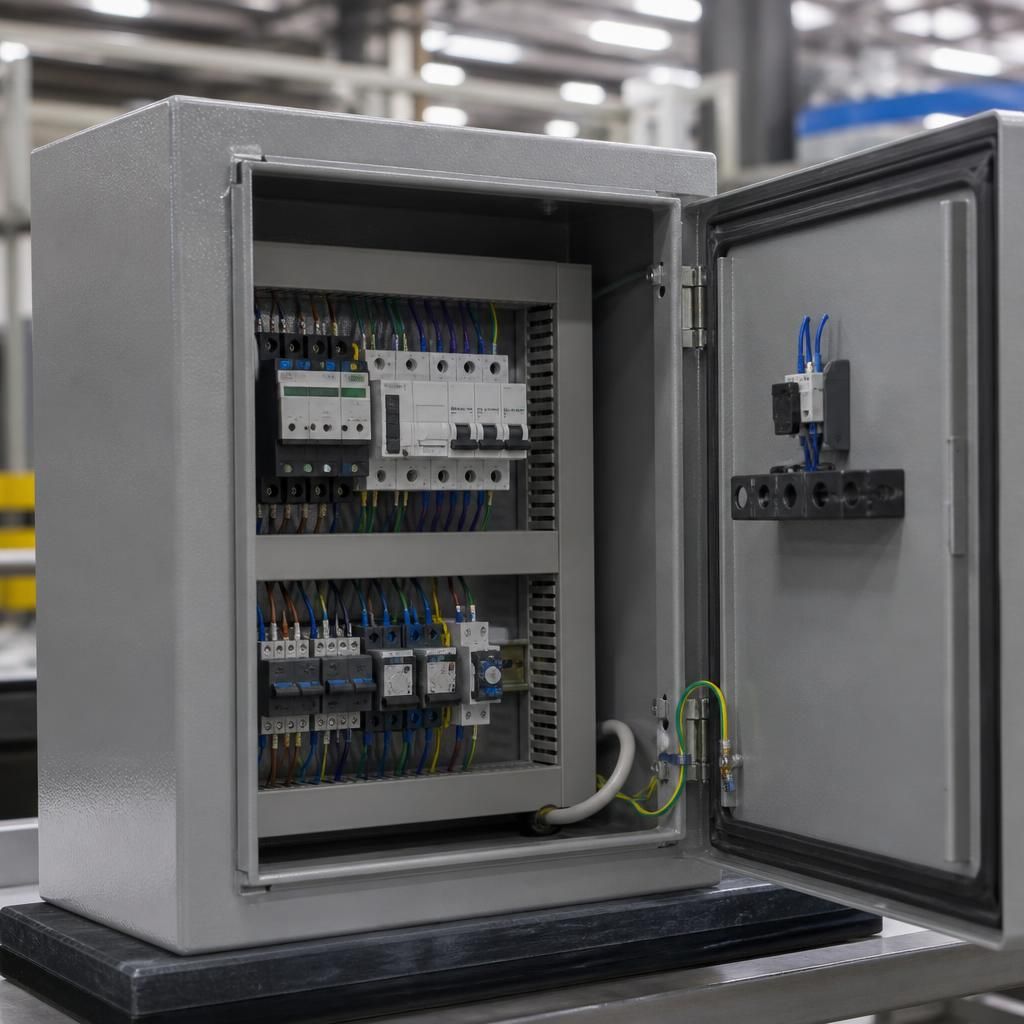
One additional distinction is that some powder epoxy formulations are specified for electrical insulation as well as corrosion protection. The cured film can separate conductive metal surfaces, but insulating performance is not an automatic property of every epoxy powder. It depends on the formulation, film continuity, thickness, component geometry and the electrical conditions involved.
Where insulation is important, the coating specification should identify the required electrical performance alongside colour, gloss and curing requirements. Edges, threaded areas, mounting points and uncoated contact zones may need careful control because a small discontinuity or incorrectly coated interface can affect the component’s function. The relevant technical data should therefore be checked before selecting epoxy for electrical enclosures, housings or other metal parts with insulation requirements.
Discuss the right powder epoxy specification
Provide details of the component, operating environment, chemical exposure and required finish so the appropriate powder epoxy specification can be assessed. The coating team can then review the resin system, film requirements and curing conditions for your project.