

What are the environmental considerations and benefits associated with choosing powder coating over traditional painting methods for metal components?
Powder coating can reduce the environmental impact of finishing metal components compared with traditional liquid painting because it uses dry powder, produces very low volatile organic compound (VOC) emissions and allows overspray to be collected for potential reuse. It also avoids many solvent-related concerns, although the curing oven requires energy and the overall impact depends on efficient application, recovery and responsible waste management.
Powder coating can offer a lower-impact finish for metal components than traditional liquid painting, particularly where the coating system is applied efficiently, overspray is recovered and waste is controlled. Its main environmental advantages are reduced airborne emissions during application, limited coating material loss and a durable finish that can reduce the need for repeated refinishing. These benefits should be assessed alongside the energy used for curing, surface-preparation requirements and the way waste is handled.
How powder coating can reduce environmental impact
- Lower emissions during application: Powder coating is applied without the liquid solvents used in many conventional paint systems. This can reduce the release of volatile organic compounds and the associated need to manage solvent vapours.
- More efficient material use: Unattached powder can often be collected through the booth recovery system. Depending on the coating specification and contamination level, recovered material may be suitable for reuse. This reduces the quantity of unused coating requiring disposal, although powder from different colours or formulations cannot always be mixed or reused.
- Less solvent-related waste: Liquid painting commonly involves paint residues, solvent cleaning materials, contaminated containers and equipment-washing waste. Powder application avoids much of this particular waste stream, but it still requires controlled handling of used filters, sweepings and contaminated powder.
- Durable protection: A correctly specified finish can help metal components resist corrosion, abrasion and weathering. Extending the usable service life of a component may reduce the environmental burden associated with replacement manufacture, transport and further finishing.
The comparison with liquid paint is not limited to the coating material itself. A meaningful assessment should consider the complete finishing process, including preparation, application, curing, rejected parts, packaging, transport and eventual disposal or recycling of the coated component.
Energy use and curing
Powder coating requires heat to cure the applied film, so the curing oven is an important part of the environmental assessment. Energy demand is affected by the oven design, insulation, loading pattern, line settings, component mass and the curing schedule required by the chosen powder. Heating a partially loaded oven or using unsuitable settings can increase energy use without improving the finished coating.
Efficient production planning can therefore support the environmental advantages of powder coating. Appropriate batch sizes, correct oven loading and accurate temperature control help avoid unnecessary processing. Components should not be over-cured, as this can waste energy and may affect the coating’s performance. The required cure should be determined from the powder manufacturer’s technical requirements and the component specification.
Surface preparation and water use
Preparation is essential for adhesion and corrosion protection, but it can introduce its own environmental considerations. Degreasing, rinsing, chemical pretreatment and abrasive cleaning may generate wastewater, spent chemicals, sludge or used abrasive media. These materials need to be segregated, stored and disposed of in accordance with applicable requirements rather than released untreated.
For this reason, powder coating should not be judged only by the absence of liquid paint solvents. The selected preparation method, chemical controls, rinse-water management and condition of the metal all influence the overall impact. Removing oil, rust, scale and other contaminants effectively also helps prevent rejects and rework, which would consume additional materials and energy.
Waste, recovery and contamination control
Powder recovery is most effective when coating colours and formulations are managed carefully. Overspray contaminated with dust, oils or another powder may no longer be suitable for reuse. Similarly, mixed-colour waste can be difficult to return to a consistent finish. Collection systems, booth maintenance and appropriate segregation help maximise recoverable material and reduce disposal.
Waste controls should cover more than excess powder. Filters, protective coverings, packaging, masking materials and failed or damaged components may all require consideration. A responsible finishing process keeps these streams identifiable and uses recycling or authorised disposal routes where reuse is not practical. Rework should also be investigated because recurring defects may indicate problems with preparation, application, curing or handling.
Health and workplace considerations
Powder coating removes many solvent exposure concerns associated with liquid paint, but powder is not harmless simply because it is dry. Fine particles should be controlled through suitable extraction, housekeeping, storage and personal protective equipment. The relevant safety information for the powder and pretreatment chemicals should guide handling, spill response and disposal procedures.
Environmental and occupational considerations are closely connected. Effective extraction helps control airborne powder, while disciplined cleaning reduces the risk of material entering drains or surrounding areas. Powder residues and chemical containers should be managed as controlled process waste where required by their composition.
Product design and end-of-life factors
The environmental value of a coated component also depends on what happens after use. A durable finish may support longer service, repair or refurbishment, but the coating can affect how the metal is processed at end of life. Powder-coated metal is generally still recyclable as a metal product, although recycling operators may need to account for the coating and any attached materials.
Designers can support better outcomes by specifying only the performance and film characteristics needed for the application, avoiding unnecessary rework and selecting a finish compatible with the component’s expected service conditions. They should also consider whether the item may later need stripping, recoating, repair or separation from other materials.
Questions to consider when comparing finishing methods
- What emissions and waste are generated by the complete process, including preparation and cleaning?
- How is unused or contaminated powder collected, segregated, reused or disposed of?
- What energy is required for curing the actual component and batch?
- Are pretreatment chemicals, rinse water and sludge managed through suitable controls?
- How often is the component likely to need repair, recoating or replacement?
- Will the chosen coating support the component’s intended service life and eventual recycling route?
For manufacturers and fabricators, the most defensible choice is therefore not simply “powder rather than paint”. It is a coating specification and production method that balances emissions, material efficiency, curing energy, preparation impacts, durability and end-of-life handling. Powder coating can provide clear environmental benefits over traditional painting when those factors are managed as part of the complete finishing process.
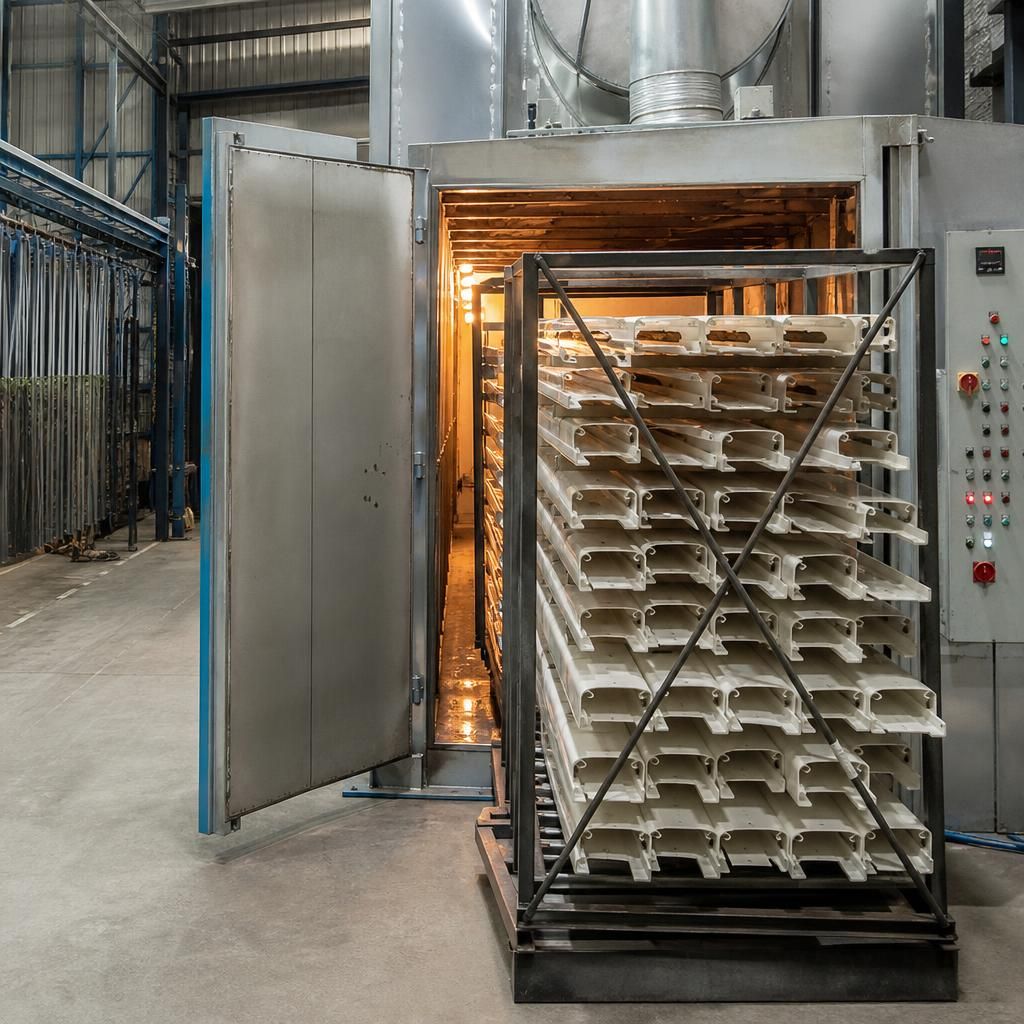
The environmental balance of powder coating depends partly on how efficiently the curing oven is used. Processing compatible components together can make better use of the heated chamber than running several small, poorly planned loads, while accurate loading prevents energy being spent on unused space. The required cure schedule should still follow the powder specification, as reducing temperature or cure time without technical justification can cause defects and lead to rework.
For this reason, an environmental comparison should consider the coating’s performance requirements alongside its application method. A finish that cures correctly in a well-planned production cycle can avoid unnecessary repeat processing, helping limit additional energy use, material consumption and waste.
Assess powder coating for your metal components
Discuss your metal components, service environment and finish requirements with Powder-coatings.co.uk to assess whether powder coating is an appropriate lower-impact alternative to traditional painting. The team can help establish a suitable coating specification for your application.