

How does powder coating improve the longevity of metal components?
Powder coating improves the longevity of metal components by forming a tough, evenly bonded finish that helps protect the substrate from corrosion, abrasion, impact and weathering. This durable protective layer reduces surface deterioration and helps components retain their functional performance and appearance for longer.
Powder coating improves the service life of metal components by combining a correctly prepared surface with a cured polymer film that remains firmly attached during use. Its contribution to longevity depends not only on the powder itself, but also on surface preparation, coating selection, film thickness, curing and the conditions in which the component will operate.
Adhesion is the foundation of long-term performance. Oils, grease, mill scale, rust, moisture and other contaminants can prevent the coating from bonding properly. Cleaning and, where appropriate, abrasive preparation create a sound surface for the powder to adhere to. This reduces the likelihood of peeling, flaking or localised coating failure, which can expose the underlying metal and allow deterioration to begin.
The coating also separates the metal substrate from moisture and other contaminants that may reach its surface during service. Where the component is exposed to demanding conditions, the powder chemistry should be selected for the relevant environment rather than chosen solely for its colour or appearance. Industrial, exterior, chemical or high-contact applications may require different performance characteristics.
Correct application and curing are equally important. The powder must be deposited consistently over the component, including faces, recesses and edges where practical. It is then heated so that the particles melt, flow together and cure into a continuous film. Insufficient or excessive curing can affect the coating’s final properties, while uneven application can leave weak areas. Controlled processing therefore helps produce a finish with more consistent performance from one component to the next.
Longevity is also affected by the design and condition of the metal part. Sharp corners, enclosed sections, drainage points and areas that trap water can create additional risks if they are not considered before coating. Components should be designed, prepared and handled in a way that avoids damaging the finish before installation. Scratches, drilled holes, cut edges and contact points may need particular attention because local damage can become the starting point for wider coating failure.
For high-use components, powder coating can reduce the frequency of remedial work by providing a finish that withstands ordinary handling and service conditions without requiring repeated repainting. However, it is not a substitute for selecting the correct coating system or maintaining the component in a suitable environment. Regular inspection can identify chips, contamination or damage early, allowing the affected area to be assessed before the metal beneath is compromised.
When specifying a coating for a production run, the most important considerations include:
- the type and condition of the metal substrate;
- the preparation method needed to establish a clean, bondable surface;
- the component’s exposure to moisture, chemicals, heat, handling and contact;
- the required coating type and film build;
- the curing requirements for the selected powder;
- the geometry of the part, including edges, recesses and areas that may retain moisture; and
- how the coated component will be packed, transported, installed and maintained.
For manufacturers and fabricators, these factors make powder coating a process decision rather than simply a final decorative treatment. Matching the coating system and preparation standard to the component’s working conditions gives the finish a better basis for long-term service and helps protect the value of the finished metal part.
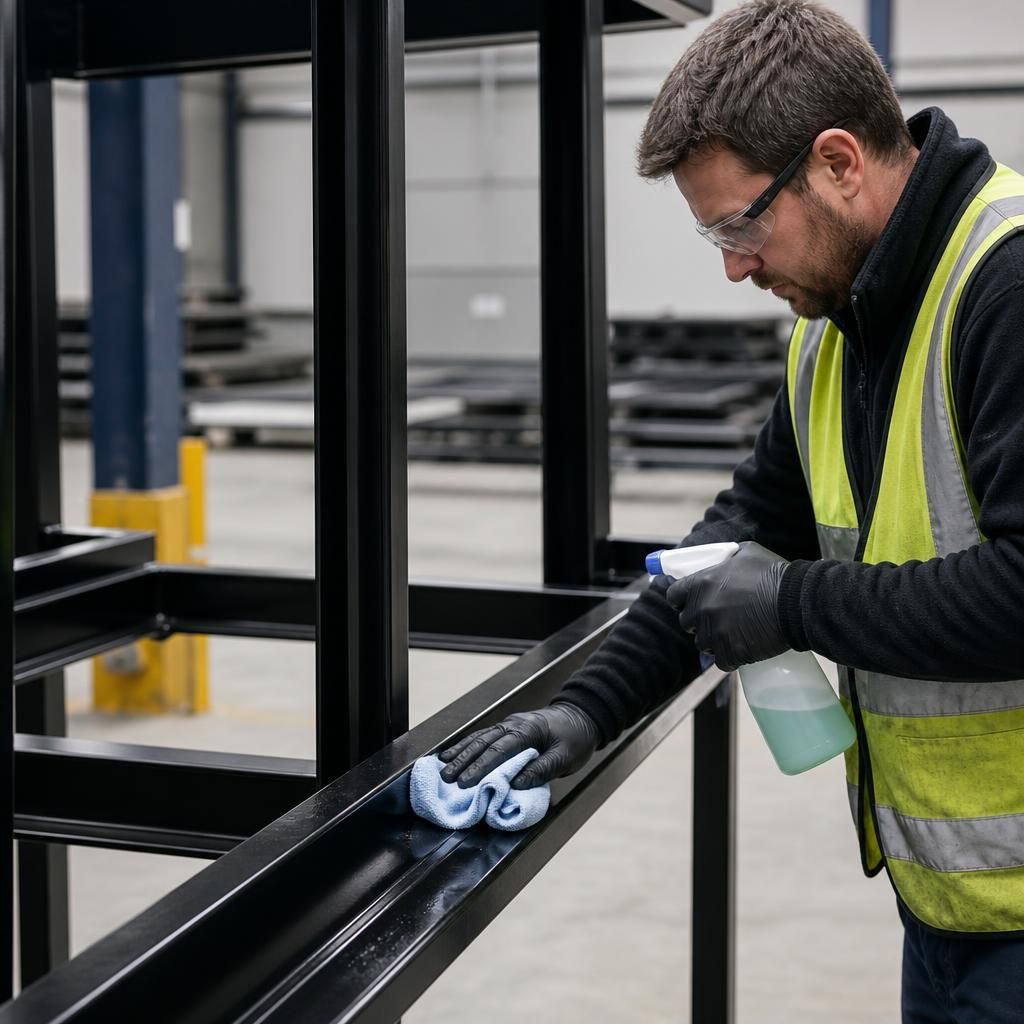
Routine cleaning helps preserve the coating’s protective properties throughout the component’s service life. Dust, road film, salts and industrial deposits can retain moisture against the surface or introduce chemicals that gradually weaken the finish, particularly in exposed or high-use applications. Removing these deposits reduces the time they remain in contact with the coating and makes early damage easier to identify.
Cleaning should be matched to the coating system and the type of contamination. A suitable mild detergent, clean water and non-abrasive equipment are generally preferable to aggressive solvents, harsh chemicals or abrasive tools, which may mark or degrade the surface. Areas around fixings, joints and contact points deserve particular attention because deposits and minor damage can be harder to see there. Good cleaning practice does not replace correct preparation or coating selection, but it helps the cured finish continue performing as intended.