

What logistical considerations should be taken into account when planning for powder coating services, particularly in terms of collection and delivery options?
Plan collection and delivery around the workpiece dimensions, weight, quantity, loading access and required coating sequence. Confirm packaging, collection and delivery addresses, site access restrictions, handling requirements and agreed delivery dates in advance so parts can be transported safely and received ready for processing or installation.
Logistical planning for powder coating involves coordinating transport, preparation, processing and return delivery so that metal components arrive in a suitable condition, move through the coating process in the correct order and can be received safely at their destination. Collection and delivery arrangements should therefore be agreed alongside the technical coating requirements, rather than treated as a separate task.
Choose the most suitable transport arrangement. A single collection and return delivery may be appropriate for a straightforward batch, while larger or ongoing projects may need staged movements. Staggered collections can help prevent finished and unfinished parts from becoming mixed, particularly where components are being processed in several batches or supplied from more than one manufacturing stage. Confirm whether the quotation covers collection, delivery, both movements or transport arranged independently by the customer.
Coordinate transport with the production sequence. Powder coating may form one stage within a wider manufacturing or installation programme. Parts should be collected only when fabrication, welding, machining and any required pre-treatment work have been completed. The return delivery should then be planned around inspection, assembly or installation. If some components require masking, plugs, threaded protection or different coating specifications, identify these before transport so the batch can be organised correctly on arrival.
Provide accurate collection and delivery information. The coating provider and carrier may need more than a postcode. Supply the full site address, a named site contact, delivery instructions, restrictions on vehicle access, loading arrangements and any booking procedure required by the receiving site. Industrial estates, construction sites and manufacturing premises may have separate goods-in areas or restrictions on vehicle size and arrival routes. These details should be confirmed before collection so that the planned vehicle and handling method are suitable.
Protect components during transit. Coating work can be affected by damage, contamination or contact between parts before processing. Use suitable stillages, pallets, crates or separators, depending on the shape and vulnerability of the items. Small components should be grouped in clearly identified containers rather than left loose, while finished surfaces should be protected from rubbing, impact and moisture. Packaging should also allow parts to be unloaded and inspected without unnecessary handling.
Packaging requirements after coating can differ from those before coating. Newly finished components may need additional separation to prevent scuffing, marking or edge damage on the return journey. Agree whether the coating provider will supply return packaging, reuse customer-owned stillages or return components in the original transport equipment. If packaging is to be reused, establish how it will be identified and moved between sites.
Use clear identification and documentation. Each batch should be traceable to the relevant purchase order, drawing, job reference or delivery note. Labels should remain legible during handling and should distinguish between different parts, colours, finishes or processing instructions. Include a packing list that records the quantity and description of each item, with any missing, damaged or partially completed components noted before dispatch.
For projects involving multiple finishes, separate the loads or use clear batch-level labelling. This reduces the risk of parts being coated to the wrong specification or returned to the wrong production area. Drawings and written instructions should identify areas that must remain uncoated, together with any masking or protection requirements.
Consider loading and unloading responsibility. Confirm who supplies the vehicle, who loads and secures the goods, and who provides lifting equipment at each location. Some components may require mechanical handling rather than manual unloading. The receiving site should ensure that the agreed equipment and personnel are available when the vehicle arrives. Any requirement for tail-lift access, forklift handling or specialist lifting should be stated before the collection is booked.
It is also sensible to agree what happens if goods cannot be collected or delivered as planned. Establish who must be contacted, whether the load can be held safely, and how a revised movement will be authorised. This is particularly important where components are needed for a scheduled installation or where a failed delivery could result in additional transport or handling charges.
Build the coating stages into the transport plan. Some projects involve preparation, coating, inspection and more than one finish or colour. Transport should not be arranged on the assumption that every item will follow an identical route through the facility. Ask the coating provider to confirm the planned sequence, any separation required between batches and whether parts should be delivered in a particular order for processing.
For businesses in the Midlands and surrounding areas, a regional powder coating provider may be able to discuss collection and delivery as part of the overall job arrangement. When requesting a quote, provide the proposed movement details at the same time as the coating specification. This allows transport, handling, packaging and processing requirements to be considered together and gives both parties a clearer basis for agreeing the scope of work.
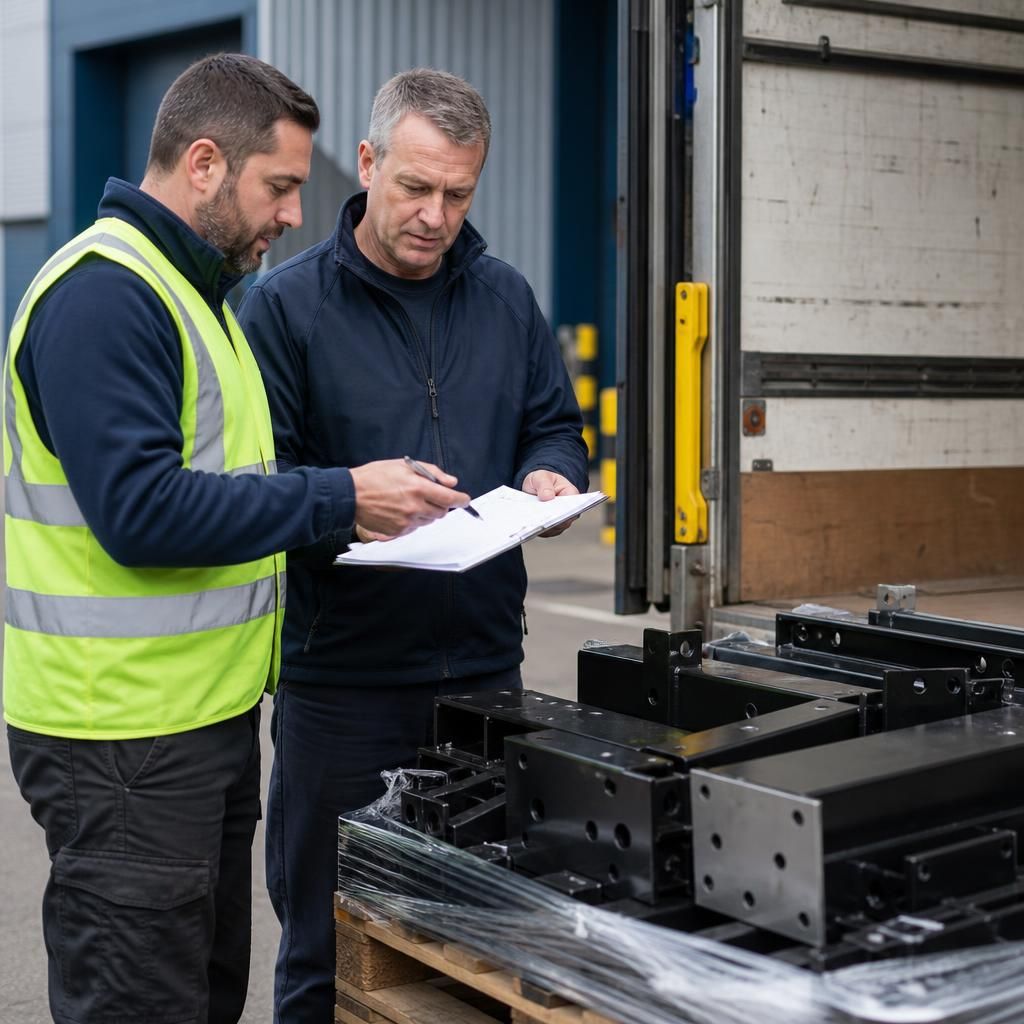
Condition checks at collection and delivery provide a clear record of responsibility for the components. Before loading, the sender and carrier should confirm the quantity, visible condition and any existing damage, particularly on items with machined edges, exposed threads or delicate profiles. Any exceptions should be recorded on the collection documentation rather than left for later clarification.
On return, the receiving team should inspect the consignment before signing for it. Check that the number of items agrees with the delivery note and look for movement, impact marks, moisture or damage to the finished surfaces. Separating transport damage from a coating issue is easier when the pre-collection condition and delivery condition have both been documented.