

What is the typical lead time for powder coating services?
There is no single standard lead time for powder coating services, as the schedule depends on surface preparation, batch size, coating specification and current production requirements. A specialist can confirm the expected timeframe once the component details, quantities and collection or delivery arrangements have been assessed.
A typical powder coating lead time is confirmed on a project-by-project basis rather than taken from a universal industry standard. The quoted period should identify when the parts are expected to enter production, when coating and inspection are due to be completed, and whether transport is included in the agreed schedule.
In practice, the lead time covers more than the application of powder. A job may pass through several stages:
- review of the drawings, component condition, finish requirements and quantity;
- booking the work into the production schedule;
- receipt, identification and inspection of the metalwork;
- cleaning and preparation of the surfaces;
- masking or plugging areas that must remain uncoated;
- powder application and oven curing;
- visual and dimensional checks, followed by suitable packing; and
- collection or delivery of the completed parts.
The time allocated to each stage can vary considerably. Components requiring extensive preparation, repair or the removal of an existing finish may need additional handling before they are suitable for coating. Fabrications with enclosed sections, threaded holes, moving interfaces or tight tolerances can also require more preparation and inspection than straightforward flat or open components.
Quantity affects scheduling in more than one way. A larger batch may need to be processed in planned runs, while a mixed batch containing different colours, finishes, component sizes or masking requirements may require separate setup arrangements. Parts also need to be compatible with the available hanging, handling and curing process. Confirming how the components will be presented and grouped helps the coater establish a realistic production slot.
Specialist requirements should be identified before the lead time is agreed. Nylon coatings, protective systems and other non-standard finishes may involve particular preparation methods, application controls or inspection criteria. The same applies where a project requires a specified gloss level, texture, colour match, film build, edge coverage or restricted coating on selected areas. Late changes to these requirements can result in the work being reassessed and rescheduled.
For a dependable estimate, provide accurate information at the enquiry stage. Useful details include:
- the number and dimensions of each component;
- the metal type and current surface condition;
- drawings or photographs showing critical areas;
- the required colour, texture, gloss and coating system;
- any masking, plugging, racking or tolerance requirements;
- whether the parts are new, previously coated, contaminated or corroded; and
- the preferred handover arrangements and any site constraints.
It is also important to agree what starts the lead-time clock. Depending on the project, the start point may be acceptance of the specification, approval of a colour or sample, receipt of the components, or confirmation that all technical information is complete. If these points are not defined, the quoted period can be misunderstood.
Transport should be considered separately from the coating operation. Collection and delivery introduce requirements for access, loading, packaging, component protection and the number of vehicle movements. Large or awkward fabrications may need special handling, and inadequate packaging can create damage or inspection issues even where the coating itself has been completed correctly.
Where a project has a fixed installation or manufacturing date, allow time for checking the finished parts before they are put into service. This provides an opportunity to identify damage, missing masking, colour discrepancies or dimensional issues and to resolve them before the components reach the next stage of the build.
The most useful lead-time question is therefore not simply how many days the coating will take. Ask for a schedule that separates technical review, preparation, coating, inspection and transport, and confirm which assumptions the schedule depends on. A Midlands powder coating specialist can then assess the job details and provide a timeframe that reflects the actual components and agreed finish.
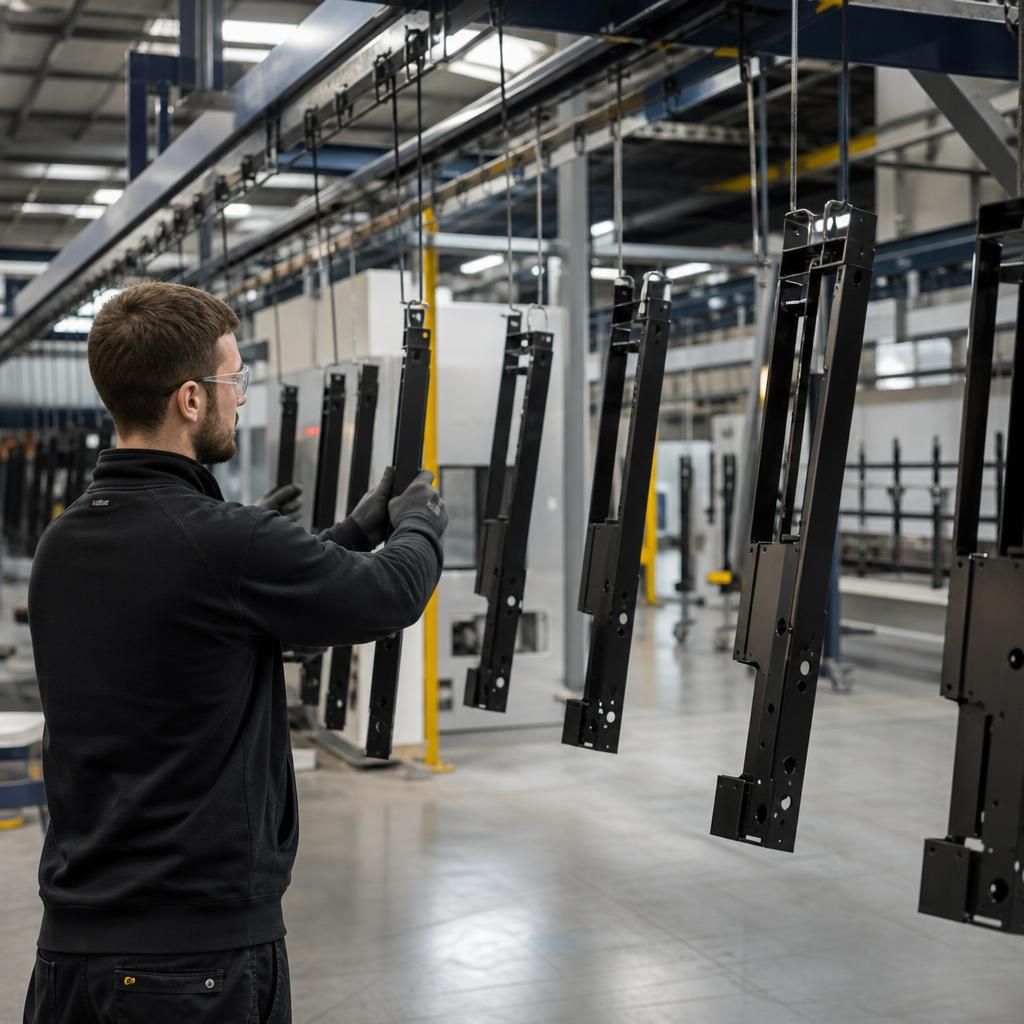
Lead time is the elapsed period from the agreed project start point to completion and handover; it is not the same as the time spent spraying and curing the powder. A job may require only limited processing once it reaches the line, but the overall schedule also includes production planning, preparation, inspection and transport.
When coordinating powder coating with a manufacturing or construction programme, use the confirmed lead time as the date range for the complete service. Build the coating stage into the wider project plan rather than setting the deadline from oven time alone. This helps account for the movement of parts between operations, internal checks after return and any approvals needed before the coated components can be installed or assembled.