

What factors influence the cost of powder coating services?
The cost of powder coating services is influenced by the size and complexity of the metal parts, order volume, surface preparation required, powder specification, finish, masking and handling needs. Collection and delivery requirements, along with any specialist coating or additional preparation, can also affect the final quotation.
The cost of powder coating is determined by more than the coating material itself. A quotation usually reflects the work required to prepare, load, coat, cure, inspect and return the components, together with the specification and commercial requirements of the project.
How the job is priced
Coaters may assess a job by component, batch, surface area, weight or the amount of production time involved. A minimum charge may apply where a small order still requires the same preparation, equipment setup and handling as a larger one. This means that the cost per part is not always directly proportional to its physical size.
The way components are presented can also affect the quotation. Parts supplied in a consistent, production-ready format are generally easier to process than mixed items requiring separate identification, sorting or individual assessment. Drawings, part numbers and a clear quantity breakdown help the coater establish the actual scope of work.
Production setup and oven utilisation
Powder coating requires components to be positioned on suitable racks or fixtures and processed through a curing oven. The available oven space, the way parts can be arranged and the required curing conditions may all influence production time. Components that cannot be grouped efficiently may use equipment less economically than a uniform batch, even where the coating operation itself is straightforward.
Some projects also require dedicated jigs, additional fixtures or a particular loading arrangement. These setup requirements can add preparation time and may be reflected as a separate cost or as part of the overall processing charge.
Quality requirements and inspection
The required standard of finish affects the amount of checking needed before components are released. A general protective finish has different inspection requirements from a project with tightly defined appearance criteria, specified coating thickness, edge coverage requirements or documented acceptance standards.
Where a customer requires inspection records, batch identification, coating certificates, test results or other quality documentation, the additional administration and testing can influence the price. These requirements should be agreed before work starts rather than introduced after coating has been completed.
Specification and acceptance criteria
The quotation should identify what constitutes an acceptable result. For example, the parties may need to agree how visible faces will be assessed, which areas are non-visible, how minor surface variation will be treated and whether the finish is primarily decorative, protective or both. More precise acceptance criteria can require additional inspection and may reduce the scope for using a standard production approach.
Samples or a first-off approval may also be appropriate for repeat work. Although this can add an initial step, it helps establish the agreed appearance and reduces the risk of disagreement or avoidable rework later.
Risk of rework and rectification
Rework is a significant cost consideration because a defective or damaged component may need to be assessed, stripped, prepared again and recoated. The cost may be higher where the part has already been assembled, where the original coating is difficult to remove, or where the problem is found only after delivery or installation.
A clear specification, suitable packaging and agreement on inspection responsibility can reduce uncertainty around rectification. If a component has been manufactured with features that make coating unsuitable or difficult, resolving that issue before production is usually more economical than correcting it afterwards.
Packaging and presentation for return
Finished components need protection against scratching, impact and contamination during handling and transport. The packaging method may depend on the geometry, weight, fragility and required presentation of the parts. Reusable stillages, separators, protective wrapping or bespoke packing arrangements can add to the project cost, particularly where components must arrive ready for direct assembly or installation.
Commercial and material considerations
Powder type, colour and finish form part of the technical specification, but the commercial effect can also depend on material availability, order quantities and whether a particular product has to be sourced specifically for the project. Energy, labour, consumables and equipment costs also contribute to the quotation and can change over time.
For that reason, a quote should be checked for its validity period, what is included, and which activities would be charged separately. It is also useful to confirm whether the price covers inspection, packaging, documentation, remedial work and transport, rather than assuming these are included automatically.
Information that supports an accurate quotation
- Component drawings or clear photographs showing the relevant features.
- Material type and any existing coating or treatment.
- Part dimensions, approximate weight and the number of items.
- Required coating specification and appearance criteria.
- Areas that must remain uncoated, including threads, bores, contact points and earth points.
- Any inspection, testing, certification or traceability requirements.
- Packaging, assembly and return requirements.
Providing this information allows the coater to separate unavoidable processing costs from optional requirements. It also makes quotations easier to compare, because a lower initial price may not represent better value if preparation, inspection, packaging or remedial work has been excluded.
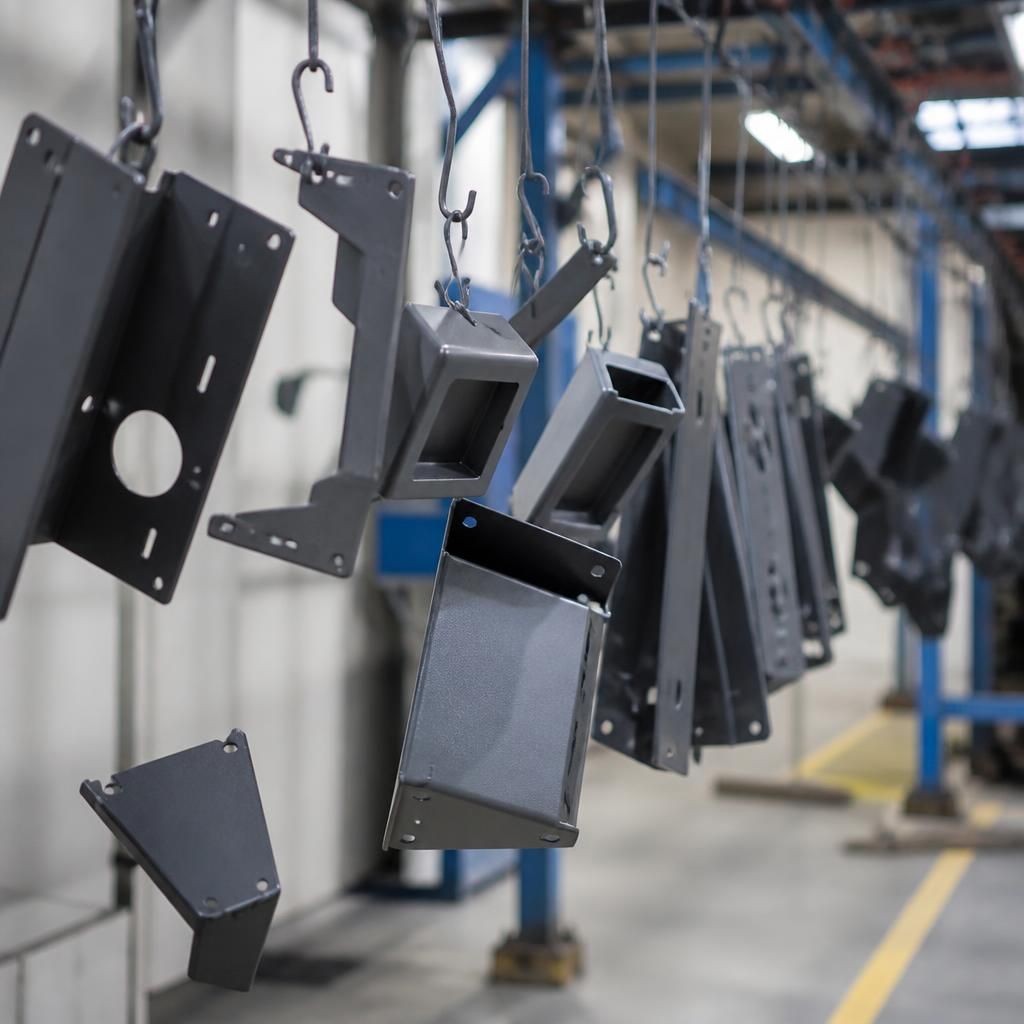
Part geometry can influence the cost of powder coating because the shape determines how easily the component can be cleaned, hung, coated and cured. Deep recesses, narrow gaps, enclosed sections and sharp internal corners may require different racking or application techniques, while hollow fabrications may need suitable venting and drainage to support safe processing.
Complex geometry can also increase handling and inspection time, particularly where powder coverage is difficult to assess or where certain faces must be protected from coating. Supplying accurate drawings or photographs helps the coater identify these features before pricing and determine whether additional fixtures, masking or processing steps are needed.