

How do the specific surface preparation techniques used impact the overall cost and quality of powder coating?
Surface preparation directly affects both powder coating cost and finish quality: thorough cleaning, degreasing, blasting or chemical treatment helps the powder bond correctly and resist corrosion, while inadequate preparation can cause defects and premature failure. The most suitable technique depends on the metal, existing surface condition, component size and required performance, so preparation requirements should be assessed when costing the work.
Surface preparation is the set of operations used to remove contaminants, deal with existing corrosion or coatings, and create a surface profile that allows powder coating to adhere and perform correctly. Its effect on cost comes from the labour, equipment, materials and handling required; its effect on quality is seen in adhesion, corrosion resistance, appearance and service life.
The correct process is determined by the substrate and its condition rather than by a single standard treatment. New steel, previously painted fabrications, galvanised components and aluminium each present different preparation requirements. A component with light contamination may need only cleaning, whereas rust, mill scale, weld residues or an incompatible coating may require mechanical or chemical treatment before coating can begin.
- Degreasing and cleaning: Alkaline or solvent-based cleaning removes oil, grease, fingerprints and manufacturing residues. This is often an essential first stage, because blasting or coating over contamination can spread the defect rather than remove it.
- Abrasive blasting: Grit or shot blasting removes rust, scale and old coatings while producing a controlled surface profile. It can provide a strong mechanical key, but adds preparation time and requires suitable containment, media handling and protection of areas that must remain uncoated.
- Mechanical preparation: Grinding, sanding or wire brushing may be appropriate for localised rust, weld spatter, sharp edges and minor surface defects. It can be cost-effective for limited areas, but is less consistent than blasting across complex or heavily contaminated components.
- Chemical pre-treatment: Processes such as phosphate or conversion treatment can improve adhesion and provide additional corrosion protection. They involve chemical control, rinsing and drying, so their cost depends on the component, required specification and process complexity.
- Preparation for galvanised or previously coated metal: These surfaces may need specialised cleaning, profiling or removal of unsuitable material. If preparation is too aggressive it can damage the substrate or remove useful protection; if it is insufficient, the new coating may fail to bond properly.
Preparation also affects the visual result. Powder coating will not conceal deep pitting, weld irregularities, grinding marks, sharp edges or dents. Where appearance is important, the preparation stage may therefore include edge treatment, weld dressing and additional surface correction. These operations increase the cost before coating takes place, but can prevent a finish that is technically sound yet visibly unacceptable.
Component design influences preparation time as well. Hollow sections, recesses, threaded holes, folded returns and narrow internal areas are harder to clean, blast and dry consistently. Components may need drainage holes, special handling or masking to prevent trapped solution, abrasive or powder in areas where it could cause later problems. Small parts supplied in large batches may be efficient to process, while awkward individual items can require more manual handling and inspection.
Over-preparation can raise costs without improving the finished result. For example, an aggressive blast specification may be unnecessary for a sound surface that only requires cleaning and light profiling. Conversely, reducing preparation to save on the initial quotation can create additional costs through stripping, rework, replacement components or repeated transport. The economical approach is not always the shortest preparation route; it is the route that matches the substrate, exposure conditions and finish specification.
Preparation standards should be agreed before work starts, particularly where components will face moisture, chemicals, abrasion, outdoor exposure or frequent handling. Useful information includes the base metal, any existing coating, the intended environment, required appearance, critical dimensions and areas that must not receive treatment or powder. Drawings and photographs can help identify masking, access and handling issues before the process is priced.
Quality control should cover the prepared surface as well as the cured coating. Checks may include visual inspection for remaining rust, oil, scale or residues; confirmation that the surface is dry and suitably clean; and, where specified, assessment of the blast profile or treatment condition. Coating thickness, adhesion and cure can then be assessed against the relevant project requirements. Recording these stages helps distinguish a preparation-related defect from a problem in application or curing.
For an accurate cost comparison, a quotation should identify what preparation is included rather than listing powder coating as a single operation. Ask whether cleaning, blasting, chemical treatment, removal of an existing coating, masking, edge treatment, inspection and remedial work are covered. Supplying clean, accessible components with clear preparation requirements can reduce uncertainty, but the required treatment should never be omitted where it is necessary for performance.
In practice, the best balance between cost and quality comes from specifying the least intensive preparation that reliably achieves the required adhesion and protection. A coating specialist can assess the metal and existing surface, identify preparation risks and explain where a more involved process is justified by the component’s operating conditions.
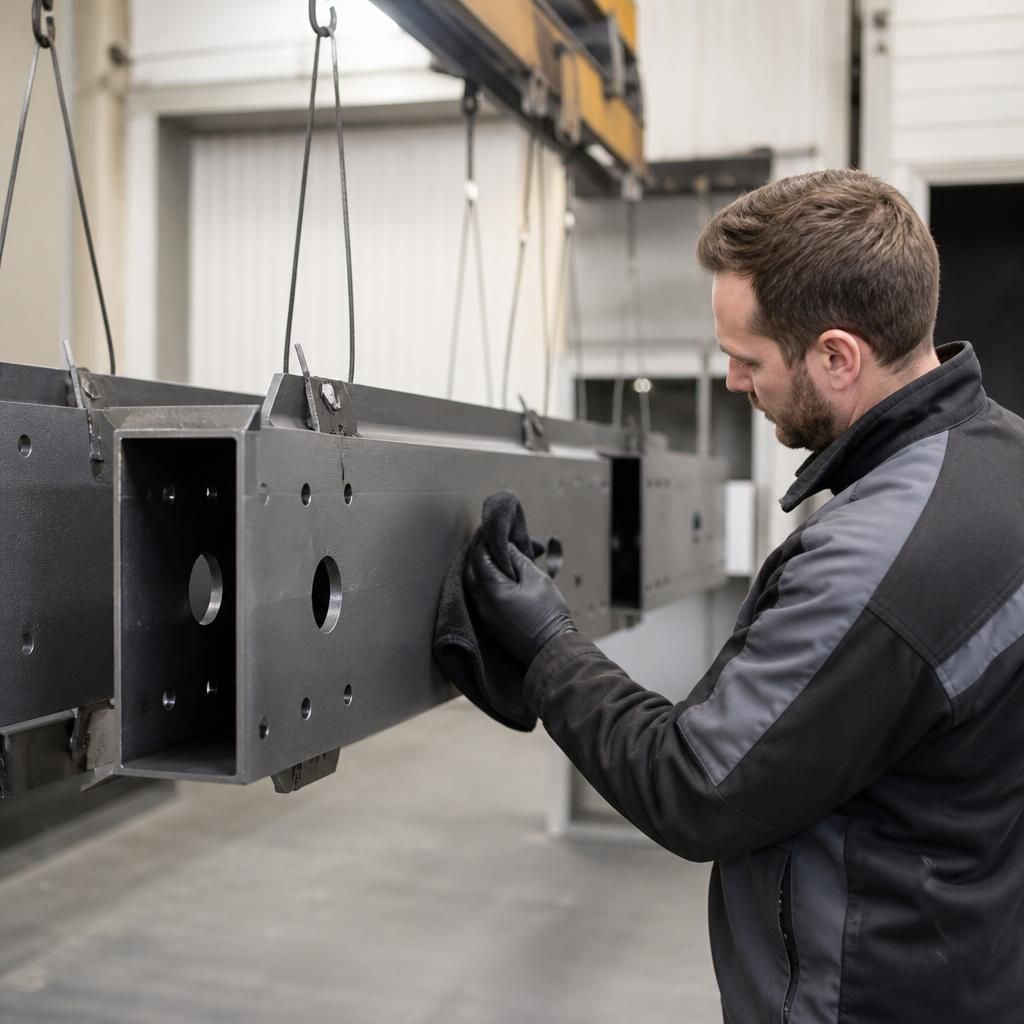
The condition of a prepared surface can deteriorate before powder is applied if it is exposed to moisture, dust, handling or other contaminants. Cleaned or blasted metal should therefore be kept dry, handled with suitable protection and transferred to coating without unnecessary contamination. On susceptible steel, delay or moisture exposure can also lead to flash rust, requiring further preparation before coating.
This part of the process affects both quality and cost: re-cleaning or re-blasting adds labour and handling, while coating over a recontaminated surface can lead to poor adhesion or corrosion beneath the finish. A preparation method is therefore only effective if the subsequent storage, transport and coating stages preserve the prepared condition.