

What types of steel and aluminium components can be powder coated?
Steel and aluminium components commonly suitable for powder coating include frames, panels, brackets, enclosures, guards, railings, fabricated assemblies and other metal parts. The component must be compatible with the preparation and curing process, with its size, shape, material condition and any existing finish assessed before coating.
Powder coating is suitable for most clean, heat-tolerant steel and aluminium parts with a suitable surface for preparation and curing. This includes standard fabricated items, formed sheet components, tubular sections, machined parts and more complex assemblies, provided their material, construction and intended use are assessed before processing.
Common steel components
- Mild steel fabrications: Welded or bolted steelwork used in industrial equipment, building components, storage systems and general fabrication can often be powder coated.
- Sheet steel parts: Cut, folded, pressed and perforated sheet components are suitable where the design allows thorough cleaning and an even coating across edges, faces and returns.
- Tube and section: Circular, square and rectangular hollow sections can be coated, along with angle, channel and other structural profiles. Open ends, drain holes and internal surfaces need consideration where pretreatment or curing could otherwise be affected.
- Galvanised or zinc-coated steel: These materials may be coated, but they need preparation appropriate to the existing finish. Trapped gases, residues and surface irregularities can affect the final appearance if they are not addressed.
- Stainless steel: Stainless components can be powder coated when the surface is suitably prepared to promote adhesion. The required preparation depends on the grade, condition and previous use of the part.
Common aluminium components
- Extruded aluminium profiles: Long sections used for framing, trims, supports, architectural features and equipment can be coated when the profile can be handled and cured correctly.
- Aluminium sheet and folded parts: Covers, trays, fascia sections, formed panels and guards can receive a consistent finish when their folds, seams and edges are accessible during preparation.
- Cast aluminium: Castings used for housings, covers, brackets and machinery components may be suitable. Their porous surfaces can require particular attention because oils, moisture or gases retained in the casting can influence the cured coating.
- Machined aluminium parts: Small and medium-sized precision components can be coated, although close-tolerance faces, threaded holes and bearing locations may need to remain uncoated.
Powder coating can also be considered for industrial machinery and equipment parts, including access covers, removable panels, support members, protective guards, brackets, bases and replacement components. In these applications, the coating specification should reflect the part’s exposure to handling, moisture, chemicals, abrasion, heat and cleaning regimes rather than being selected on colour alone.
Assemblies and specialist components may be suitable where they can be safely prepared and cured as a unit. However, separate coating is often preferable for items containing hinges, bearings, electrical contacts, springs, seals, plastics or other heat-sensitive materials. Components that move against one another may also need uncoated contact faces or carefully defined masking areas to preserve fit and function.
Design details have a significant effect on whether a component is a good candidate. Deep recesses, narrow gaps, overlapping joints and enclosed cavities can restrict cleaning and powder coverage. Weld spatter, sharp edges, silicone contamination, oil, corrosion and old coatings may require additional preparation. Drainage and venting should be considered for hollow fabrications, while threaded holes, machined interfaces and identification surfaces may need masking before coating.
The material condition is equally important. New steel may require removal of mill scale, grease or fabrication residues, while previously painted or corroded parts may need the existing finish and corrosion removed before a new system is specified. Aluminium requires preparation suited to its oxide layer and surface condition. The correct approach is therefore based on the actual component, not simply whether it is labelled steel or aluminium.
Items are usually assessed against four practical questions:
- Can the component withstand the temperature and handling involved in powder curing?
- Can all required surfaces be cleaned and prepared effectively?
- Can the part be suspended, supported or positioned without damaging the coating?
- Which faces, holes, threads, contact points or tolerances must remain free of powder?
For manufacturers, fabricators, construction firms and automotive businesses, this assessment is particularly useful when coating repeat batches, replacement parts or mixed steel and aluminium components. Powder-coating specialists can review drawings, sample parts or the construction of an assembly to identify preparation requirements, masking points and any features that could affect the finished result before production proceeds.
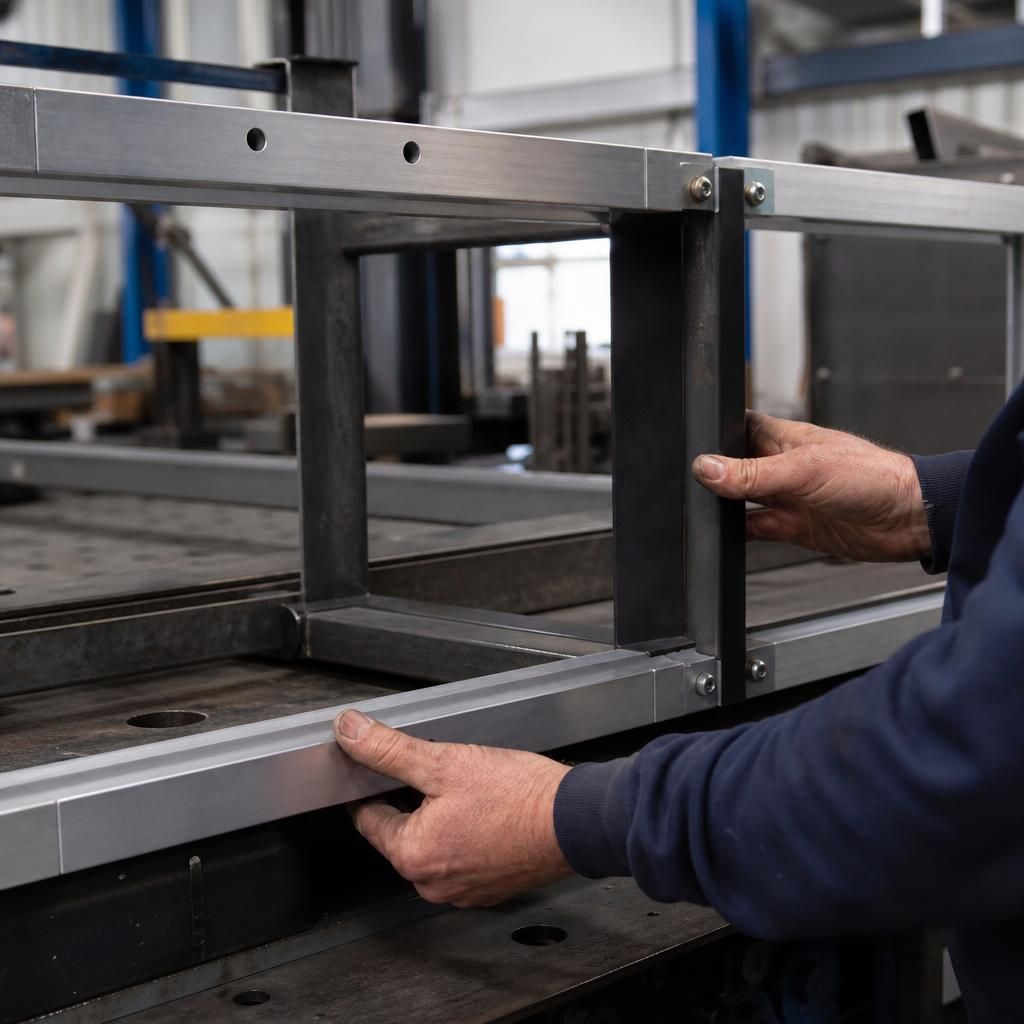
Mixed steel and aluminium assemblies need particular planning. Where different metals are joined, coating each part separately can give better control over surface preparation, coverage and final fit than coating the completed assembly. The design should also account for any areas that require electrical continuity, earthing or direct metal-to-metal contact, as powder coating forms an insulating layer.
For these components, the coating plan should identify which surfaces are cosmetic, which provide mechanical contact and which must remain accessible for assembly or maintenance. Drawings or sample parts can help establish masking requirements and confirm whether the finished dimensions will suit the intended joint.