

What steps do you take to ensure environmental compliance and sustainability in your powder coating processes for steel and aluminium products?
Environmental compliance in our powder coating processes is supported by controlled powder application, careful handling of overspray and responsible management of coating and preparation waste. For steel and aluminium products, we also focus on efficient material use, appropriate curing and durable finishes that can extend component service life and reduce the need for recoating.
Environmental compliance in powder coating means controlling the potential effects of preparation, coating, curing and waste-handling activities throughout the process. For steel and aluminium products, this requires suitable chemical controls, documented operating procedures, responsible waste management and ongoing checks that the process remains within applicable UK environmental requirements.
Process controls are established before production begins. The coating specification, substrate, pretreatment route and curing requirements are reviewed so that the selected process is appropriate for the component and its intended use. This helps avoid unsuitable chemicals, unnecessary reprocessing and premature coating failure. Steel and aluminium may require different preparation approaches because their surface chemistry and corrosion behaviour are not the same.
Preparation stages are managed with particular attention to chemical use and wastewater risk. Cleaning and pretreatment products should be stored securely, used in accordance with their safety and technical information, and kept separate where incompatibility could create a hazard. Any liquid residues, contaminated materials or spent preparation products need to be identified and managed through the appropriate waste route rather than being treated as general waste.
Waste traceability is an important part of environmental compliance. Powder residues, contaminated consumables, packaging and preparation waste should be kept in suitable containers, clearly identified and separated where different disposal or recovery routes apply. Records from waste collections and disposal arrangements provide evidence that waste has been handled responsibly. Segregation also makes it easier to identify avoidable waste and improve production practices over time.
Equipment condition is reviewed as part of responsible operation. Extraction, application and curing equipment that is correctly maintained is less likely to create uncontrolled releases, inconsistent finishes or unnecessary reject work. Monitoring the process can highlight issues such as excessive powder build-up, poor transfer, incorrect curing or repeated rework, allowing corrective action before material and energy are wasted.
Energy use is considered alongside finish quality. Curing must provide the required coating performance without applying unsuitable heat or extending the cycle unnecessarily. Correct loading, appropriate oven settings and adherence to the coating manufacturer’s technical requirements help prevent under-cured or over-cured finishes, both of which can lead to additional processing or replacement components.
Sustainability also depends on the service life of the finished product. A correctly prepared and cured powder-coated surface can provide durable protection for steel and aluminium components, helping reduce the frequency of repainting, replacement or additional surface treatment. The coating specification should therefore reflect the component’s environment, handling conditions and expected exposure rather than relying on a one-size-fits-all finish.
For a B2B coating project, useful environmental information to establish at quotation or technical review stage includes:
- the substrate and any existing coating or contamination;
- the required finish, service environment and performance specification;
- any restrictions on coating chemistry, colour changes or product use;
- how components will be packed, transported and returned;
- the client’s own environmental, waste or material-traceability requirements.
This information helps align the coating route with the product’s full life cycle. It can also prevent avoidable stripping, rework or rejected parts caused by an incomplete specification.
Environmental compliance is therefore not limited to the powder application stage. It covers the selection and control of preparation materials, safe storage, process monitoring, energy use, waste segregation, records and the durability of the completed finish. These controls support a more sustainable coating process while maintaining the performance requirements expected for steel and aluminium products.
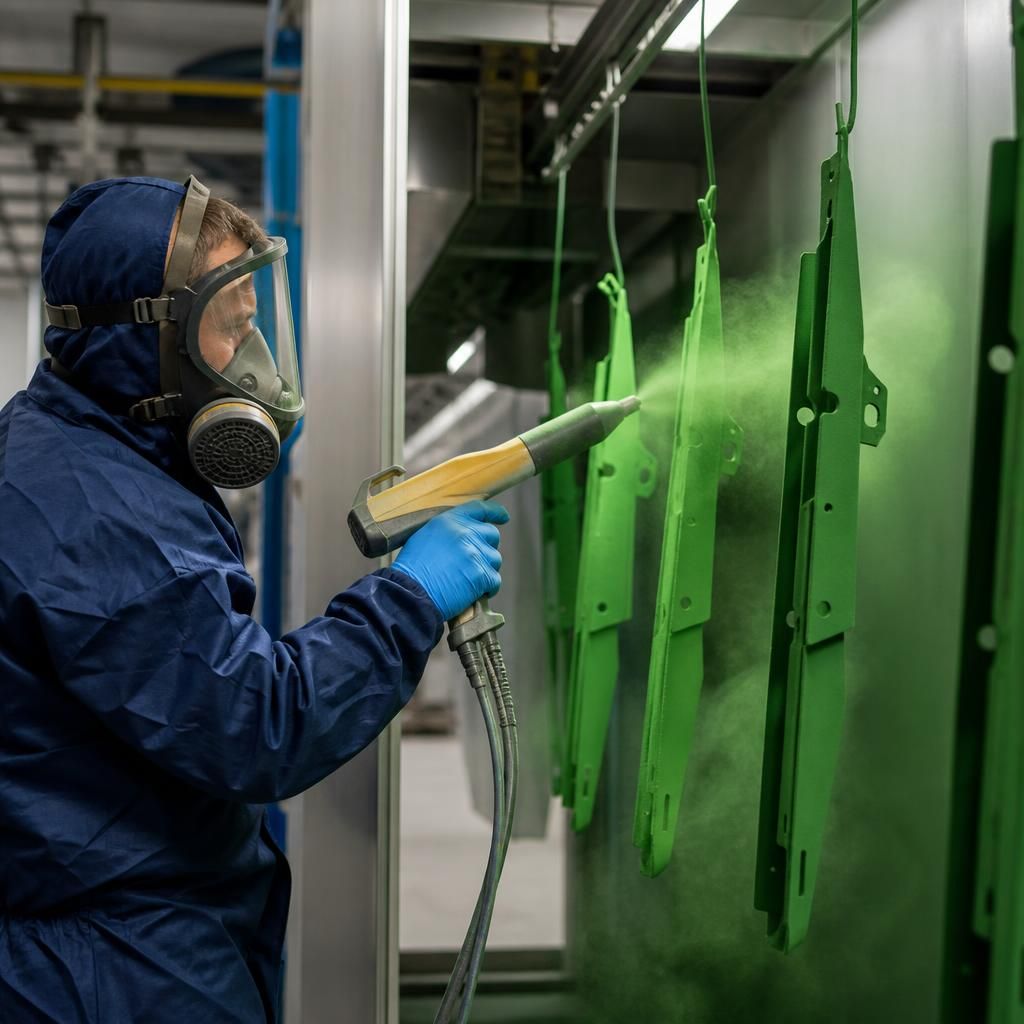
Powder coating supports environmental compliance by applying a dry coating material rather than a solvent-based liquid paint system. This can reduce reliance on solvent carriers and the associated volatile organic compound emissions during application. However, the powder, curing process and any pretreatment chemicals still need to be assessed and controlled in line with their technical and safety requirements.
For steel and aluminium products, the environmental benefit therefore depends on the complete process rather than the coating material alone. Correct application, suitable extraction, controlled curing and responsible handling of preparation chemicals help ensure that the lower-solvent nature of powder coating is supported by sound operational practice.