

What measures do you take to ensure the longevity and quality of powder-coated finishes on steel and aluminium under varying weather conditions?
We support long-lasting powder-coated finishes through thorough steel and aluminium preparation, suitable coating selection, controlled application and curing, and inspection of the completed surface. These measures help the coating withstand changing Midlands weather, including moisture, temperature variation and exposure to corrosion.
Long-lasting powder-coated finishes depend on matching the complete coating system to the component’s intended environment, preventing water retention in the finished design, and protecting the surface during handling, installation and service. For steel and aluminium, we consider how moisture, ultraviolet exposure, temperature changes, atmospheric pollutants and physical wear may affect the component throughout its working life.
Exposure assessment: The expected service environment influences the coating specification. Components used indoors, externally, in persistently damp locations or where they may encounter road salt and industrial pollutants do not all face the same risks. Reviewing the application helps identify whether the main concern is corrosion, colour stability, surface wear or repeated wetting and drying. This assessment supports a finish that is appropriate for the conditions rather than relying on a single standard approach.
Component design and water management: Coating cannot compensate for a design that continually holds water against metal. We look for features such as unsealed overlaps, narrow crevices, enclosed sections and horizontal ledges where moisture can remain trapped. Suitable drainage, ventilation and access for coating help reduce prolonged dampness. This is particularly important for fabricated steelwork, folded sections, frames and assemblies installed outdoors.
Where steel and aluminium are joined, the design also needs to limit conditions that could encourage galvanic corrosion. Electrical contact between dissimilar metals in the presence of moisture can create a corrosion risk, especially if the joint remains wet. Appropriate separation, sealing and detailing can help preserve the coating system around these interfaces.
Managing thermal movement: Steel and aluminium expand and contract as temperatures change, although they do so at different rates. Large panels, long sections and mixed-metal assemblies therefore need suitable allowances at joints and fixing points. If movement is restricted, the coating or the surrounding assembly may be subjected to unnecessary stress. Considering these details before finishing helps reduce cracking, distortion or damage during seasonal temperature variation.
Protecting the finish after coating: A sound coating can still be damaged by poor handling, stacking, transport or installation. Components should be supported without creating concentrated pressure points, kept clear of abrasive contamination and protected from contact with sharp edges. During installation, cut edges, drilled areas and fixing points need particular attention because they may expose the underlying metal. Any site damage should be dealt with using a compatible repair method rather than left to collect moisture.
Consistent finish requirements: For projects containing multiple components, the required colour, gloss level, texture and appearance should be agreed before production. Parts intended to be viewed together should be considered as one visual group, with sensible controls over batches, orientation and the areas that will remain visible after assembly. This reduces avoidable variation and helps ensure that replacement or additional parts are specified consistently.
Maintenance and environmental control: Powder coating reduces the need for frequent refinishing, but it is not maintenance-free. Dirt, airborne deposits and organic matter can retain moisture against the surface, so periodic cleaning with clean water and a mild, non-abrasive detergent is appropriate for many applications. Abrasive pads, aggressive solvents and harsh cleaning methods can reduce gloss or damage the coating. Where a component is exposed to unusual contamination, the cleaning method should be checked against the coating specification.
Routine checks should pay particular attention to edges, joints, fixings, drainage points and areas subject to impact or abrasion. Early treatment of scratches, chips, corrosion at exposed metal or failed seals is more effective than allowing a local defect to spread beneath the surrounding finish. The correct repair approach depends on the coating type, the substrate and the extent of the damage.
These measures work together: suitable environmental specification, sound component detailing, allowance for movement, careful handling and sensible aftercare all contribute to retaining the protective and decorative properties of powder-coated steel and aluminium through changing weather conditions.
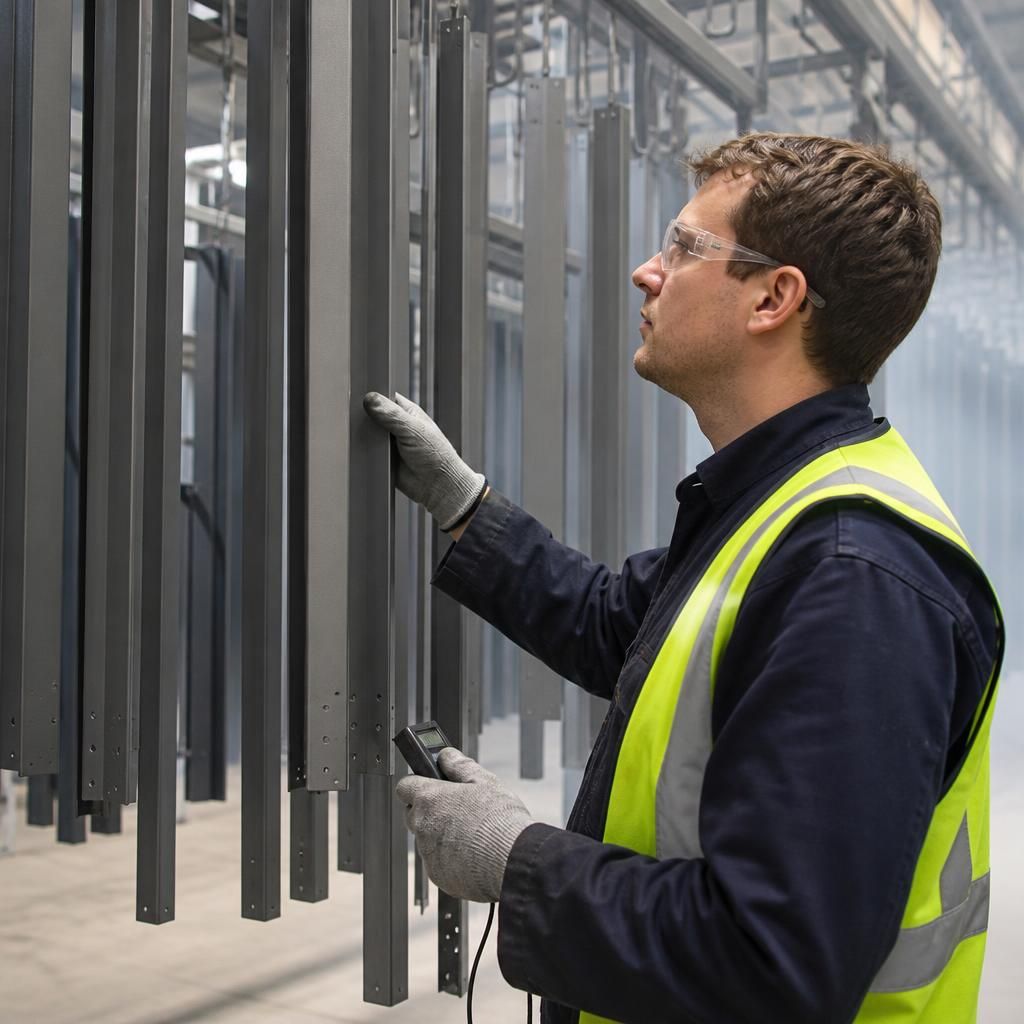
Consistent film thickness is an important factor in protecting powder-coated steel and aluminium from changing weather. The coating must be applied evenly across the accessible faces, edges and profiles, while avoiding thin areas that may provide less protection or excessive build-up that can affect appearance and performance. Application settings and the condition of each component are reviewed to maintain an even finish across individual parts and production batches.
Curing is then controlled so the powder develops its intended physical properties rather than being judged by appearance alone. The completed coating is checked for coverage, finish uniformity and visible defects, with particular attention to edges, recesses and other areas where the metal geometry can make consistent application more difficult. This combination of controlled film build, appropriate curing and close inspection helps the finished surface retain its protective function as conditions change.
Discuss Your Weather-Resistant Powder Coating Requirements
Discuss your steel or aluminium components with our team to identify a powder-coating specification suited to their intended weather exposure, design and use. Share the component details and finish requirements so we can advise on the appropriate approach.