

How do your powder coating techniques ensure optimal corrosion resistance for steel and aluminium components used in harsh environments?
Corrosion resistance is achieved through thorough preparation of the steel or aluminium, appropriate pre-treatment, even application of a suitable powder coating and controlled curing to form a continuous, well-bonded protective film. For components exposed to moisture, chemicals or changing outdoor conditions, the coating system and preparation method are selected to suit the substrate and service environment, helping limit corrosion at the metal surface.
Optimal corrosion resistance comes from treating the powder coating as a complete protection system rather than as a decorative finish alone. The system must match the metal substrate, exposure conditions, component design and required service performance so that moisture, salts, chemicals and contaminants have as few routes as possible to reach the steel or aluminium.
Coating selection is central to performance. Steel components exposed to persistent moisture can require a coating system with strong barrier properties, while components exposed to sunlight and changing weather need a formulation that retains its protective properties outdoors. Chemical exposure, abrasion, impact and operating temperature also influence the specification. Epoxy-based powders can be appropriate where chemical resistance is important, although a different formulation may be preferable where prolonged ultraviolet exposure is expected. Polyester-based powders are commonly considered for external applications because of their weathering performance. Where more than one property is required, the system can be selected around the most demanding part of the operating environment.
Aluminium requires particular consideration because its surface behaves differently from steel. It naturally forms an oxide layer, but aggressive moisture, salts and chemicals can still cause localised attack, including pitting, if the protective system is unsuitable or damaged. The coating specification therefore needs to account for the aluminium grade, the component’s intended use and the surrounding environment. The same powder and process should not automatically be assumed to be appropriate for every steel and aluminium part.
Component design affects corrosion resistance. Water traps, narrow crevices, unsealed joints and overlapping sections can retain moisture after the part has been coated. Sharp edges can also receive less effective coverage than broad, accessible faces, making them vulnerable to early breakdown. Where the component is still at the design or fabrication stage, practical improvements can include drainage points, smoother transitions, accessible surfaces and reduced crevice formation. These details help the finished coating perform consistently across the whole part rather than only on its most visible faces.
Edges, holes, recesses and weld areas receive close attention because they are common points for coating weakness or corrosion initiation. Weld spatter, sharp burrs and fabrication residues can interfere with the finish and create local defects. Threads, bearing seats, electrical contact points and close-tolerance surfaces may need suitable masking or other protection so that the coating does not affect assembly or function. Masking must be planned alongside the corrosion specification: leaving excessive bare metal can create an entry point for corrosion, while coating an area that must remain exposed can prevent correct installation.
Interfaces between different metals also need consideration. When steel, aluminium, fixings or other conductive materials are joined in the presence of an electrolyte such as rainwater or salt-contaminated moisture, galvanic corrosion can occur. Powder coating can reduce direct contact and limit access to moisture, but the joint design, fastener choice and sealing arrangement remain important. Coating should not be viewed as a substitute for suitable material selection and detailing at the connection.
Film build is managed with the geometry and use of the component in mind. An insufficient coating layer may leave the substrate inadequately isolated, whereas excessive build can affect edges, fit, flexibility and appearance. Areas that are difficult to reach, such as internal corners and recessed features, need particular inspection. A consistent finish should be free from visible pinholes, bare patches, contamination, runs, impact damage and other discontinuities that could provide a route for moisture.
Inspection supports the corrosion-resistance objective. Depending on the project specification, checks can include visual examination, coating thickness assessment, adhesion testing and verification that the finish has developed correctly during processing. Components may also be reviewed for defects around edges, apertures, welds and masked areas. These checks are most useful when they are linked to agreed acceptance criteria for the part’s environment, appearance and function rather than applied as a purely cosmetic review.
Handling and transport are part of the protection process as well. Newly coated parts can be marked or chipped by metal-to-metal contact, unsuitable packing or careless lifting. Spacers, protective packaging and appropriate storage help prevent damage before installation. If the coating is cut, abraded or removed during assembly, the exposed area should be assessed and repaired using a method compatible with the original system. A repair that is unsuitable for the powder coating or the service environment may become the weakest point in the finish.
For severe exposure, the coating specification should be agreed from the outset with details of the substrate, component geometry, expected contaminants, outdoor or indoor use, chemical contact, abrasion and maintenance conditions. This allows the powder type, preparation requirements, masking approach, inspection checks and handling arrangements to be considered together. The result is a more reliable corrosion barrier for steel and aluminium components used in demanding industrial, construction, manufacturing and automotive environments.
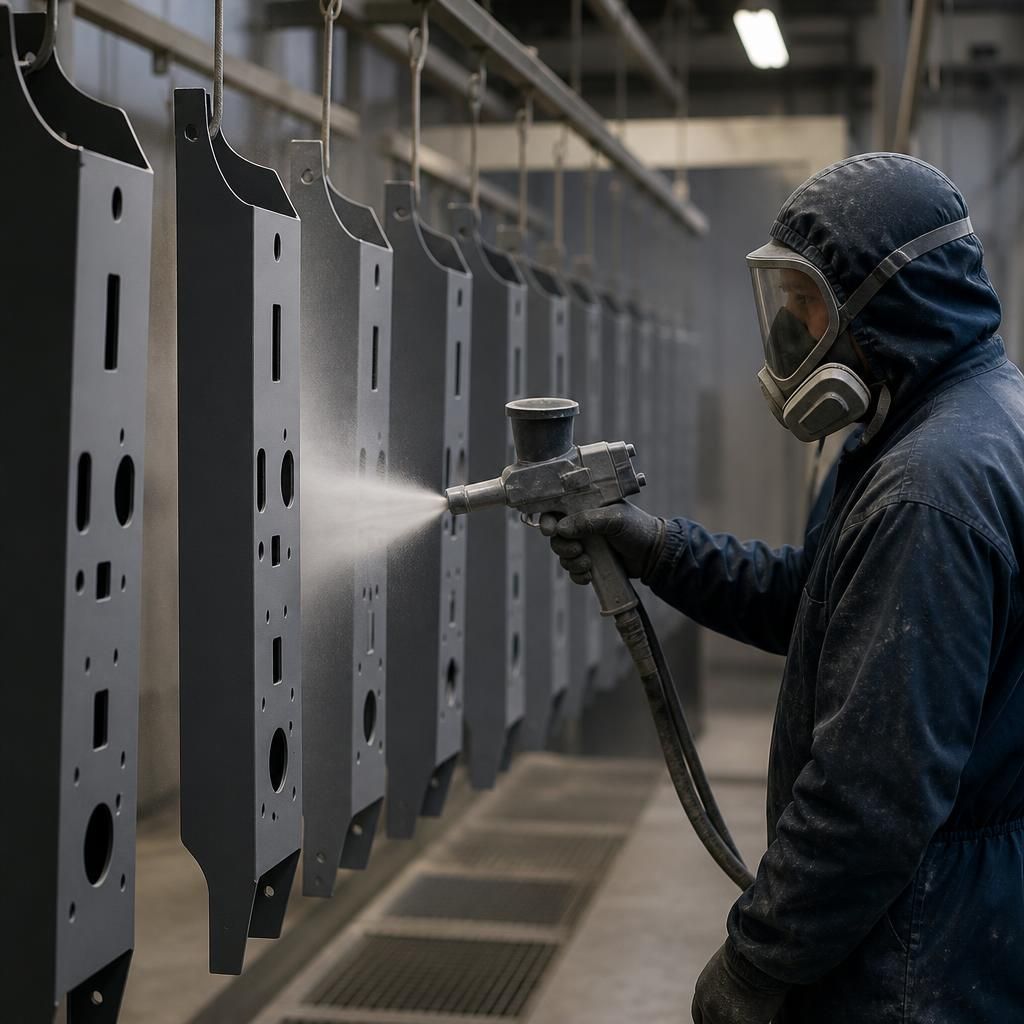
For steel components facing severe moisture, salt or chemical exposure, corrosion resistance may be improved by specifying a multi-layer coating system rather than relying on a single powder layer. A compatible primer can provide additional barrier protection and help reduce the effect of minor surface imperfections, while the topcoat supplies the required weathering, chemical or abrasion resistance. The layers must be compatible and cured according to the coating specification; otherwise, poor bonding between them can create a weakness rather than additional protection.
On aluminium, the same principle applies but the preparation and primer selection must suit the alloy and its naturally oxidised surface. The objective is to establish a stable interface between the metal and the powder film, particularly where the component will encounter condensation, airborne salts or industrial contaminants. This approach is most useful when the exposure conditions are defined before processing, allowing the coating build and system design to be assessed against the component’s actual service environment.