

What safety measures should be implemented when operating conveyorised powder coating lines?
Conveyorised powder coating lines should be operated under a documented risk assessment covering moving machinery, airborne powder, heat, electricity and fire, with effective guarding, interlocks, extraction and emergency-stop controls in place. Operators should use suitable PPE, follow safe powder-handling and housekeeping procedures, receive task-specific training, and work to documented inspection, maintenance and emergency procedures.
Safe operation of a conveyorised powder coating line depends on controlling combustible powder, hot surfaces, electrical energy and moving equipment as separate but connected hazards. Controls should be selected from a documented assessment of the particular line, coating materials, building and production process, then incorporated into routine operating instructions and supervision.
Control combustible-dust risks. Powder overspray can form a combustible dust cloud or layer if it is allowed to accumulate. The booth, recovery equipment, filters, ducts, ledges and surrounding areas should be designed and managed to prevent deposits reaching hazardous levels. Cleaning methods must be compatible with the powder and equipment; compressed air should not be used to disperse settled powder unless the system and risk assessment specifically permit it. Waste powder, contaminated filters and cleaning materials should be stored and removed in accordance with the relevant safety data sheet.
Where a powder could create an explosive atmosphere, the operator should assess the requirements of the Dangerous Substances and Explosive Atmospheres Regulations (DSEAR). This may include zoning, suitable equipment selection, ignition-source control and documented inspection of protective systems. Equipment installed in a classified area should be appropriate for that classification, with any restrictions on mobile electrical equipment clearly communicated to staff.
Prevent ignition. Smoking, naked flames, hot work and unauthorised heat-producing equipment should be excluded from powder application and recovery areas. Earthing and bonding should be checked for the booth, guns, workpieces, hangers, recovery equipment and other conductive parts so that static charge does not build up. Hangers and contact points need to remain electrically effective; excessive coating or contamination can interrupt the path to earth and should be dealt with through a defined cleaning and inspection routine.
Ovens and curing equipment require additional controls. Operators should be protected from hot surfaces and should not enter or reach into heated areas without following the isolation procedure. Gas-fired or electrically heated equipment should be inspected by competent personnel, and combustion systems should have the appropriate flame-failure, temperature-control and over-temperature protection. The curing process should also be controlled so that unsuitable materials do not enter the oven and create smoke, fumes or a fire risk.
Use suitable respiratory and personal protection. The correct protective equipment should be selected from the powder safety data sheet and the findings of the workplace assessment. Depending on the task, this may include protective clothing, gloves, safety footwear, eye protection and respiratory protective equipment. Respirators must be suitable for the substance and fitted, maintained and stored correctly; facial hair or poor fitting can prevent an adequate seal. Reusable clothing and equipment should not carry powder into offices, welfare areas or vehicles.
Good personal hygiene is also important. Operators should avoid eating, drinking or smoking in work areas, wash before breaks and prevent contaminated hands from touching the face. Any skin, eye or breathing symptoms should be reported through the site’s occupational health or incident process rather than ignored.
Manage the conveyor and loading points. Loading and unloading stations can expose people to pinch points, suspended loads and unexpected conveyor movement. Only compatible, stable items should be loaded, with weight, dimensions and hanger capacity kept within the line’s specified limits. Workpieces should be secured so they cannot fall, swing into people or strike booth equipment. Safe distances and marked walkways should separate pedestrians from the conveyor and any powered handling equipment.
Access to the line should be controlled while it is running. A person must not reach through an opening, step beneath suspended parts or attempt to remove a snagged component without first stopping and isolating the relevant energy sources. Isolation should cover electrical, pneumatic, hydraulic, thermal, gravitational and stored energy. Under the Provision and Use of Work Equipment Regulations (PUWER), guards and protective devices should be maintained and must not be bypassed to overcome production problems.
Apply a controlled isolation procedure. A lockout and tagout process should identify who may isolate the line, how residual energy is released and how zero-energy status is verified before work begins. This is particularly important when cleaning guns, clearing a conveyor obstruction, changing filters, entering an oven area or working on recovery equipment. Restart controls should prevent an unexpected start, and everyone affected should be told when the line is being returned to service.
Control chemicals and associated substances. Although powder is a dry coating, the full process may involve pretreatment chemicals, cleaners, solvents or maintenance products. Each substance should have an accessible safety data sheet, suitable storage, clear labelling and defined spill arrangements. COSHH assessments should cover inhalation, skin and eye exposure, incompatibilities and waste disposal. Containers should remain closed when not in use, and chemicals should not be decanted into unlabelled containers.
Provide competent supervision and records. Training should be specific to the line and the operator’s tasks, including loading limits, powder changes, alarm responses, isolation, cleaning and dealing with defects. Competence should be checked rather than assumed, particularly for contractors and temporary staff. Records should show examinations, faults, corrective actions, training and any changes to powder, equipment or process conditions.
UK operators should review the relevant requirements of PUWER, DSEAR, COSHH, the Regulatory Reform (Fire Safety) Order and applicable electrical and gas safety duties. The exact controls depend on the equipment and substances in use, so a competent person should verify the installation and review it after modifications, incidents, near misses or changes in production. A safe line is one in which protective systems remain functional, hazardous energy is controlled and operators can identify when the process must be stopped.
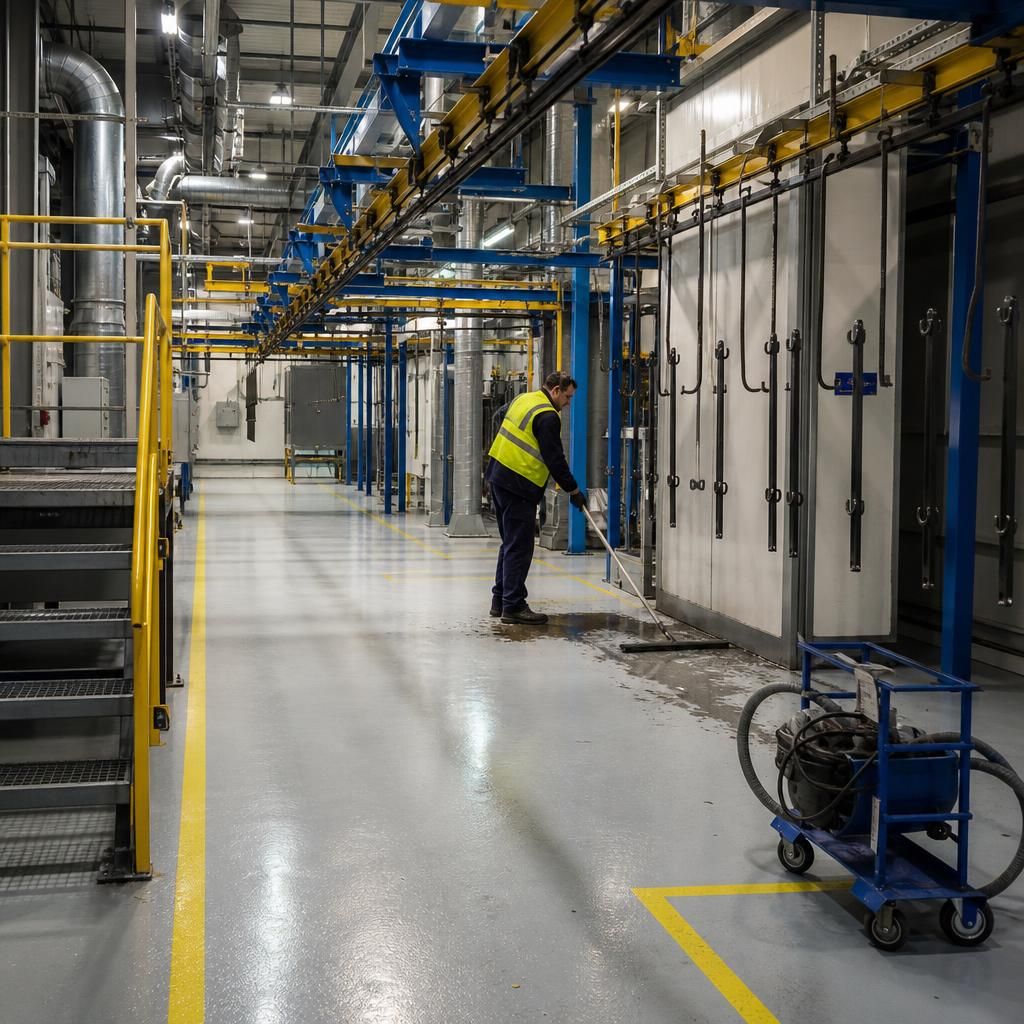
Good housekeeping around the line should also address general workplace hazards, not only powder deposits. Floors at loading, unloading and maintenance points should be kept dry and free from overspray, packaging, loose components and other obstructions. Hoses, cables and extraction connections should be routed so they cannot create trip hazards or become damaged by moving equipment, while lighting should allow operators to see conveyor movement, controls and defects clearly.
The condition of access platforms, steps, handrails and floor surfaces should be included in routine inspections. Any damage, spill or obstruction should be reported and corrected before it exposes people to a slip, trip or fall. Clear access to controls, isolation points and escape routes must be maintained throughout production rather than being used for storage.
Discuss Safety Requirements for Your Conveyorised Powder Coating Line
If you are planning a new conveyorised powder coating line or reviewing an existing installation, discuss the process layout, equipment safeguards and operational controls with a specialist. Powder-coatings.co.uk can help you consider safety requirements alongside your coating needs.