

What factors should I consider when choosing a conveyorised powder coating system for my production needs?
Choose a conveyorised powder coating system by assessing part dimensions and weight, required throughput, coating specification, pretreatment needs, oven capacity, conveyor layout, available floor space and the level of automation required. Also compare colour-change arrangements, extraction and safety provisions, maintenance access, energy use and total lifecycle cost so the system matches both your production process and future capacity.
The right conveyorised powder coating system is the one that fits the complete production process, from part loading and surface preparation through to curing, inspection and unloading. Selection should therefore be based on the parts being coated, the way they move through the factory, the finish specification and the operational controls required, rather than on conveyor speed or oven size alone.
Start with the product range and production pattern. Assess whether the line will handle one consistent product family or a changing mix of components. Record variations in geometry, wall thickness, aperture size, surface condition and hanging points. A line designed around a single repeatable component may be unsuitable if future work includes frames, fabricated assemblies or parts with enclosed sections. Consider how often products will be changed, whether batches need to remain separate and whether different components require different handling or coating settings.
Production scheduling is also important. A line may need to accommodate regular, predictable runs, irregular batch work or a combination of standard and specialist items. The system should support the actual sequence in which products are manufactured, including any waiting time before coating, inspection or packing. This helps prevent the coating line becoming a constraint elsewhere in the factory.
Check how parts will be loaded and presented. The method used to hang a component affects coverage, drainage, grounding and the number of parts that can travel through the system together. Ask whether existing jigs, hooks and racks can be adapted, or whether dedicated hanging equipment is needed. Parts should be supported securely without masking important surfaces or creating areas where powder collects excessively.
Loading and unloading should be assessed as part of the same process. Consider operator reach, lifting requirements, the weight of loaded fixtures and the space needed to stage unfinished and finished work. If components are awkward to handle, the line may require lifting aids or a revised material-flow arrangement. These practical details can affect both safety and the usable capacity of the system.
Define the finish and inspection requirements in measurable terms. The powder type, gloss level, texture, colour, film build, adhesion and corrosion resistance should be documented for each product group. Where a component has critical masking areas, threaded holes, mating faces or close-tolerance dimensions, these requirements need to be incorporated into the process design rather than treated as inspection issues at the end of the line.
Ask how the system will verify that the specified finish has been achieved. Depending on the application, this may involve checks for coverage, visual defects, film thickness, cure condition, adhesion or colour consistency. The chosen line should make it practical to isolate non-conforming parts, identify the relevant batch and investigate the cause without disrupting all production.
Consider powder application and material handling. The equipment should suit the range of powders and finishes being used, including the required spray pattern and the geometry of the parts. Overspray handling, powder collection and reclaim arrangements need careful evaluation. Reclaimed powder can be useful in suitable applications, but the system must control contamination and manage the relationship between reclaim material and virgin powder where colour or finish requirements are strict.
Colour and product changes should be assessed in terms of the complete changeover procedure, not just the spray equipment. Consider cleaning access, the areas that need to be purged, the handling of waste powder and the risk of one finish affecting another. If several coating specifications are processed, segregated powder paths or separate application arrangements may be appropriate.
Review integration with the rest of the factory. The line should work with existing fabrication, storage, inspection and packing areas. Map the movement of raw components, coated parts, rejected items and empty fixtures to identify crossings, bottlenecks and unnecessary handling. Check the positions of electrical supplies, compressed air, extraction connections and other services, but also consider access for installation and future alterations.
Integration with production records may be valuable where traceability is required. Controls can be selected to record process settings, identify jobs, flag deviations and link coated batches to work orders. The appropriate level of control depends on the products and quality system; extensive automation is not automatically the best choice if it makes routine adjustments difficult or leaves operators unable to understand the process.
Assess the level of operator involvement. A system should provide clear access to controls, readable status information and sensible adjustment procedures. Consider how operators will load fixtures, change recipes, deal with alarms, remove defective parts and carry out routine checks. Training requirements should be identified before installation, particularly where the process includes multiple powder types, masking arrangements or product-specific settings.
Human factors should include visibility of key areas, safe access to inspection points and clear separation between clean and potentially contaminated activities. The design should support consistent working methods rather than relying on individual operator judgement for settings that could be controlled or recorded.
Examine installation, expansion and support arrangements. Confirm what preparation is needed before the system arrives, including floor condition, service capacity, access routes and any changes to surrounding equipment. Installation can affect production flow, so the project plan should identify how existing work will be managed while the line is being positioned and commissioned.
Ask whether the system can be extended or reconfigured if the product range changes. Modular fixtures, accessible components and well-documented control settings can make future changes more manageable. Obtain clear information about recommended consumables, replacement parts, servicing responsibilities, training and technical documentation. A system that is difficult to support may create avoidable disruption even if its initial specification appears suitable.
Compare the whole project rather than the purchase price alone. The evaluation should include design, installation, commissioning, operator training, consumables, powder use, utilities, waste handling, planned servicing and replacement parts. Also consider the cost of floor space, production interruptions during installation and any modifications needed to adjacent processes. Comparing these elements on a common basis gives a more useful view of suitability than comparing equipment prices in isolation.
A practical selection process is to prepare a written duty specification containing representative part drawings, weights, finish requirements, production sequences, handling methods, quality checks and expected future changes. Invite potential system designers or coating specialists to explain how each requirement would be met, what assumptions have been made and which limitations remain. This provides a sound basis for deciding whether a conveyorised powder coating system is technically appropriate for the production needs and workable for the people who will operate it.
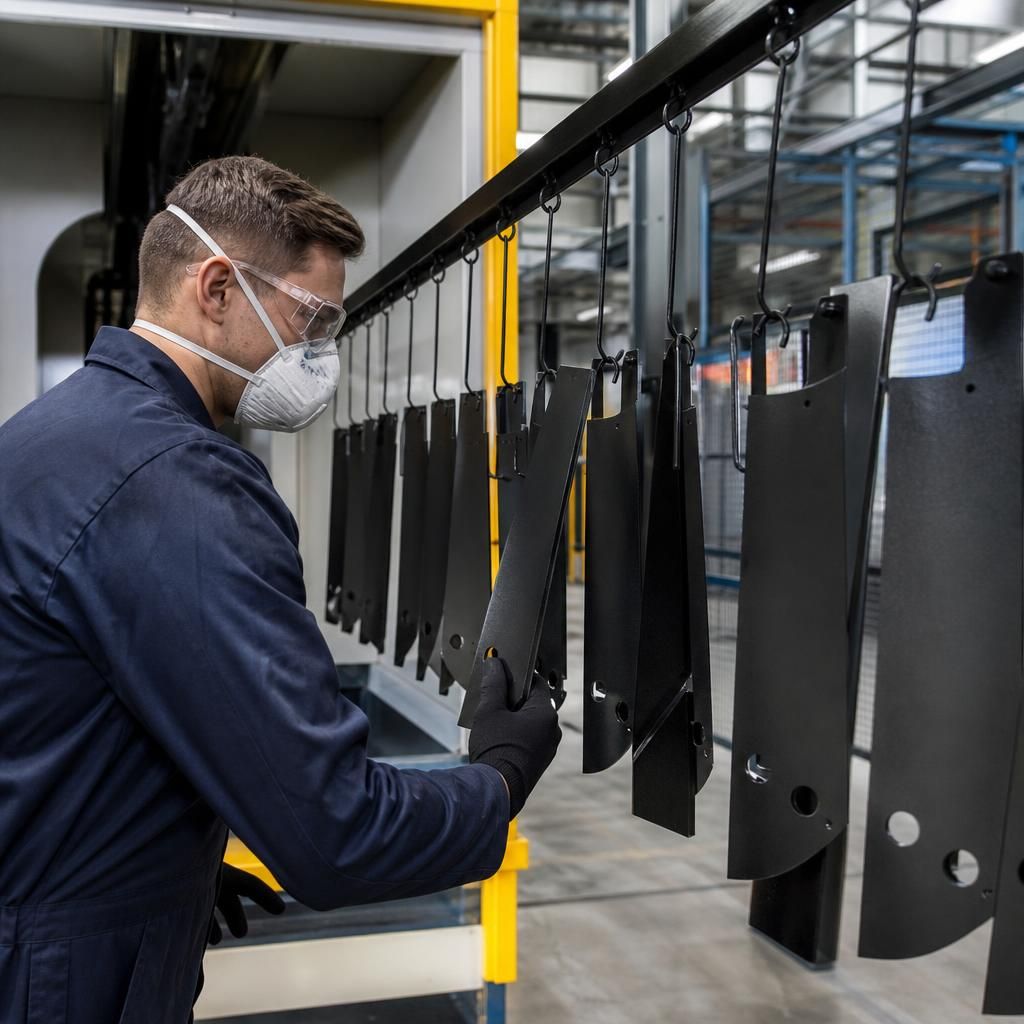
A representative coating trial can help validate a proposed system before the final specification is agreed. Use parts that reflect the most demanding combination of geometry, surface condition and finish requirement, rather than testing only an easy, typical component. The trial should examine how the line handles loading, spray access, masking, curing and transfer between stages. Record any areas of incomplete coverage, excessive powder build-up, handling marks or difficulty removing parts from fixtures. This evidence helps distinguish a system that is theoretically suitable from one that can produce acceptable results under realistic production conditions.