

What are the key maintenance requirements for ensuring optimal performance of a conveyorised powder coating line?
A conveyorised powder coating line requires scheduled cleaning, inspection and lubrication of the conveyor, booths, guns, filters and moving parts, alongside checks on electrical earthing and powder recovery equipment. Regular oven temperature verification, burner and airflow inspections, and documented preventive maintenance help maintain consistent curing, safe operation and efficient production.
Maintaining a conveyorised powder coating line requires a planned, condition-based programme covering process controls, utilities, pretreatment, safety systems and calibration, as well as the equipment checks normally carried out during production. The objective is to keep each stage operating within its intended parameters so that parts are prepared correctly, powder is applied consistently and the finished coating is properly cured.
Inspect the line structure and load-handling equipment. Product hooks, hangers, jigs and fixtures should be checked for distortion, excessive coating build-up and loss of electrical contact. Poorly maintained contact points can affect electrostatic transfer and create inconsistent finishes. Hangers should also be checked for wear, cracks and deformation, particularly where components are heavy or awkwardly shaped. Remove damaged items from service and ensure the loading arrangement does not allow parts to touch one another or obstruct the spray pattern.
Maintain pretreatment equipment and chemistry. The pretreatment stage has a direct effect on adhesion and corrosion protection. Tanks, spray nozzles, pumps and strainers need checks for blockage, leakage and deposits. Chemical concentration, pH, temperature and contamination should be measured against the process specification rather than judged by appearance alone. Rinsing stages require particular attention because residues left on the metal can interfere with coating performance. Any corrective action, chemical adjustment or tank change should be recorded so that recurring process drift can be identified.
Check compressed air quality. Moisture, oil or solid particles in the air supply can contaminate powder application equipment and affect the finish. Drain collection points, inspect filters and verify that the air treatment system is functioning correctly. Air pressure should be checked at the relevant equipment rather than assumed from the compressor setting, as restrictions in pipework or filters can reduce pressure at the point of use. Unexpected changes in powder flow, atomisation or gun response should prompt an air-quality and supply check.
Verify application settings and electrical performance. Powder output, conveying air, atomising air and electrostatic settings should be checked against the approved recipe for each product range. Calibration equipment should be suitable for the measurement being taken, and any instrument that has drifted or been damaged should be removed from use. Earthing is a fundamental safety and quality control, but its effectiveness also depends on clean, secure contact between the workpiece, hanger and line. Test points should be checked according to the site risk assessment and equipment instructions, with results retained for comparison.
Control powder condition and storage. Powder should be kept in its specified storage conditions and protected from moisture, heat and contamination. Containers should remain closed when material is not being used. Before reuse, recovered powder should be assessed in accordance with the coating process requirements, including any controls on blending or filtration. Mixing different colours, chemistries or grades without a defined procedure can cause contamination and unpredictable finish characteristics. Stock rotation and clear labelling help prevent the wrong material being introduced into the system.
Validate the curing process. Oven temperature readings alone do not always confirm that a component has received the required cure. Periodically check the relationship between air temperature, part temperature, dwell time and line speed using an appropriate profiling method. Pay attention to changes in part mass, geometry, loading density and material thickness, as these affect how quickly the metal reaches curing temperature. If a profile changes unexpectedly, investigate the cause before releasing affected production. Oven doors, seals, access panels and ventilation arrangements should also be checked for damage or leakage that could disturb the process.
Test controls and safety interlocks. Emergency stops, access switches, booth extraction interlocks, oven protection devices, alarms and fault indicators should be tested as part of a defined inspection schedule. These checks should follow the equipment manufacturer’s instructions and the site’s risk assessment. Guards must remain secure, and bypassing an interlock to keep production moving should not be accepted as a maintenance solution. Faults affecting safe isolation, extraction or temperature control require prompt escalation and documented resolution.
Use planned calibration and replacement intervals. Temperature sensors, pressure gauges, flow meters, timers and other instruments should be identified in a calibration register. The register should state the equipment reference, inspection date, result and next required check. Wear parts such as seals, hoses, nozzles, filters, contact points and bearings should be replaced according to condition or the manufacturer’s guidance, rather than waiting for a visible failure. Keeping suitable spares available reduces the risk of fitting an improvised component that changes the process or compromises safety.
Record maintenance against production conditions. A useful maintenance record links the work completed with the line, coating material, product type and observed fault. Include readings, adjustments, replaced parts and any product placed on hold during the investigation. Trend information can reveal gradual deterioration, such as increasing powder consumption, repeated colour contamination, longer heating times or recurring defects. These signs are often more useful than a single visual inspection because they indicate that a process component may be moving away from its normal operating condition.
A practical maintenance plan normally combines operator checks, scheduled technical inspections and periodic process validation. Operators can identify changes in finish, sound, pressure, temperature or equipment response during routine production, while competent maintenance personnel handle isolation, electrical work, calibration and repairs. The frequency of each task should reflect equipment design, production duty, coating materials and the consequences of failure. This approach keeps maintenance proportionate while protecting coating quality, equipment reliability and safe operation.
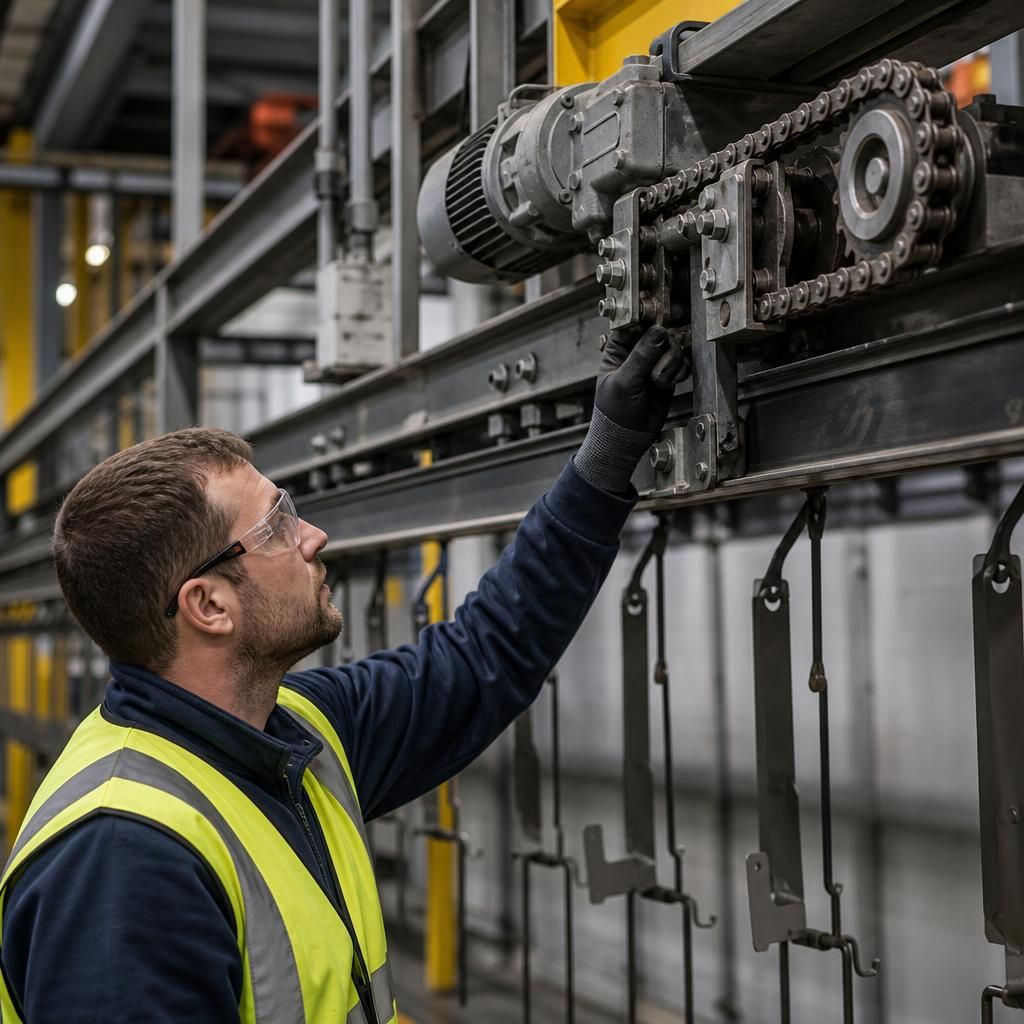
The conveyor drive and tracking system require specific attention because mechanical instability can affect both coating application and curing. Inspect the chain or belt, sprockets, bearings, drive motor and guide rails for abnormal noise, vibration, wear or misalignment. Excessive slack or uneven movement can cause parts to sway through the spray booth, alter their distance from the guns and change dwell time in the oven. Check conveyor speed against the approved process setting and investigate any variation rather than compensating through unverified changes to spray or oven controls.
Discuss your conveyorised powder coating line maintenance requirements
If you are reviewing the maintenance requirements of a conveyorised powder coating line, discuss your production process and coating needs with Powder-coatings.co.uk. Their team can help you assess the practical requirements for consistent industrial powder coating.