

What are the environmental considerations when operating a conveyorised powder coating line?
Operating a conveyorised powder coating line requires control of energy use, curing efficiency, airborne emissions, chemical handling and production waste. Environmental performance can be improved through efficient oven operation, powder recovery and reuse where suitable, responsible management of pretreatment chemicals, and correct disposal of unusable powder and process residues.
The environmental assessment of a conveyorised powder coating line should cover the complete process, from incoming metal components and pretreatment through to curing, packaging and dispatch. In addition to controlling energy use, airborne emissions and powder waste, operators should consider water consumption, wastewater, raw material selection, transport, equipment design and the service life of the finished component.
Pretreatment water and wastewater
Many conveyorised lines use cleaning, rinsing and surface-preparation stages before powder is applied. These stages can influence the line’s environmental impact through water demand and the creation of contaminated rinse water. Practical controls include using measured dosing, preventing unnecessary overflow, checking rinse quality and separating incompatible process liquids. Spent solutions and sludge should be stored securely, characterised where necessary and transferred through an appropriate waste route rather than discharged without confirmation that the receiving system permits it.
Water-saving arrangements may include staged rinsing, counter-current flow or closed-loop treatment, but their suitability depends on the pretreatment chemistry, substrate and required finish. Any change to the process should be validated for corrosion resistance and coating adhesion, not assessed on water use alone.
Choice of powder and substrate
The powder formulation should be matched to the component’s intended environment and performance requirements. A coating that provides the necessary durability can reduce the likelihood of premature stripping, repair or replacement during the product’s working life. This is a lifecycle consideration: the environmental burden of the coating process should be considered alongside the expected service life of the coated part.
Material selection also affects recovery and end-of-life treatment. Where components may later be recycled, the coating system, substrate and any additional treatments should be considered together. Product specifications should identify restrictions such as appearance requirements, chemical exposure, outdoor use or elevated operating temperatures, since applying an unsuitable coating can lead to rework and avoidable material use.
Powder recovery and process control
Powder recovery can reduce the amount of material sent for disposal, but recovered material is not automatically suitable for every application. The collection method, colour changes, contamination risk and required finish all affect whether it can be reused. Recovered powder should therefore be segregated, identified and assessed against the coating supplier’s technical guidance. Mixing incompatible materials or reusing contaminated powder can create defects, rejected parts and more waste.
Good process control has an environmental benefit because it limits rework. Correct hanging, earthing, gun settings, film thickness checks and cure verification help prevent parts being stripped and recoated. These controls should be supported by documented procedures so that changes in product mix, line speed or coating specification do not create avoidable rejects.
Air quality and filtration management
Powder application areas should be designed to contain overspray and protect the surrounding workplace and environment. Extraction and filtration equipment needs to be selected for the booth and powder type, with filters inspected and replaced in line with their condition and the equipment manufacturer’s requirements. Used filters and collected residues require an identified disposal route.
Environmental control is not limited to visible dust. The curing system, pretreatment plant and storage arrangements should be reviewed as part of the site’s overall emissions assessment. Where a process change introduces a different powder, cleaning chemical or fuel source, the operator should check whether the change affects emission controls, monitoring duties or permit requirements.
Packaging and transport
Packaging materials can form a significant part of the process footprint, particularly where coated components require protection against scratches, moisture or contact during handling. Packaging should be selected to protect the finish without excessive material, and reusable stillages or separators may be suitable for repeat movements between a manufacturer, fabricator and coater. Cardboard, plastics and other materials should be kept separate where this supports recycling or the chosen waste contractor’s requirements.
Collection and delivery planning also matters. Loads should be arranged to make effective use of vehicle capacity and to minimise unnecessary movements, while still preventing damage to the coating. For regional B2B production, combining compatible consignments and agreeing suitable delivery points can reduce handling and transport activity.
Environmental management and records
A line’s performance is easier to improve when operators record relevant information rather than relying on visual judgement. Useful records may include powder purchased and disposed of, recovered material, water and chemical usage, rejected or recoated parts, filter changes, maintenance activity and waste transfer documentation. Reviewing these records can reveal recurring losses, equipment faults or process stages that require adjustment.
Environmental responsibilities should be allocated clearly between production, maintenance, contractors and waste carriers. Storage areas should prevent leaks and protect powders and chemicals from moisture or damage. Spill procedures, staff training and documented checks help ensure that an incident is contained and reported through the appropriate internal and regulatory process.
For a conveyorised line serving varied metal components, the most effective approach is to assess each stage as part of one controlled system. The aim is not simply to reduce a single input, but to prevent defective work, manage water and residues responsibly, maintain air-quality controls, minimise packaging and transport impacts, and produce a durable finish without creating avoidable environmental burdens.
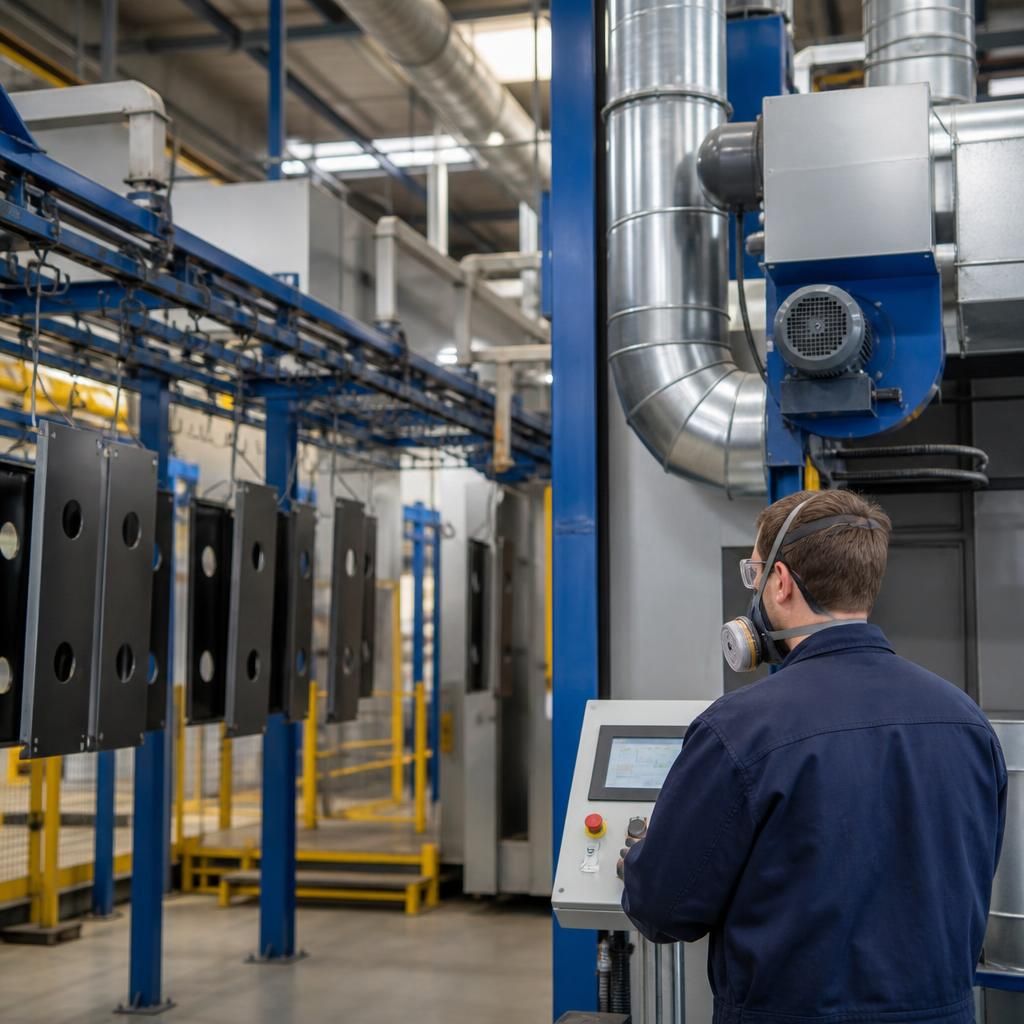
Solvent use and emissions are important environmental considerations when assessing a conveyorised powder coating line. Powder coatings are applied as a dry material and generally contain little or no solvent, which can reduce solvent-related emissions compared with liquid paint systems. However, this does not remove the need for effective extraction and emissions controls.
During curing, the coating’s binder and additives can release process emissions, while pretreatment stages may introduce separate chemical concerns. Operators should assess the specific powder and pretreatment chemistry, maintain suitable ventilation and filtration, and check whether changes to materials or curing conditions affect monitoring or regulatory requirements.
Discuss Your Conveyorised Powder Coating Line
Discuss your proposed conveyorised powder coating line with the Powder-coatings.co.uk team to review its environmental requirements alongside the component, coating and production specifications. This can help identify suitable process controls before equipment or operating changes are made.