

What makes nylon powder coatings suitable for industrial applications?
Nylon powder coatings are suitable for industrial applications because they provide a tough, abrasion-resistant finish with low friction and good resistance to impact, chemicals and moisture. These properties help protect metal components used in demanding environments, particularly where surfaces experience repeated contact or wear.
Nylon powder coatings are suitable for industrial applications because they form a functional thermoplastic layer that combines surface protection with useful mechanical and electrical properties. Unlike thermosetting powder coatings, nylon does not cross-link during heating; the particles melt and fuse into a continuous film. This makes nylon particularly appropriate for metal components that need a resilient, cleanable and well-insulated surface.
Key reasons for selecting nylon powder coating include:
- Flexibility: Nylon can accommodate a degree of substrate movement and repeated contact without behaving as a brittle decorative film. This is useful for components exposed to handling, assembly and service-related movement.
- Surface insulation: Nylon is electrically insulating, so it can help separate conductive metal surfaces where the design requires a non-conductive barrier. The coating specification must account for film thickness, edges, contact points and any areas that need to remain electrically connected.
- Cleanable finish: The fused surface can be suitable for components that need regular cleaning or hygienic handling. The correct nylon grade and cleaning regime should be selected together, particularly where detergents, solvents or elevated cleaning temperatures are involved.
- Good coverage of complex components: Nylon powder can be applied to suitably prepared fabrications, formed parts and other metal geometries. Design details such as recesses, sharp corners, narrow gaps and threaded areas still need to be reviewed because they can affect powder deposition, film build and final assembly.
- Controlled film build: Nylon can provide a substantial functional coating rather than a very thin decorative layer. This can help protect edges and working surfaces, although excessive thickness may affect tolerances, fits, holes and moving interfaces.
Nylon is also selected for its thermoplastic behaviour. If the coating is damaged or the component is reheated, the material does not respond in exactly the same way as a cross-linked epoxy or polyester powder coating. The application temperature, heating profile and cooling conditions therefore need to be controlled so that the powder fully fuses without distorting the metal part or affecting its dimensions.
Suitability depends on the nylon grade and the operating environment. A specification should consider continuous and peak service temperature, exposure to sunlight, contact with fuels or process fluids, required electrical resistance, expected film thickness and the dimensions of mating parts. Nylon is not automatically the best choice for every high-temperature or solvent-intensive application, and a different powder chemistry may be more appropriate where the coating must tolerate conditions beyond the selected nylon grade.
Preparation is equally important. Metal should be free from oil, rust, scale and other contaminants before coating, with the preparation method chosen according to the substrate and the required level of adhesion. Welds, sharp edges, threaded features and drainage points should be assessed before work begins. For fabricated components, these details often determine whether the finished coating performs consistently across the whole part rather than only on its broad faces.
For manufacturers, fabricators and other industrial users, the most reliable approach is to specify nylon by function rather than appearance alone. The coating brief should identify the substrate, component geometry, service temperature, contact conditions, cleaning requirements, electrical needs and dimensional tolerances. A specialist industrial powder coating provider can then assess whether nylon is appropriate and establish the preparation, application and finishing requirements for the batch.
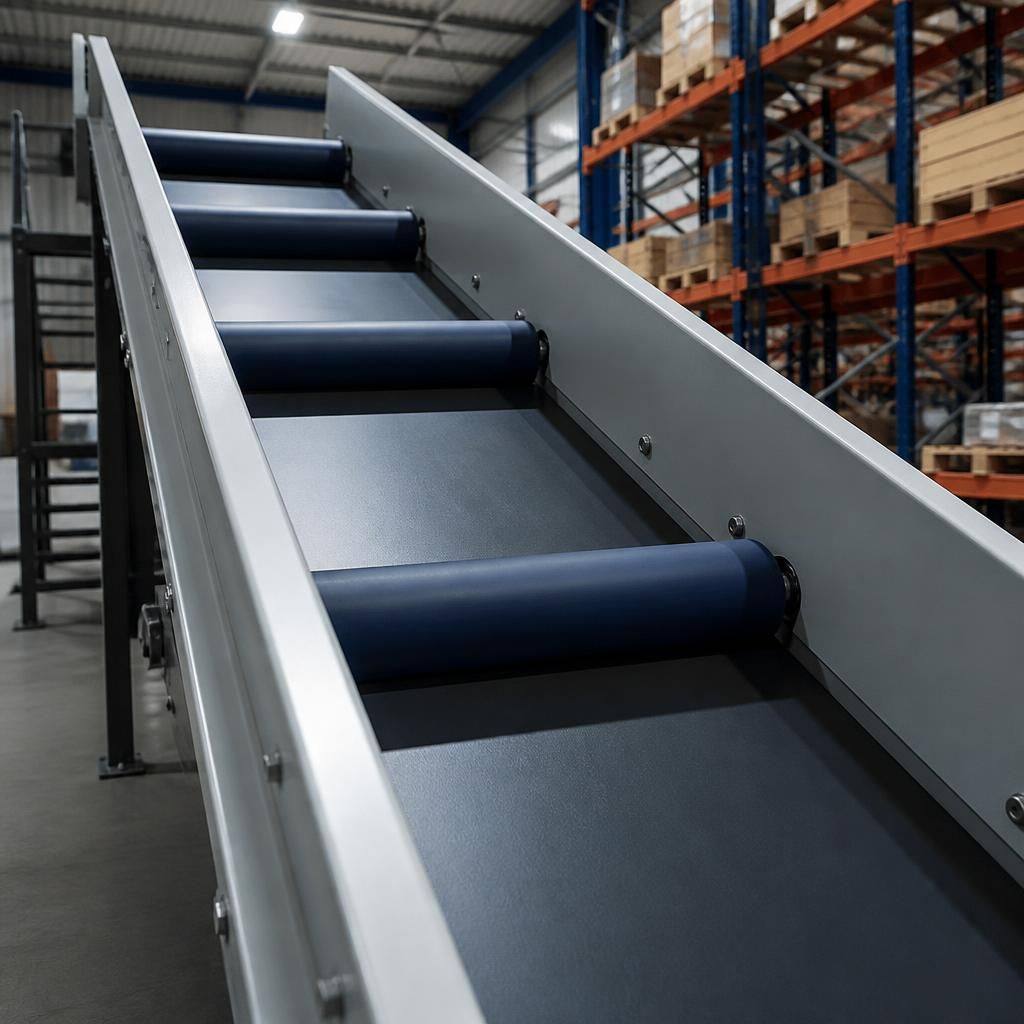
Nylon powder coating is particularly useful where a metal component has a sliding, guiding or contact function. Its relatively low-friction surface can help reduce resistance between mating surfaces and limit the tendency of materials to adhere to the coated part. This makes it relevant to items such as guides, chutes, rollers and handling components, provided the selected nylon grade is compatible with the load and movement involved.
Low friction does not remove the need to assess the complete interface. Contact pressure, movement speed, temperature, the material of the opposing surface and the presence of abrasive particles can all affect performance. The coating specification should therefore consider the working relationship between the coated component and its mating part, rather than treating low friction as a standalone property.
Discuss your nylon powder coating requirements
Discuss your component’s operating conditions, dimensional tolerances and required nylon coating performance with a specialist industrial powder coating provider. This allows the coating specification and preparation requirements to be assessed before your batch proceeds.