

What are the benefits of using industrial powder coating for large-scale projects?
Industrial powder coating benefits large-scale projects by producing a durable, uniform finish across batches of metal components, with strong resistance to wear, corrosion and handling damage. Its controlled application also supports repeatable quality, efficient production and practical long-term protection for components used in manufacturing, construction and automotive applications.
For large-scale projects, industrial powder coating provides a controlled production method for finishing substantial quantities of metal components while helping manage material use, labour, scheduling and long-term maintenance requirements. Its main advantages arise from the way the coating is applied, cured, inspected and integrated into a repeatable manufacturing workflow rather than from the coating material alone.
Efficient use of coating material
Powder is applied as a dry material and can be collected and reused in suitable controlled systems. This may reduce material waste compared with processes where liquid paint overspray cannot be recovered. The potential benefit depends on the equipment, colour-change arrangements and contamination controls used by the coater. Powder selection and application settings must also be matched to the component, as excessive build or unsuitable recovery practices can affect finish quality.
Lower solvent-related impacts
Powder coating does not rely on the same solvent evaporation stage as conventional wet paint. This can reduce the use of solvent-based materials and simplify controls associated with solvent emissions. It does not make the process impact-free: pretreatment chemicals, powder handling, oven operation and waste management still need to be controlled. For a large project, these factors should be assessed as part of the complete coating system rather than by considering the powder in isolation.
Better production planning across batches
Large projects often involve repeated parts, assemblies or component families. A defined powder specification, agreed preparation standard and documented curing method allow these items to be processed using a planned sequence. Work can be organised around component size, racking capacity, colour grouping and oven constraints, helping to reduce avoidable rehandling and interruptions between production stages.
Batch planning is particularly useful where a project has phased deliveries or requires several component types to be coated to the same specification. Before production starts, the customer and coating provider should confirm the required colour, gloss level, coating thickness, masking points, cure conditions and inspection criteria. This prevents a visually acceptable finish from being rejected because it does not meet a functional or assembly requirement.
Potential cost advantages over the project life
Powder coating can support cost control through efficient application, reduced rework and fewer coating-related maintenance interventions. The relevant comparison is not simply the price of coating one component. A proper assessment should include preparation, masking, transport, application, curing, inspection, repair and the likely maintenance cycle during service.
For large quantities, a consistent specification can also reduce the need to manage multiple coating systems. However, powder coating is not automatically the lowest-cost option for every project. Small batches, complex masking, very large components or parts that cannot tolerate an oven cure may make another finish more suitable. The correct choice depends on component design, quantity, performance requirements and the available production route.
Useful integration with quality control
Industrial coating projects can be managed using documented checks at several stages, including substrate cleanliness, pretreatment, powder identification, application settings, coating thickness, cure and visual appearance. This creates a clearer record for batch release and makes it easier to investigate defects if they occur.
For critical components, sample panels or representative test pieces can help establish the agreed appearance and performance before the full run begins. This is valuable on large projects because correcting a specification problem after hundreds of parts have been coated can create considerable disruption. Inspection requirements should be agreed before production, including where measurements are taken and how imperfections, touch-ups and masked areas are treated.
Design and assembly considerations
Powder coating can be incorporated into a component design at an early stage. Designers should allow for coating build on mating faces, holes, threads, sharp edges and close-fitting interfaces. Areas that must remain electrically conductive, welded, bonded or dimensionally precise may need masking or post-coating machining.
Component size and geometry also affect the practical benefit. Parts must be safely handled, racked and accommodated within the coating and curing equipment. Hollow sections require suitable preparation and drainage, while enclosed areas may need particular attention to pretreatment and powder coverage. Reviewing these issues before manufacture reduces the risk of rework and avoids designing parts around an assumed coating process that cannot be applied consistently.
Reduced handling and maintenance disruption
A well-specified finish can help project owners manage future maintenance by providing a defined coating system for replacement or additional components. Keeping records of the colour, finish, substrate preparation and coating requirements makes later refurbishment or extension work easier to plan. This is especially relevant to manufactured equipment, construction elements and automotive components that may be supplied in stages or serviced over time.
These benefits depend on correct preparation and curing. Powder coating cannot compensate for contamination, unsuitable substrates, poor storage or damage caused during transport and assembly. Components should therefore be protected after coating and handled in a way that preserves the finished surface.
When assessing industrial powder coating for a large-scale project, the most useful questions are:
- Can the component dimensions, geometry and tolerances be accommodated by the coating and curing process?
- What preparation, pretreatment and masking requirements apply?
- Which areas must remain uncoated or meet a specific thickness tolerance?
- How will batches, colour changes, inspection and phased delivery be organised?
- What records and acceptance criteria are needed for project quality control?
- Does the coating system meet the component’s expected service conditions and maintenance requirements?
For manufacturers, fabricators, construction firms and automotive businesses, these checks determine whether powder coating is merely suitable in principle or genuinely efficient for the complete project. A coating provider can then assess the parts, quantities and specification before confirming the most appropriate process.
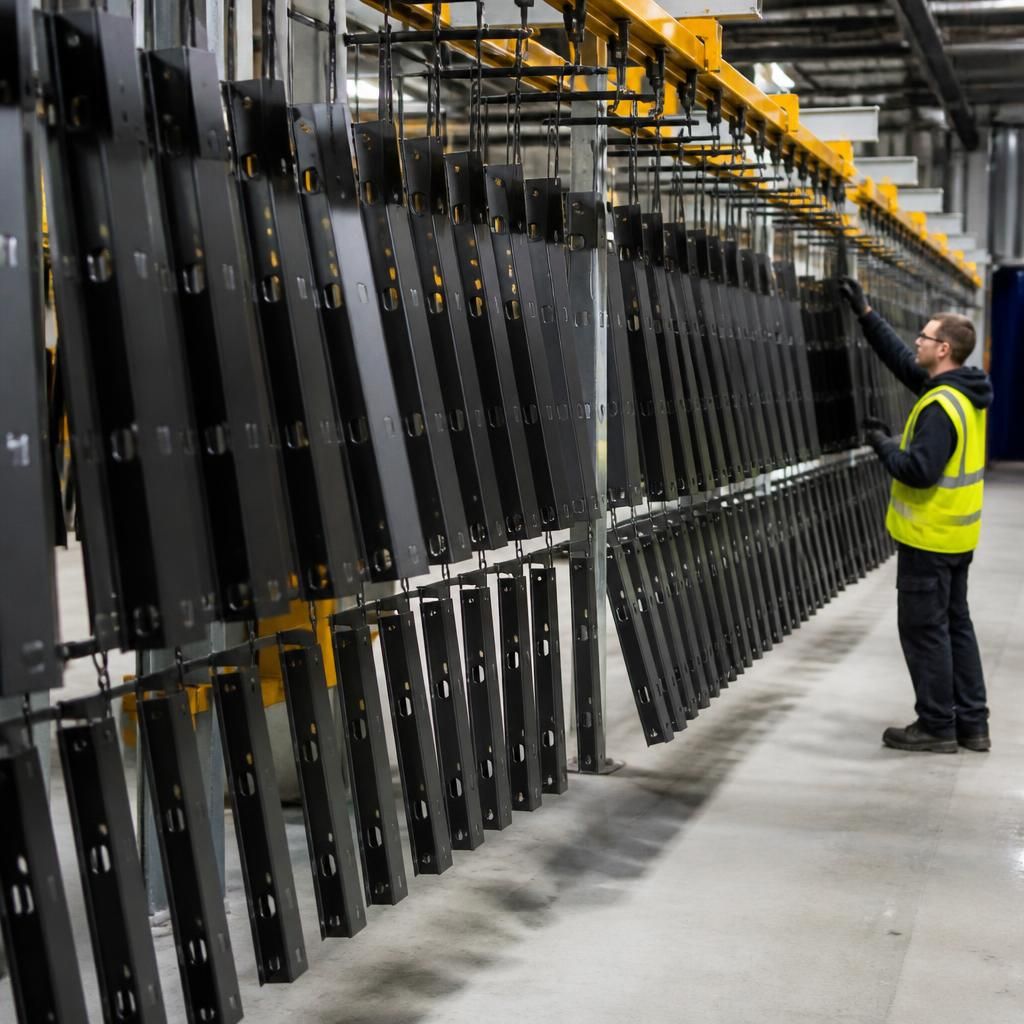
Large-scale projects can make powder coating more efficient because the preparation and process setup are spread across a larger number of components. Once the coating specification, racking method, masking requirements and application settings have been established, subsequent parts can follow the same controlled route rather than requiring a separate approach for every item.
This advantage is strongest when components share a material, colour and finish requirement. It may be reduced where a project contains many different colours, highly complex shapes or frequent specification changes, because each variation can require additional preparation and process control. Assessing the mix of parts before production helps establish whether the project is suitable for a standardised powder coating route.