

How do you ensure that your powder coating process adheres to industry standards and regulatory compliance?
We support compliance by controlling and documenting each stage of the powder coating process, from substrate preparation and powder application through to curing and final inspection. Requirements are assessed against the component specification and end use, with appropriate health, safety and environmental controls applied throughout.
Compliance is maintained through a documented, specification-led process in which the coating system, preparation method, application conditions, curing cycle and inspection criteria are matched to the component’s intended use. This provides objective evidence that the finished coating has been produced in accordance with the agreed technical requirements and applicable UK health, safety and environmental obligations.
Requirements are established before production. The component drawing, material, dimensions, service environment, required colour or gloss level, corrosion-resistance expectations and any customer-specific standard are reviewed before processing. The end use is important: an indoor fabricated part, an external structural component and an automotive item may require different preparation, powder chemistry, film build and performance checks. Any limitations in the substrate or specification can therefore be identified before coating begins.
Where a recognised standard is relevant, its requirements are used to define the coating system and acceptance criteria. Depending on the application, this may include standards covering corrosion protection, powder coating materials, surface preparation, coating thickness, adhesion or curing. A standard is not treated as a substitute for a project specification: the required performance, test method and permitted tolerances need to be clear for the particular component.
Materials and technical information are controlled. Powder products are selected against the agreed application and supported by the supplier’s technical data and safety information. Product identification, batch details and relevant storage conditions are recorded so that the coating used can be traced to the work undertaken. Powders are kept in suitable conditions and handled in accordance with the manufacturer’s instructions, because contamination, moisture and incorrect storage can affect application and final performance.
Process controls are applied at each critical stage. Before coating, the substrate is checked for contamination, oxidation, weld residue, sharp edges, oil, grease and other conditions that could affect adhesion or corrosion protection. The selected cleaning, blasting or chemical pretreatment method is appropriate to the metal and the required finish. Application controls include the condition of the powder, equipment settings, earthing, spray coverage and film-build requirements. These controls help prevent defects such as poor adhesion, uneven coverage, pinholes, runs and premature corrosion.
Curing is verified against the powder manufacturer’s specified requirements and the component’s thermal characteristics. Oven settings alone do not establish that the coating has cured correctly, because the relevant temperature is the metal temperature and larger or more complex parts heat differently from smaller items. Records of the applicable curing conditions, together with checks of the equipment and process, support repeatability across batches.
Inspection confirms that the result meets the agreed criteria. Depending on the specification, checks may include:
- visual appearance, colour, gloss, coverage and visible defects;
- dry-film thickness using suitable measurement equipment;
- adhesion or other performance tests where specified;
- evidence of adequate coverage on edges, recesses, welds and difficult-to-coat areas;
- condition of masking, threaded holes, mating faces and other areas that must remain free from coating; and
- packaging and handling checks to reduce damage before delivery or assembly.
Inspection results are assessed against the agreed acceptance criteria rather than an assumed universal standard. If a non-conformance is found, the affected work is identified and reviewed before release. The cause may relate to preparation, application, curing, handling or the incoming component, and any permitted rework or corrective action is considered against the specification. This prevents unsuitable work from being treated as acceptable simply because the appearance is satisfactory.
Records provide traceability. Job information, material details, process observations and inspection results are retained in a form that allows the coating history to be reviewed. Traceability is particularly important for batch production, repeat orders and components used in regulated or safety-critical environments. Customers requiring particular documentation should define this at quotation or order stage, including any reports, test evidence, sample approval or retention requirements.
Regulatory compliance also covers the people and environment involved in the process. Powder handling, preparation chemicals, cleaning agents and maintenance activities are managed with appropriate risk assessments, control measures, personal protective equipment and safety information. Relevant UK workplace requirements can include the Control of Substances Hazardous to Health Regulations and controls for combustible dust or other fire risks, where applicable. Waste powder, contaminated materials, blasting media and chemical residues are segregated, stored and disposed of through suitable procedures, with emissions and housekeeping controlled to reduce risk.
The precise evidence required depends on the product, coating system, industry and customer contract. For that reason, compliance is best demonstrated by agreeing the applicable standard and acceptance criteria before production, then retaining records that connect those requirements to the completed component. This approach gives manufacturers, fabricators, construction firms and automotive businesses a clear technical basis for assessing whether a powder-coated part is suitable for its intended application.
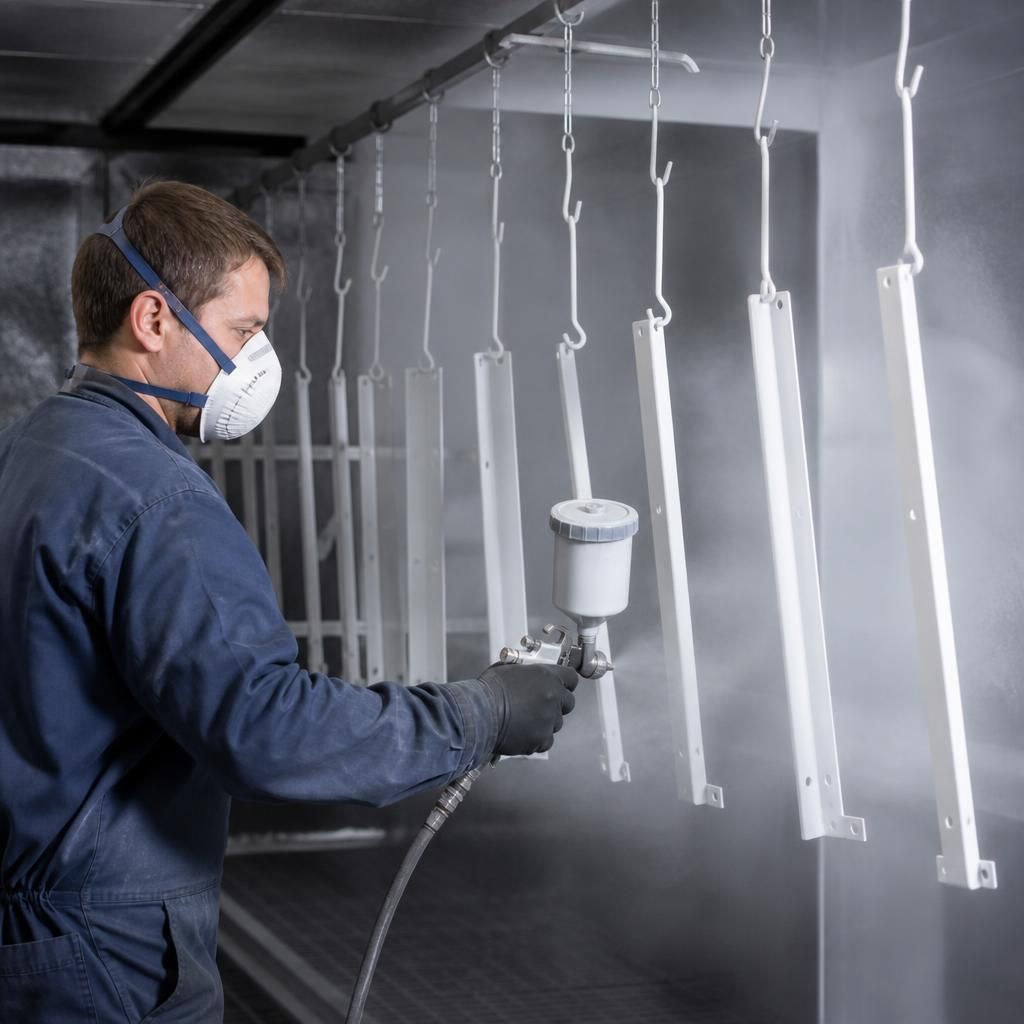
Powder coating compliance applies to the coating process and the agreed performance requirements for the finished component; it does not automatically certify the complete product or assembly. A coating may satisfy its specified thickness, adhesion and corrosion-resistance requirements while the wider component remains subject to separate design, structural, electrical or industry-specific obligations.
For regulated or safety-critical applications, the customer should identify the standards and approval requirements that relate to the complete part. The coating process can then be assessed as one controlled element within that framework, with suitable technical evidence retained to support the customer’s own compliance and product records.
Discuss your powder coating compliance requirements
Discuss your powder coating compliance requirements before quotation, including the applicable standards, acceptance criteria and documentation needed for your components. This helps establish the technical requirements for the coating process and supporting records.