

What are the recommended techniques for preparing metal surfaces before applying powder coating to ensure minimal defects?
Recommended preparation includes thorough degreasing, removal of rust and existing coatings by suitable abrasive blasting or other controlled methods, followed by rinsing and complete drying. Inspect the surface before coating, remove dust and residues, and apply a compatible primer or chemical pretreatment where the metal and service conditions require additional adhesion or corrosion protection.
Effective powder coating preparation is a controlled process of making the metal chemically clean, physically uniform and suitable for the planned coating system. Beyond removing visible contamination, the recommended approach is to control surface profile, weld and edge condition, trapped air or moisture, masking, handling and inspection so that defects are not introduced immediately before application.
Assess the component before selecting the preparation method. Identify the substrate, existing finish, areas exposed to corrosion, welds, cast features, threaded holes and surfaces that must remain uncoated. Aluminium, mild steel, galvanised steel and previously coated parts can react differently to preparation chemicals and heat. The intended service environment also matters: an indoor component may need a different preparation specification from a part exposed to weather, road salt, chemicals or abrasion.
Look for conditions that can later appear as coating defects. Porous castings may release gases during curing, while oil trapped in seams can cause craters or poor adhesion. Rust staining around joints may indicate moisture retention rather than a superficial mark. Silicone, wax, adhesive residue, marking ink and handling products are particularly troublesome because small traces can cause fisheyes, craters or bare areas.
Control the surface profile rather than simply making it visibly rough. The prepared surface should provide a consistent key for the powder film without leaving sharp peaks, embedded abrasive or unevenly treated patches. Excessively aggressive treatment can thin edges, distort light-gauge parts or leave a profile that shows through the finish. Insufficient treatment can leave weakly bonded areas. The correct balance depends on the metal, coating specification and component geometry, so preparation settings should be checked against the required finish rather than judged by appearance alone.
Give particular attention to welds, edges and fabricated joints. Remove weld spatter and smooth sharp projections that could produce thin coverage or become visible through the coating. Grind welds consistently where appearance is important, but avoid deep gouges that may remain visible after coating. Close or dress crevices where practical, and ensure that overlapping sections do not retain moisture or process residues. Rounded edges generally receive more reliable powder coverage than sharp corners, which can create areas of reduced film thickness.
Fabricated parts should also be checked for burrs, swarf and loose particles inside drilled holes. These can fall onto the surface during coating or curing and create raised specks. Drainage and venting holes may be needed in hollow sections to allow trapped air, gases and liquids to escape safely. Without suitable venting, pressure or outgassing can produce pinholes, blisters or small eruptions in the cured film.
Manage porous or contamination-prone components before coating. Castings, folded sections and parts containing oils may require a controlled preheating or outgassing stage appropriate to the material and coating system. This helps release volatile substances before powder is applied, rather than allowing them to emerge through the film during curing. Any such treatment must be controlled carefully: overheating can affect the substrate, alter dimensions or create oxidation that requires further preparation.
Mask deliberately and use suitable plugs or caps. Threads, bearing seats, electrical contact points, tight tolerances and precision machined faces should be protected with materials that withstand the preparation and curing process. Masking should be secure enough to prevent powder build-up underneath, while avoiding exposed adhesive or fibres that could contaminate the surface. Masking lines should be positioned where they will not interfere with assembly or leave an unacceptable visible transition.
Parts should be supported in a way that minimises contact marks and prevents prepared faces from touching dirty racks, hooks or benches. Contact points should be selected on non-critical areas where possible. Racks and hanging equipment need to be free from loose coating and residue; poor contact or contamination at the suspension point can contribute to uneven coverage and electrical application problems.
Prevent recontamination after preparation. Once the surface has been treated, avoid bare-hand contact, unclean gloves, dusty clothing, oily lifting equipment and unprotected storage. Keep prepared parts separated from untreated work and move them using clean handling practices. The interval between preparation and coating should be controlled according to the substrate and surroundings, particularly where humidity or flash corrosion is a risk.
Before powder application, carry out a final inspection under suitable lighting. Check for visible residue, abrasive particles, rust bloom, water marks, sharp burrs, weld spatter, damaged masking and blocked holes. Where the specification requires it, verify surface condition using appropriate checks for cleanliness, profile, substrate temperature or chemical pretreatment. A simple visual check will not detect every problem, so higher-risk components may need documented process checks.
Use a defect-prevention checklist for repeat or batch work.
- Confirm the substrate and required coating system before preparation begins.
- Record any areas requiring masking, plugs, special handling or dimensional protection.
- Inspect welds, edges, cast surfaces, joints, holes and recesses rather than checking only broad flat faces.
- Check that racks, hooks, tools and handling equipment cannot transfer contamination.
- Verify that prepared parts are dry, clean and free from loose particles before coating.
- Keep preparation and inspection standards consistent across the batch.
For complex, large or repeatedly manufactured components, the preparation specification should be agreed before production, including acceptable edge condition, weld finish, masking positions, inspection points and any outgassing requirements. This turns surface preparation from a visual clean-up step into a repeatable part of the coating process, reducing the likelihood of adhesion failures, pinholes, craters, uneven coverage and premature corrosion.
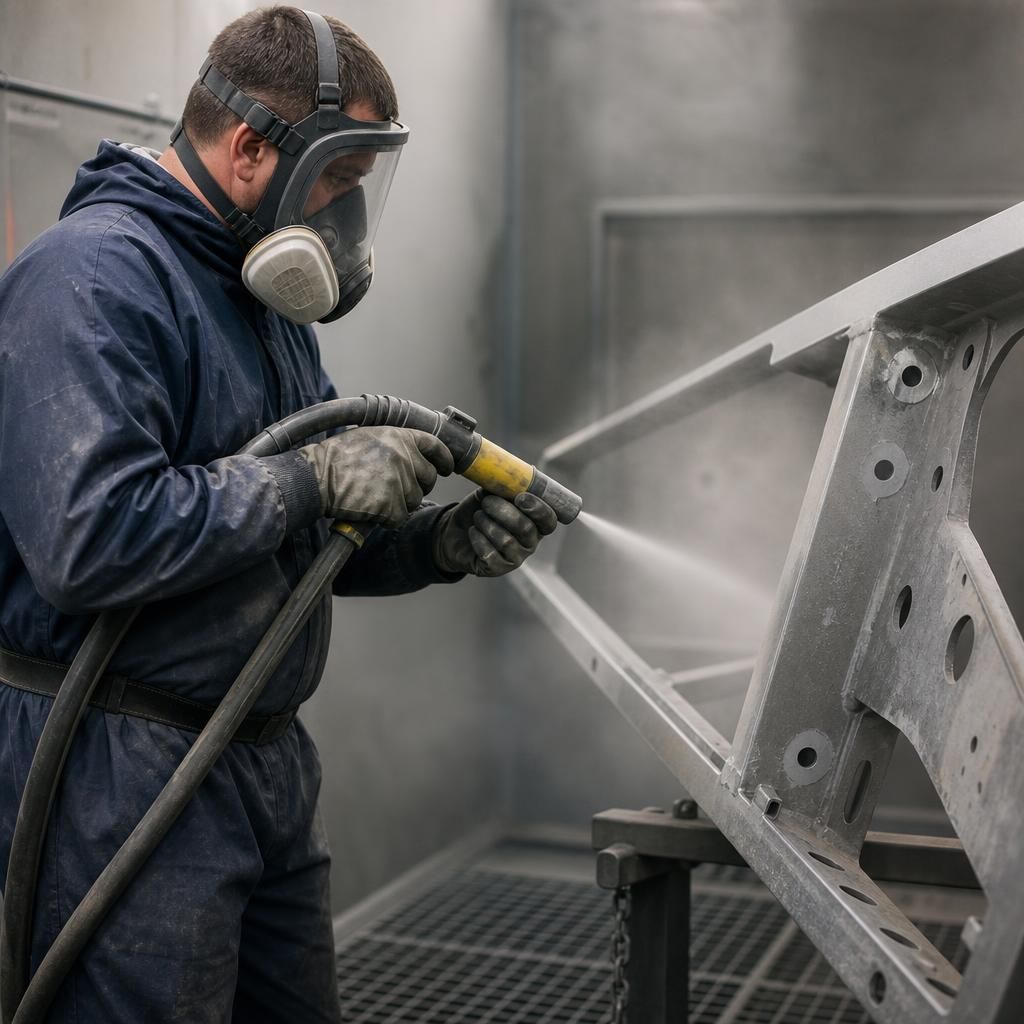
Preparation must be matched to the substrate rather than applying one blasting or cleaning method to every component. Aluminium can be damaged or excessively profiled by overly aggressive abrasive treatment, while galvanised steel may need careful removal of loose oxidation and a compatible pretreatment to support adhesion. Mild steel generally requires thorough removal of mill scale, rust and contaminants before the coating system is applied.
The abrasive or chemical process should also be checked for residues that could interfere with curing or adhesion. Abrasive media must be suitable for the substrate and kept clean, while chemically treated parts need effective rinsing and drying. This is particularly important where different metals are processed in the same facility, as cross-contamination from tools, media or tanks can create isolated adhesion failures that are difficult to identify after coating.
Discuss your metal surface preparation requirements
Discuss your metal surface preparation requirements with Powder-coatings.co.uk, including the substrate, component geometry, existing finish and intended service conditions. The team can help identify a suitable preparation specification before coating begins.