

What are the most effective repair methods for dealing with corrosion on powder-coated metal, and how can they extend the lifespan of the coating?
Effective repair involves removing loose coating and corrosion, preparing the exposed metal, applying a suitable protective primer where required, and restoring the powder-coated finish with a compatible coating system. Matching the repair to the damage prevents corrosion from spreading, reinstates the protective barrier and can extend the service life of the metal component.
The most effective corrosion repairs preserve as much sound coating as possible while completely removing active corrosion from the exposed metal. The repair normally involves assessing the damage, removing rust and poorly bonded coating, preparing the substrate, applying a compatible corrosion-protection system and reinstating the powder-coated finish. The correct method depends on whether the defect is localised, has penetrated the metal, or indicates widespread coating failure.
1. Assess the extent and cause of the corrosion
Inspection should establish how far corrosion has travelled beneath the coating and whether the metal itself has lost section or strength. Blistering, bubbling, lifting edges, staining around fasteners and rust emerging from scratches are signs that moisture may have reached the substrate. Corrosion can also develop at cut edges, drilled holes, welds, joints and contact points where the coating is thinner or has been damaged during assembly.
The cause should be addressed as part of the repair. Continued exposure to moisture, road salt, industrial chemicals, trapped water or dissimilar metals can cause a replacement coating to fail in the same location. Drainage, joint design, fastener condition and areas subject to impact should therefore be considered before the component is recoated.
2. Remove corrosion and unsound coating
For small, clearly defined areas, mechanical preparation may be suitable. Scrapers, abrasive pads, rotary tools or controlled sanding can remove loose coating and surface rust. The prepared area should extend beyond the visible stain until the surrounding coating is firmly bonded. Edges are feathered rather than left as a sharp step, helping the new material transition into the existing finish.
Abrasive blasting is generally more appropriate where corrosion is extensive, the coating has delaminated across a larger area, or pitting is present. It removes contamination and defective coating while exposing the condition of the metal. The abrasive and pressure must be selected for the substrate and component geometry; excessive blasting can distort thin sections or create an unnecessarily rough profile.
If corrosion has penetrated deeply, surface cleaning alone is not sufficient. Deep pits may retain contaminants and provide a route for corrosion to return. Depending on the component and its specification, the metal may require further preparation, repair or rejection before a coating system is applied.
3. Prepare the exposed metal correctly
After rust and loose material have been removed, the surface must be free from dust, grease, salts, abrasive residue and moisture. Cleaning is particularly important around pits, seams and welds, where contamination can remain hidden. The prepared area should not be handled with bare hands before coating, as transferred oils can affect adhesion.
Preparation also includes checking the existing powder coating. A sound surrounding coating can usually remain in place if it is properly keyed and free from underfilm corrosion. If adhesion is doubtful, removing a larger section or stripping the component completely is safer than coating over a weak boundary.
4. Use a suitable primer where the specification requires one
A protective primer can provide additional corrosion resistance on exposed steel or other suitable substrates, particularly where the component faces demanding moisture or chemical conditions. It must be compatible with the substrate, the existing coating and the powder finish applied over it. The primer needs the correct film build, coverage and cure before recoating; an unsuitable or poorly cured layer can reduce adhesion and create a new failure interface.
Primer selection should reflect the service environment rather than being treated as a universal solution. Components exposed to outdoor weathering, immersion, industrial contamination or repeated abrasion may require different protection from parts used in a dry internal setting. Where the existing coating system or substrate is uncertain, a coating specialist can establish a compatible specification before work begins.
5. Restore the powder-coated finish
Local repairs may be possible when the damage is limited and colour, texture and performance requirements allow a touch-up system. However, a liquid touch-up and a factory-applied powder coating do not necessarily have the same appearance, hardness or durability. The repair should therefore be judged against the required finish and the visibility and function of the component.
For larger damaged areas, recoating the component provides a more consistent result. The prepared surface is coated with a powder selected for the substrate, service conditions and existing finish. Where colour matching is important, the surrounding coating should be assessed for weathering, fading and texture changes; a nominally identical colour may not produce an invisible repair on an aged part.
When corrosion is widespread, coating adhesion is uncertain, or several repair areas would overlap, complete removal of the old coating and full reprocessing is often the more reliable option. This avoids leaving hidden corrosion or weak coating beneath isolated patches and provides a consistent surface for the replacement system.
6. Pay attention to edges, joints and fabricated details
Corrosion frequently returns at locations that are difficult to coat evenly. Sharp edges can receive less powder than adjacent flat faces, while crevices can retain moisture and cleaning residues. Welds should be checked for spatter, porosity and contamination, and enclosed sections should be considered for drainage and ventilation. Fasteners and interfaces between different metals may also require isolation or a compatible protective treatment.
Improving these details extends the useful life of the repair because the new coating is not being asked to compensate for a design feature that continually concentrates water or damages the film.
7. Confirm the repair before returning the part to service
Quality checks should include visual inspection for remaining rust, pinholes, missed edges, craters, poor coverage and contamination. Adhesion, coating thickness, cure and colour or texture should be checked against the agreed specification where those properties are critical. The finished component should also be examined at fixing points and other areas that may be damaged during handling or installation.
Following repair, avoid dragging or striking the component and prevent water or chemicals from becoming trapped against the coating. Regular inspection is useful for parts operating outdoors or in corrosive industrial environments. Small chips and damaged edges can then be dealt with before moisture reaches a larger area of the substrate.
In practical terms, local mechanical preparation and compatible touch-up may be appropriate for minor, isolated damage; blasting, priming and recoating are better suited to established or broader corrosion; and complete stripping and reprocessing is justified when the original coating has lost reliable adhesion or corrosion is widespread. Extending coating life depends less on covering visible rust than on removing the corrosion mechanism, preparing sound metal and applying a coating system suited to the component’s actual operating environment.
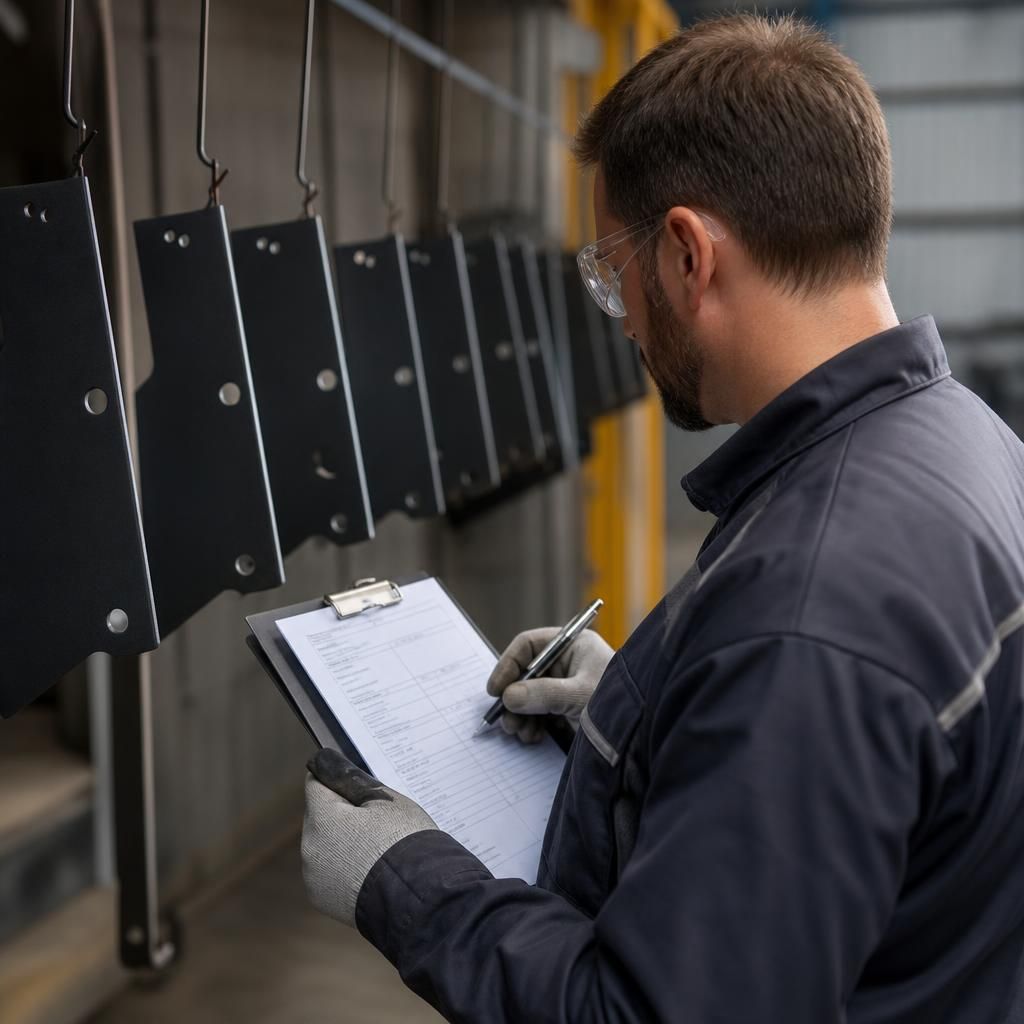
Documenting the repair specification helps protect the coating’s service life after the component returns to use. Record the substrate, corrosion location, preparation method, primer and powder system, film-build requirements and curing conditions. This information provides a reference for future inspections and prevents incompatible materials or unsuitable preparation methods being used if further damage occurs.
Repair records are particularly useful for fabricated parts installed in demanding environments. They allow recurring corrosion to be compared with the component’s exposure conditions and installation details, helping determine whether the issue is isolated damage or evidence that the original protection system needs review.
Discuss Your Powder-Coated Metal Corrosion Repair Requirements
If you need help deciding whether a corroded powder-coated component requires local repair or complete reprocessing, discuss its condition, substrate and intended use with our powder coating specialists. We can help identify a suitable repair approach for your metal parts.