

What are the most common powder coating defects, and how can they be effectively identified and repaired?
Common powder coating defects include orange peel, pinholes, bubbling, runs, blistering, contamination and poor adhesion, identified through visual inspection, cross-hatch or adhesion testing, and checks for corrosion or substrate contamination. Effective repair typically involves removing the failed coating, correcting the underlying surface or application problem, preparing the metal thoroughly and applying a compatible replacement coating.
Powder coating defects are departures from the intended appearance, coverage, adhesion or performance of the cured film. Effective diagnosis depends on separating a coating-film problem from a substrate, preparation, application or curing problem; otherwise, a replacement layer may conceal the symptom while leaving the cause in place.
Begin with the pattern and location of the fault. A defect confined to edges, welds, recesses or fixing points often indicates a preparation or coverage issue specific to that feature. A fault repeated across an entire batch is more likely to relate to powder storage, pretreatment, application settings or oven conditions. Recording the part position, coating batch, substrate type and process stage helps establish whether the issue is isolated or systematic.
Different surface faults require different diagnoses. An uneven, textured finish may result from powder behaviour, excessive film build, insufficient flow or an unsuitable cure profile. Small craters or voids can be associated with oil, moisture, silicone or other low-surface-energy contamination. Bubbling beneath the film may point to trapped gas, porous castings, damp blast media or corrosion developing under the coating. A run or sag is generally linked to excessive deposited material, poor part orientation or over-flow during curing. These appearances can overlap, so the affected area should be examined alongside an unaffected section rather than judged in isolation.
Check the coating and the metal beneath it. Where a damaged area exposes the substrate, look for rust, white corrosion products, weld residue, sharp edges, grease or remnants of the previous finish. Corrosion beneath an apparently intact film may show as lifting, cracking or localised swelling. If the metal has been chemically attacked, pitted or materially weakened, coating repair alone will not restore the original condition; the component may require metalwork or replacement before recoating.
Use targeted tests rather than relying on appearance alone. Film thickness measurements can reveal excessive or insufficient build, particularly on corners and recessed sections. A coating that appears sound but separates readily from the substrate indicates an adhesion problem requiring investigation of cleaning, pretreatment and cure. A coating that is soft, easily marked or insufficiently resistant to the specified environment may not have reached the correct cure. Any solvent-resistance or adhesion test should be selected for the coating system and carried out on an agreed area, since an unsuitable test can create unnecessary damage.
Repair usually follows a controlled sequence:
- Quarantine or identify affected parts so defective material is not mixed with acceptable work.
- Define the defect and determine whether the existing film is sound around the affected area.
- Remove loose, failed or incompatible coating, extending into sound material where necessary.
- Eliminate the underlying cause, such as oil, corrosion, moisture, trapped gas, sharp edges or unsuitable previous coating.
- Prepare the exposed metal using a method appropriate to its type, condition and required finish.
- Apply any compatible primer or barrier system required for corrosion protection or adhesion.
- Recoat using suitable powder, controlled film build and a cure cycle matched to the component and coating specification.
- Inspect the repaired part against agreed appearance, coverage, adhesion, thickness and functional requirements.
Local repair is not always the best option. A small chip on an otherwise stable surface may be treated differently from widespread poor adhesion, repeated pinholing or corrosion beneath a large area. Spot repairs can leave visible colour, gloss or texture differences, especially on metallic, textured or highly visible finishes. If the surrounding film has failed or the defect extends through several surfaces, complete stripping and recoating normally provides a more consistent basis than applying material only to the visible mark.
Surface preparation determines whether the repair lasts. Cleaning must remove oils, salts, dust and residues rather than simply spreading them across the part. Blasting or another approved preparation method should produce a suitable profile without embedding abrasive or damaging thin sections. Edges may need attention because coating can withdraw from sharp geometry, while blind holes, lap joints and weld areas can retain contaminants or moisture. The prepared metal should be protected from renewed contamination before powder application.
Process records help prevent recurring defects. Useful checks include powder identification and storage condition, substrate cleanliness, pretreatment control, spray equipment settings, earth continuity, film thickness and the oven temperature experienced by the part rather than air temperature alone. For batch work, retaining a reference panel or representative sample can make changes in colour, texture and cure easier to detect. Where defects recur, compare acceptable and failed parts against the same records to identify the first process difference.
For manufacturers, fabricators and other businesses repairing coated components, the appropriate method depends on the defect, substrate, coating specification, component geometry and required service environment. A coating specialist can assess whether selective preparation, complete removal, corrosion treatment, priming or full recoating is technically appropriate before work begins. The important measure is not simply whether the visible mark has disappeared, but whether the repaired system is compatible with the metal and capable of meeting the component’s functional requirements.
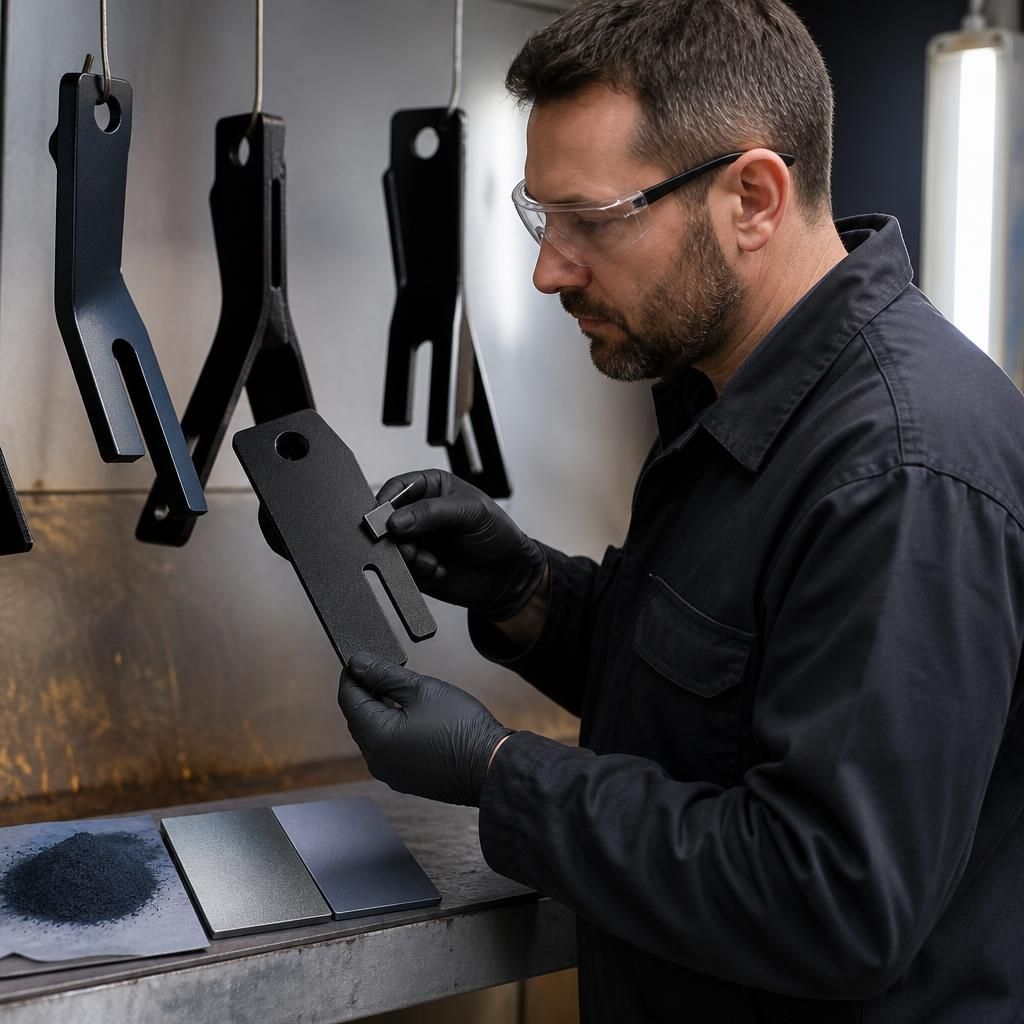
Repair materials must be compatible with the existing coating, not selected by colour alone. Check the resin type, gloss level, texture, film-build requirement and service environment before applying replacement powder. A visually similar product may cure differently or have different chemical and weathering resistance, creating a weak boundary between the original and repaired areas.
Where the coating specification is unknown, assess a small prepared area or representative sample before committing the full component. This helps confirm adhesion, appearance and cure compatibility while limiting unnecessary rework. For visible parts or assemblies supplied in batches, compare the repaired finish with an approved reference panel under consistent lighting, since metallic effects, gloss and surface texture can appear different even when the nominal colour is the same.
Discuss Your Powder Coating Defect Repair Requirements
Discuss your powder coating defect repair requirements with our Midlands coating specialists, providing details of the component, defect and operating environment. We can help determine whether selective repair, preparation and recoating, or complete stripping is the most suitable approach.