

What specific surface cleaning techniques ensure optimal powder coating adhesion?
Optimal powder coating adhesion starts with removing oil, grease, dirt, salts and other contaminants using a suitable solvent or alkaline degreaser, followed by thorough rinsing with clean water. The metal should then be completely dried and inspected before coating, as residual cleaner, moisture or handling marks can cause poor adhesion and finish defects.
Optimal adhesion depends on a controlled cleaning sequence that matches the metal substrate and the type of residue present. In practice, this means selecting the correct chemical cleaner, applying it at a consistent concentration and temperature, removing residues between stages, and verifying the surface before any conversion treatment or powder application.
Begin with a substrate and contamination assessment. Steel, aluminium, galvanised components and previously treated metal do not respond identically to cleaning chemicals. A cleaner suitable for bare steel may stain aluminium or attack zinc coatings. The preparation method should therefore take account of the alloy, existing surface treatment, weld condition and fabrication processes used. Cutting fluids, drawing compounds, adhesive residues, marker inks and silicone-based products may require different chemistry from ordinary workshop soil.
Aqueous alkaline cleaning is suitable for many fabricated components. Spray, immersion and agitated tank systems can loosen oily residues and embedded workshop soil without relying solely on mechanical action. The important controls are contact time, solution strength, bath cleanliness and temperature. Under-processing leaves a film that can interfere with the pretreatment, while excessive strength or exposure can etch the substrate and create an uneven surface. Agitation also helps fresh solution reach recesses, joints and profiles that a simple wipe may miss.
Use targeted methods for difficult residues. Emulsifying cleaners can help lift heavy organic deposits, while solvent-based or vapour processes may be considered for confined parts where aqueous cleaning cannot reach effectively. These methods must be compatible with the substrate and followed by a process that removes the cleaning agent itself. Solvent wiping is not a substitute for a controlled cleaning stage on complex or heavily soiled components, because it can spread contamination across the surface rather than remove it.
Acidic cleaning should be tightly controlled. Pickling or mild acid treatment can remove oxide films and certain inorganic residues, but it is not appropriate as a universal cleaner. Over-treatment may cause etching, hydrogen-related risks in susceptible steels or an altered surface chemistry that affects subsequent pretreatment. Where acidic products are used, the process should specify inhibitor use, exposure limits and an effective neutralising or rinsing stage.
After the main cleaning stage, rinsing quality becomes critical. A component can appear visually clean while retaining alkaline salts or acidic residues in seams, drilled holes and folded sections. Use a staged rinse where required, with clean water maintained to a suitable quality. The final rinse should not reintroduce dissolved salts; otherwise, residue may remain after drying and contribute to blistering, under-film corrosion or local adhesion failure.
Conversion treatment can provide an additional adhesion foundation. On suitable substrates, phosphate or other approved conversion processes create a controlled surface that improves the interaction between the metal and the powder coating system. The treatment must be compatible with the substrate and coating specification. It should not be used to conceal inadequate cleaning: oil, embedded shop soil or residues beneath a conversion layer can still produce defects.
Verification should combine visual and practical checks rather than relying on appearance alone:
- Inspect edges, welds, threaded holes, overlaps and recessed areas with suitable lighting.
- Check for water-break behaviour, where a continuous sheet of water indicates a more uniformly wettable surface than isolated beads or fisheyes.
- Use a clean, non-shedding wipe on representative areas to identify remaining transfer or residue.
- Where process control requires it, monitor rinse conductivity, cleaner concentration, bath loading and pH against documented limits.
- Confirm that no flash rust, powdery deposit or chemical staining has appeared before the next stage.
Handling after cleaning is part of the cleaning process. Components should be moved using clean gloves, hooks or fixtures that do not transfer hand oils or workshop residue. Contact points should be positioned so they do not create unprepared shadows, and cleaned surfaces should not be placed on dirty benches or racks. If a component is touched, stored, or exposed to a new source of contamination after preparation, the affected area may need to be cleaned again.
For repeat batch work, written process controls produce more consistent results than visual judgement alone. Record the substrate, cleaner type, operating conditions, rinse stages and inspection findings, then review any adhesion or finish defect against those records. A small test piece or representative component can also confirm that the selected cleaning and pretreatment sequence is compatible with the intended powder system before full production proceeds.
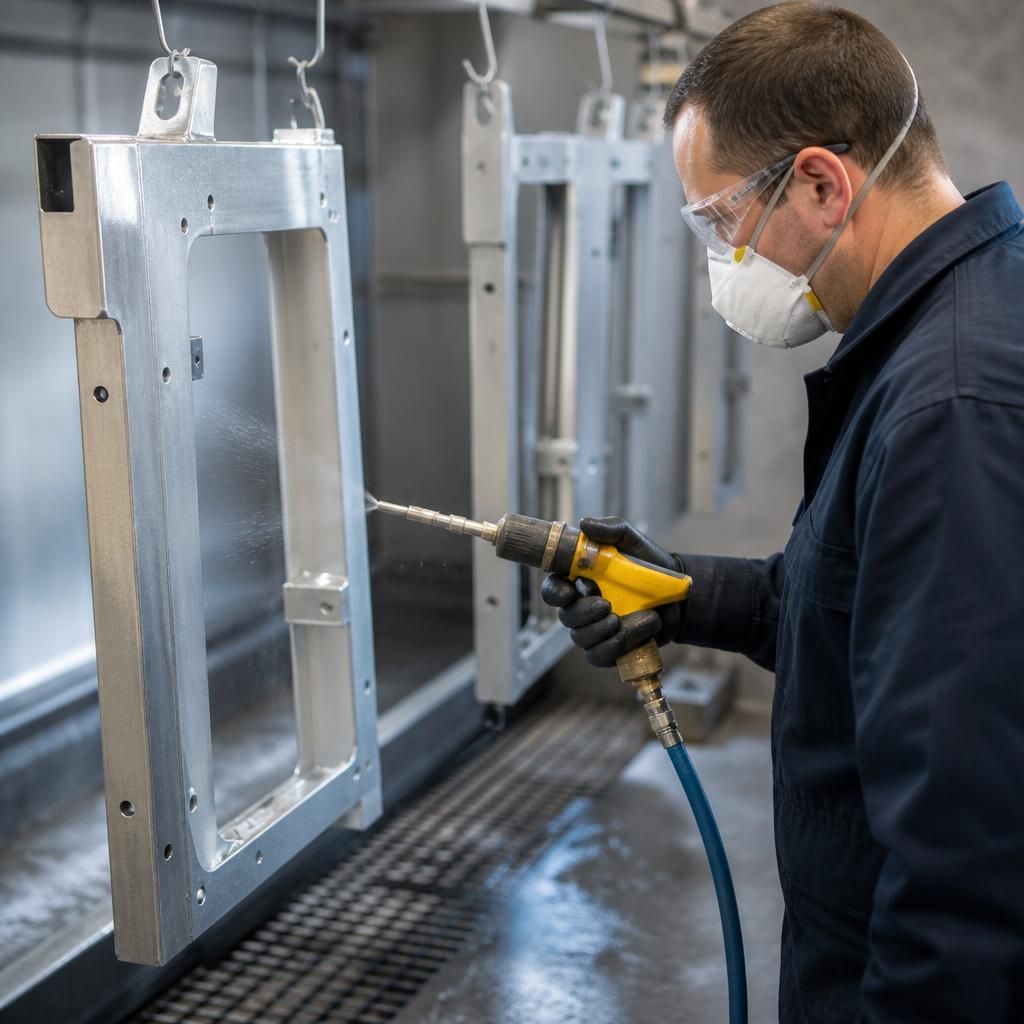
Drying should use clean, oil-free air where compressed air is applied. Moisture, compressor oil or particles from an unmaintained airline can redeposit on the freshly cleaned metal and undermine the benefit of the cleaning stage. Direct air into seams, drilled holes, folded sections and other areas where rinse water may collect, then allow the component to reach a consistently dry condition before handling.
Air quality should be checked as part of the preparation process rather than assumed. A clean test surface or suitable inspection wipe can help identify oil or moisture carry-over from the airline. If contamination is detected, the air supply should be corrected and affected areas cleaned again before powder coating proceeds.
Discuss Surface Cleaning for Powder Coating
Discuss your component’s substrate, contamination risks and required finish with our powder coating team to identify a suitable cleaning and preparation sequence. Collection and delivery options are available for businesses across the Midlands and surrounding areas.