

What safety precautions should be taken during the blasting process for metal surface preparation?
Blasting for metal surface preparation should be carried out under a documented risk assessment, with the area controlled and suitable PPE—including respiratory, eye, hearing and skin protection—worn by operators. Use effective enclosure and dust extraction, inspect hoses and connections before use, isolate the equipment during maintenance, and manage spent abrasive to prevent exposure and contamination.
Safe blasting for metal surface preparation depends on controlling the work area, the equipment, the abrasive and the operator’s exposure before work begins. The process should be carried out by trained, authorised personnel using written procedures that reflect the abrasive, substrate, blasting method and conditions on site.
Control access to the blasting area. Mark the boundary clearly and prevent people who are not involved in the operation from entering. Use suitable warning signs and, where necessary, physical barriers or an attendant to control access. Do not start blasting if another person could enter the work zone without the operator knowing. Good lighting and clear visibility of the workpiece, controls and escape routes are also important.
Assess the abrasive and coating hazards before selecting the process. Abrasive media can create different risks depending on their composition, particle size and condition. The removal of old paint or coatings may release hazardous substances, so the existing finish should be identified where possible and the relevant safety data consulted. Avoid using an abrasive that creates an unnecessary respiratory or toxicological hazard. Contaminated or previously used media should be treated according to its contents rather than assumed to be harmless.
Apply suitable respiratory controls. Respiratory protective equipment should be selected for the particular dust and coating contaminants present, not simply chosen as a general precaution. Where tight-fitting respiratory equipment is used, the wearer needs an appropriate face-fit assessment, clean-shaven contact area and suitable training. Respiratory equipment must be stored, cleaned and maintained correctly, with filters replaced in line with the equipment instructions and the conditions of use.
Reduce the need for people to remain close to the blast stream. Use remote controls, suitable blast cabinets or automated handling arrangements where appropriate. Operators should never direct the nozzle towards themselves or another person, even when the equipment appears not to be operating. The nozzle should be secured when not in use, and controls should be positioned so that the operator can stop the process without reaching through the blast area.
Check the workpiece and its position. Secure components so that they cannot move, overturn or fall when struck by the abrasive. Remove loose items from the work area and consider whether cavities, seams or enclosed sections could trap abrasive or release dust later. Components should be handled with suitable lifting equipment where their size or weight creates a manual-handling risk. Sharp edges exposed by cleaning should be identified before the part is moved.
Manage compressed-air and energy hazards. Blasting systems operate at high pressure, so controls, valves and connections should be operated only as intended by the equipment manufacturer. Never use compressed air to clean clothing, skin or another person. Before disconnecting, opening or adjusting pressurised equipment, release the pressure through the correct control and confirm that stored energy has dissipated. Electrical supplies, automatic systems and other connected energy sources should be controlled in accordance with the site’s isolation procedure before intervention.
Prevent static and ignition risks where relevant. Ensure the equipment, workpiece and associated ducting are correctly earthed where the process or materials could generate static electricity. Keep ignition sources away from dust-producing operations and consider the properties of any combustible dust or coating residue. Do not introduce liquids, chemicals or cleaning products into the system unless they are approved for that equipment and process.
Control noise, vibration and physical strain. Blasting can expose operators to high noise levels and hand-arm vibration, particularly where the nozzle is held for extended periods. Select equipment and work methods that reduce unnecessary exposure, keep controls in good condition and organise tasks so that no operator is exposed for longer than the safe operating procedure permits. Hearing protection is only one part of the control approach; reducing noise at source and maintaining the equipment are also important.
Keep the process orderly. Hoses should be routed to avoid trip hazards, crushing and sharp bends. The work area should be kept free of accumulated abrasive and residue, using a method that does not put dust back into the air. Spillages should be dealt with promptly, and waste should be placed in clearly identified containers suitable for the material. Do not mix different waste streams if that could complicate safe disposal or increase the hazard.
Use a clear emergency procedure. Operators and nearby workers should know how to stop the equipment, raise an alarm, leave the area and report an injury, loss of containment or equipment failure. First-aid arrangements should reflect likely injuries, including eye contamination, cuts and impact injuries. Any suspected exposure to hazardous dust or coating residue should be reported and dealt with promptly using the relevant safety information.
After blasting, inspect the component and the work area before removing controls or passing the part to the next stage. Confirm that loose abrasive and residue have been dealt with, that the equipment is left in a safe state and that any defect or abnormal event is recorded. These precautions protect workers while also preventing contamination from being transferred onto metal surfaces before powder coating.
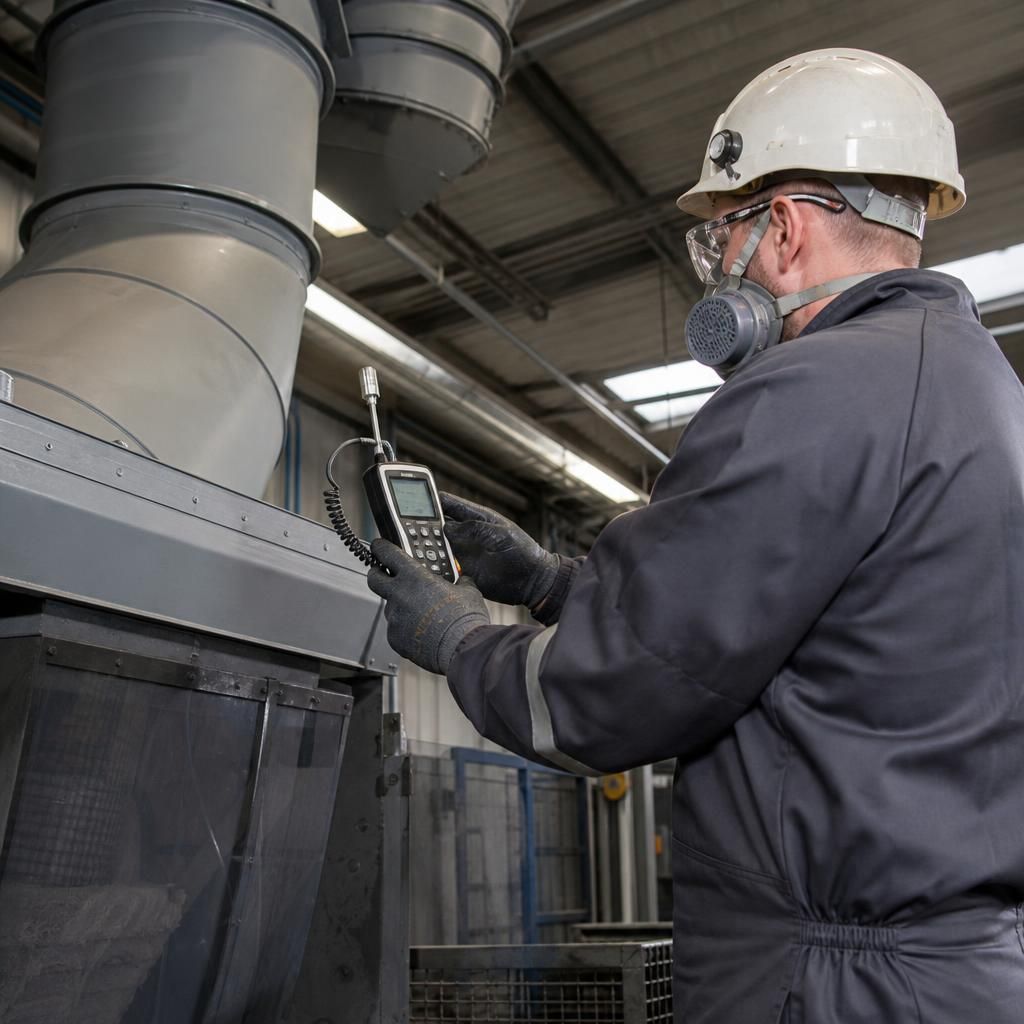
A key blasting safety precaution is to verify that exposure controls are working in practice, rather than relying on their presence alone. Where the risk assessment identifies a potential for hazardous dust or coating residues, arrange suitable checks of the enclosure, extraction performance and workplace exposure conditions by a competent person. Review the findings after changing the abrasive, coating being removed, equipment or working method, and investigate any signs of dust escaping into surrounding areas.
Keep records of inspection and monitoring results, corrective actions and any reported symptoms. This evidence helps confirm whether the control measures remain suitable and indicates when the risk assessment or work instructions need to be updated.