

What procedures should be followed to ensure consistent removal of all surface contaminants before powder coating begins?
Consistent contaminant removal requires a controlled sequence of inspection, degreasing, rinsing, drying and final checking before powder is applied. The prepared metal should be free from oil, grease, dirt, moisture, rust residue and previous coating fragments, with any remaining contamination removed and the surface rechecked before coating begins.
Consistent contaminant removal depends on a documented, substrate-specific preparation procedure rather than a single cleaning operation. Each component should be assessed for the type, location and severity of contamination, treated with a compatible method, and released for coating only after objective checks confirm that residues have been removed.
1. Define the required condition before work starts
Record the metal type, existing finish, service requirements and any areas that must remain masked. Steel, aluminium, galvanised metal and cast components may react differently to alkaline cleaners, solvents, acids and abrasive treatment. The preparation specification should identify unacceptable residues, including oil, grease, cutting fluid, drawing compounds, adhesive, marker ink, weld spatter, oxide, soluble salts and loose coating.
Components should be examined under suitable lighting, including edges, recesses, folded sections, drilled holes, welds and joints. These locations commonly retain contamination even when broad flat faces appear clean. Parts with heavy deposits or unknown substances should be segregated until the correct treatment has been established.
2. Remove gross contamination without spreading it
Loose dirt, swarf, dust and flakes should be removed before wet cleaning or blasting. Scrapers, brushes or controlled vacuuming can be used where appropriate, provided they do not introduce metallic particles or damage the substrate. Oily deposits should not be brushed across a larger area, as this can create a thin film that is harder to detect later.
Blasting should not be used as the first response to oil or grease. Abrasive treatment can drive liquid contamination into the surface or contaminate the blasting media. Where oily material is present, it should first be removed using a compatible aqueous cleaner or solvent process. Any solvent must be suitable for the metal and fully removed afterwards.
3. Match the cleaning chemistry to the substrate
Industrial alkaline cleaners are commonly used to emulsify oils and process residues, while solvent cleaning can be useful for localised contamination. The selected product should be used at the supplier’s specified concentration, temperature and contact time. Excessive concentration or prolonged exposure can stain, etch or otherwise alter some metals.
Aluminium and zinc-coated surfaces require particular control because aggressive alkaline or acidic products can attack the substrate. Castings may also contain porosity that releases oil during heating or cleaning. Welded assemblies can retain residues around weld toes and heat-affected areas, so these regions need direct attention rather than reliance on immersion alone.
Cleaning solutions should be kept within their working condition. A bath that has accumulated oil, solids or reaction products may transfer contamination back to components. Monitoring the solution and replacing or filtering it in accordance with the process specification is therefore part of contaminant control.
4. Treat rust, oxides and previous coatings separately
Surface oils and inorganic corrosion products are different types of contamination and may require different stages. Rust, mill scale and firmly bonded old coating may need controlled abrasive preparation or another approved removal method. Loose material should be removed completely, but excessive treatment can change dimensions, soften edges or create an unsuitable surface profile.
Residues from chemical stripping must be removed particularly carefully from seams, holes and crevices. Where a conversion treatment is specified, it should be applied only after the surface is chemically clean and suitably rinsed. The treatment should not be used to conceal remaining oil, loose oxide or embedded debris.
5. Control rinsing and water quality
After chemical cleaning, rinsing must remove both the contaminant and the cleaner itself. Rinse water should reach enclosed and difficult-to-access areas, with drainage arranged so that dirty liquid does not run over sections that have already been cleaned. Multiple rinse stages may be appropriate where the cleaning chemistry is strong or where residues are likely to remain in joints.
Water quality matters because dissolved salts and minerals can remain on the surface after evaporation. Where the process requires it, the final rinse should use water of suitable quality, and the rinse condition should be monitored rather than judged only by appearance. Components should be positioned to drain fully, avoiding pockets where liquid can collect.
6. Dry without recontamination
Drying should remove moisture from holes, folds, seams and other sheltered areas as well as from visible faces. Clean, dry air can help clear trapped water, but the air supply must not contain oil or moisture. Air lines, nozzles and handling equipment should be maintained so that the drying stage does not add a new contaminant.
Do not handle prepared surfaces with bare hands. Clean gloves, dedicated racks and clean contact points reduce the risk of transferring skin oils, dust or rust from handling equipment. Prepared components should be protected from dirty work areas, grinding dust, spray mist and contact with unprepared parts.
7. Use checks that can detect invisible residues
Visual inspection is necessary but cannot reliably identify every film. A water-break assessment can indicate whether a surface is uniformly wettable; beading or rapid separation may suggest oil or another hydrophobic residue. A clean white wipe can reveal loose dirt or transfer, although it should support rather than replace the specified inspection method.
Where soluble salts are a concern, use the relevant surface or rinse-water test method. Check difficult areas separately instead of testing only an accessible flat face. If any test gives an uncertain or failed result, return the part to the appropriate cleaning stage and investigate the cause before coating.
8. Keep the process repeatable
Record the cleaning method, chemical condition, equipment settings, inspection results and any deviations. Use defined acceptance criteria for each substrate and component type, and review recurring failures for causes such as exhausted cleaner, contaminated rinse water, poor drainage, inadequate access or dirty handling equipment.
Consistent results come from controlling the complete route from incoming inspection to final release. Powder should only be applied once the surface has passed the agreed checks, remained protected after preparation and is free from residues that could interfere with adhesion or finish quality.
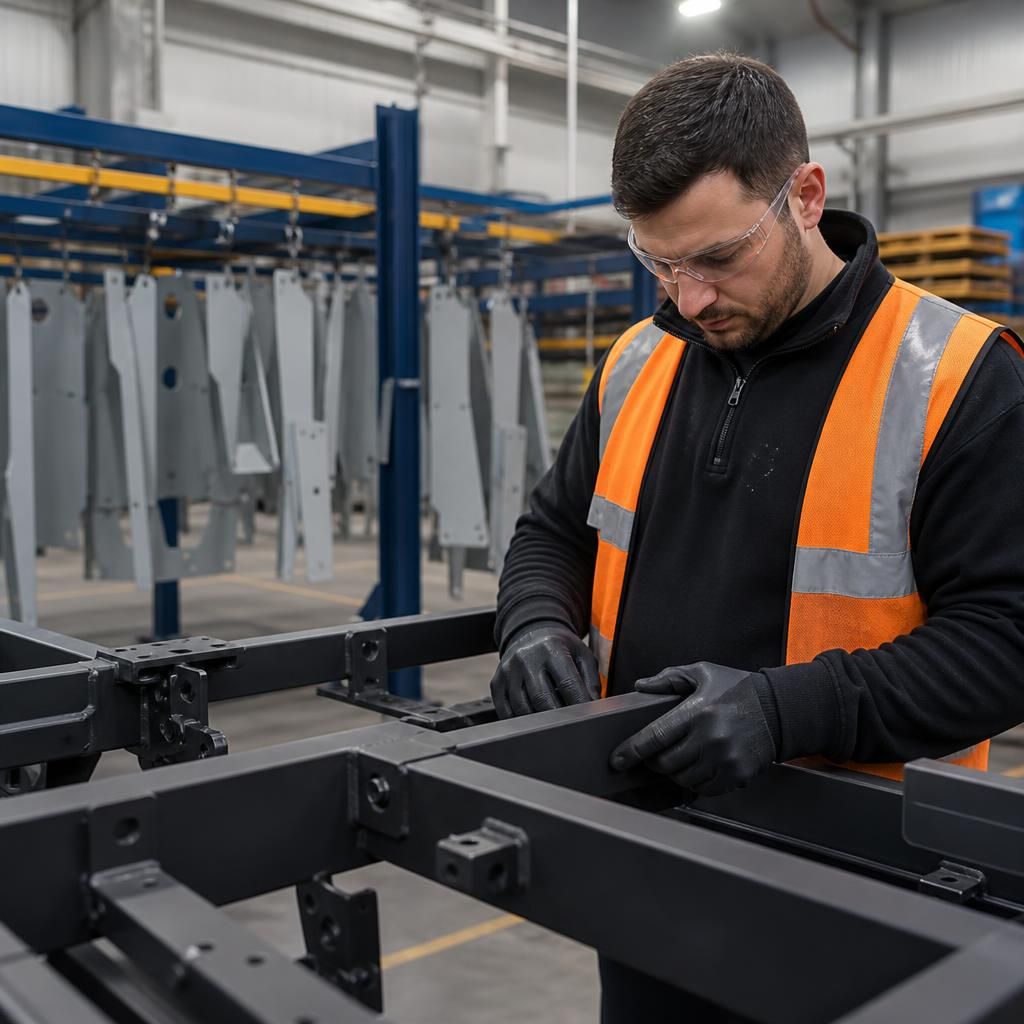
Prevent contamination after the final inspection. A cleaned component can fail if it passes through the same handling route as oily parts, grinding work or abrasive dust. Separate prepared items from incoming and rejected work, use clean storage supports, and keep packaging materials, racks and lifting accessories suitable for finished surfaces.
Each batch should have a clear status showing whether it is awaiting inspection, accepted for coating or held for further preparation. This prevents unverified components from being mixed with released work and makes any later contamination easier to trace to a particular handling stage.