

What are the key factors to consider when choosing a professional sandblasting company for powder coating repairs?
Choose a sandblasting company with relevant experience in powder coating repairs, suitable equipment for the metal components involved, and a controlled process for removing damaged coating without harming the substrate. Also assess how carefully it inspects surfaces, manages contamination and texture, prepares work for recoating, and documents quality checks.
Choosing a professional sandblasting company for powder coating repairs means assessing more than whether it can remove old coating. The right provider should understand the component’s substrate, the extent of the damage, the preparation required for the new coating and the practical controls needed to protect the part throughout the process.
1. A clear assessment of the repair scope
Before work begins, the company should establish whether the affected area can be locally prepared or whether the existing coating needs to be removed from the complete component. This decision depends on factors such as peeling or delaminated coating, corrosion, impact damage, weld areas, previous repairs and the condition of adjacent surfaces. A suitable assessment should also identify whether the component is appropriate for abrasive blasting at all, particularly where it includes thin sections, precision-finished faces or heat-sensitive features.
The quotation should state what preparation is included, which areas will be treated and whether masking, additional cleaning or post-blast handling is required. This avoids a repair being priced on the assumption of simple coating removal when the part needs more extensive preparation.
2. Understanding of component design and tolerances
Metal parts often contain threads, holes, machined faces, hinges, apertures, recesses and sharp edges that cannot be treated in the same way as broad, exposed surfaces. Ask how these features will be protected and supported. A professional provider should be able to discuss masking requirements, hanging or fixturing arrangements and the risk of abrasive entering enclosed sections.
This is particularly important for fabricated assemblies, automotive components, construction parts and manufactured items where dimensional fit or movement must be preserved. The process should remove the damaged coating without unnecessarily altering the underlying metal.
3. A preparation method matched to the substrate
Different metals and existing finishes respond differently to abrasive treatment. Steel, aluminium, galvanised surfaces and previously coated components may require different handling to avoid distortion, excessive roughness or damage to the substrate. The company should be willing to explain why its proposed abrasive, pressure and working technique are suitable for the specific part rather than applying one standard approach to every job.
It is also useful to ask how the company deals with edges, welds and areas where coating failure began. These locations can retain corrosion products or loose material and may need particular attention before a repair coating is applied.
4. Control of the handover to recoating
Blasting is only one stage in the repair process. Once preparation is complete, the surface needs to be protected from handling damage, moisture and renewed contamination before powder coating. Ask how prepared parts are inspected, packaged and transferred, and whether the business can coordinate the next coating stage where required.
The timing and sequence of preparation, transport and recoating matter because a clean blasted surface should not be left exposed unnecessarily. Suitable packaging is also important for finished preparation, especially where components have edges or exposed areas that could be marked during collection or delivery.
5. Safety and environmental controls
A professional sandblasting operation should have appropriate controls for abrasive dust, airborne debris, noise and spent media. Relevant considerations include enclosed or controlled blasting areas, effective extraction, suitable personal protective equipment, equipment maintenance and safe management of waste. These controls protect employees, visitors and nearby operations while reducing the risk of abrasive or coating residue contaminating other work.
Ask how removed coating and used abrasive are collected and disposed of, particularly if the existing finish may contain hazardous substances. The answer should demonstrate that waste handling is treated as part of the process rather than an afterthought.
6. Written communication and traceability
For repeat or production work, the provider should be able to record the agreed preparation requirements for each component or batch. Useful information may include part identification, areas to be treated, masking instructions, surface condition on arrival and any limitations identified during assessment.
Clear communication is equally important for one-off repairs. Photographs, marked-up drawings or a written description can help confirm which surfaces require preparation and which must remain untouched. This reduces the likelihood of misunderstandings between the coating company, fabricator and end client.
7. Collection, delivery and packaging arrangements
Metal components can be awkward, heavy or vulnerable to damage after preparation. Check whether the company offers collection and delivery options, what information it needs about dimensions and handling, and how parts should be packaged. Transport arrangements should account for lifting points, fragile features and separation between prepared components.
For businesses across the Midlands and surrounding areas, a regional provider may make collection and delivery more practical, but the important point is that the arrangements are agreed before the work is authorised.
8. A transparent quotation
A useful quotation should distinguish preparation from any subsequent powder coating, identify handling or masking charges and explain what could change the price after the component is examined. It should also clarify whether the work covers local repair preparation or complete coating removal.
In summary, select a sandblasting company that can assess the repair properly, protect critical component features, match the method to the metal, control dust and waste, communicate requirements clearly and return the prepared parts in a condition suitable for the next coating stage. These factors provide a more reliable basis for comparison than price alone.
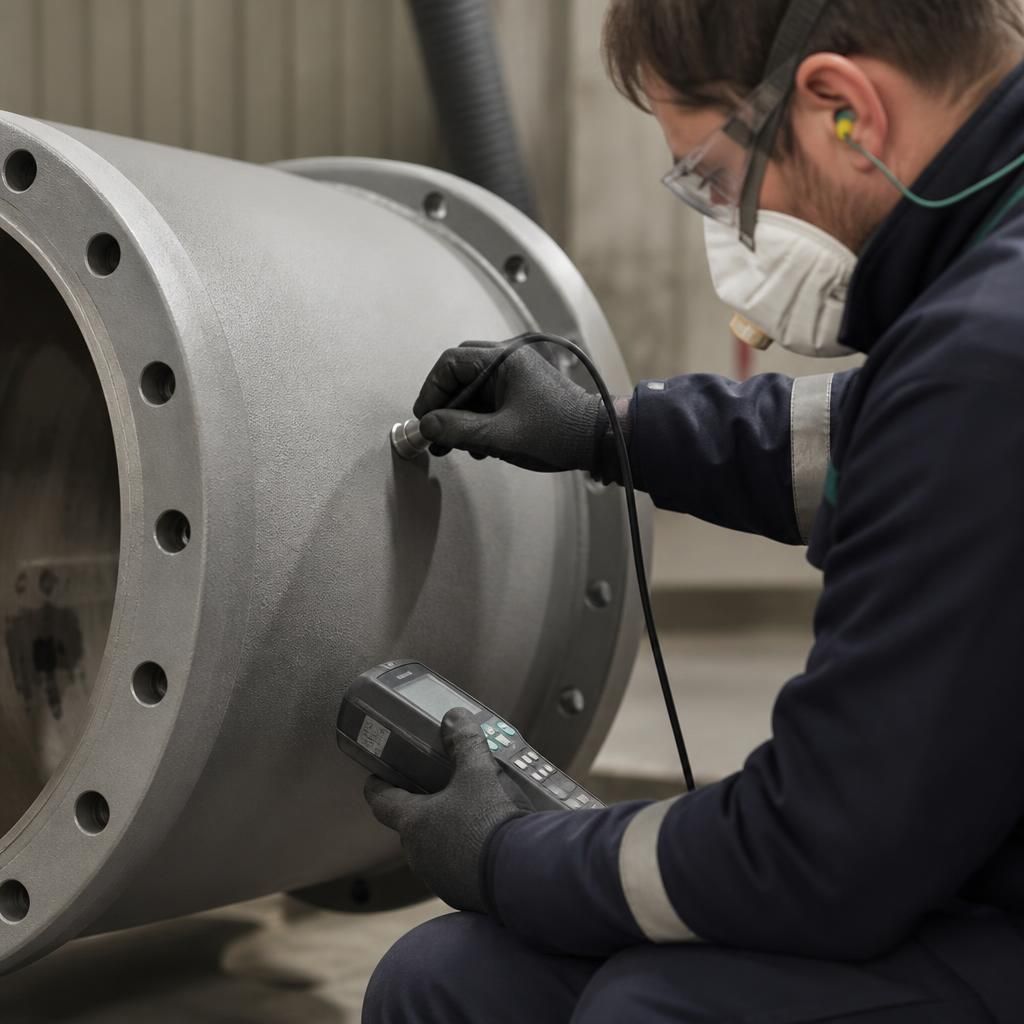
A useful sign of a competent sandblasting company is that it verifies the prepared surface rather than relying on appearance alone. Before powder coating repairs, the operator should check that loose coating, corrosion residue, grease and abrasive contamination have been removed, and that the blasted surface has a consistent profile suitable for the specified coating system. Where the repair has defined technical requirements, ask what inspection method is used and how results are recorded. This provides clearer evidence that preparation is ready for recoating and helps identify areas requiring further work before the component leaves the blasting stage.