

What materials and surfaces can be effectively treated and repaired when dealing with rust and corrosion on powder-coated metals?
Rust and corrosion on powder-coated mild steel, structural steel, galvanised steel and some aluminium components can usually be treated, provided the underlying metal remains suitable for repair. Effective treatment depends on removing corrosion and unsound coating, preparing the surface correctly, and applying a compatible protective finish to the affected area or complete component.
The most suitable materials for treating rust and corrosion on powder-coated components are sound carbon or mild steel, structural steel, galvanised steel and aluminium, provided the corrosion has not caused unacceptable loss of section, perforation or structural damage. The repair method must be matched to the base metal, the remaining coating and the location of the affected area rather than treating every corroded surface in the same way.
Mild and carbon steel are common substrates for powder-coated brackets, frames, panels, guards, enclosures, fabricated parts and general engineering components. Typical repairable defects include surface rust, corrosion around exposed edges, bubbling caused by under-film corrosion and rust developing at welds, joints or fixing points. Preparation normally involves removing loose coating and corrosion, assessing the depth of any pitting, and creating a clean, stable surface for a compatible protective finish. Where corrosion has substantially thinned the steel or created holes, coating alone will not restore the component’s strength; fabrication, reinforcement or replacement may need to be considered.
Structural steel can also be treated where corrosion is limited to the surface or to localised areas and the steel remains structurally suitable. This may include coated sections, brackets, supports, frames and other fabricated assemblies. Particular care is needed around load-bearing connections, bolted joints, welds and concealed faces, because corrosion can continue in areas that are difficult to inspect or prepare. A coating repair can protect the metal surface, but it should not be presented as a substitute for an engineering assessment where the corrosion may have affected load capacity.
Galvanised steel requires a different approach because it has a zinc layer beneath the powder coating. White corrosion deposits on zinc are not the same as the red rust associated with exposed steel, although failure of the zinc layer can eventually allow the steel below to corrode. Preparation must remove unsound powder coating and corrosion without unnecessarily damaging sound galvanising. If the zinc protection is largely intact, the repair may focus on cleaning, suitable surface preparation and recoating. If the galvanised layer has been seriously depleted, the repair specification may need to include additional corrosion protection rather than relying on the remaining zinc alone.
Aluminium components can often be repaired when the powder coating has failed and oxidation is confined to the surface. Aluminium corrosion may appear as a dull, powdery or blistered area, particularly where moisture has entered through a damaged edge, joint or fixing hole. Preparation needs to avoid embedding contaminants or causing unnecessary damage to the relatively softer substrate. Contact between aluminium and dissimilar metals can also create galvanic corrosion, so the source of moisture and the condition of adjacent fixings should be examined before recoating.
Other powder-coated substrates, including some stainless steel or cast metal components, require an individual assessment. Rust staining on stainless steel may result from contamination or contact with another corroding metal rather than failure of the stainless substrate itself. Cast components can present pores, recesses and retained oils that make thorough preparation more difficult. These surfaces may be treatable when they are clean, stable and dimensionally sound, but the proposed coating system must be compatible with the substrate and the intended service conditions.
The physical form of the component is as important as the metal from which it is made. The following areas commonly need close inspection:
- Edges and corners: coating is more vulnerable where it becomes thin over a sharp edge, particularly if the original preparation was inadequate.
- Welds and heat-affected areas: weld spatter, residues, porosity and uneven profiles can create early points of coating failure.
- Holes, slots and folded sections: moisture can collect inside returns or around apertures, allowing corrosion to develop beneath an apparently intact finish.
- Tube interiors and concealed faces: these may be inaccessible for complete preparation and may require a different repair decision from the visible exterior.
- Flat panels and broad faces: localised corrosion can often be identified more clearly, but visible colour or texture differences may make a small repair noticeable.
The existing powder coating also affects whether a local repair is practical. A firmly bonded coating surrounding a small defect may allow the affected area to be prepared and recoated. Widespread blistering, peeling, chalking or loss of adhesion indicates that corrosion or contamination may extend beyond the visible mark. In that situation, removing and recoating a larger area, or stripping the component before applying a new system, is more reliable than covering isolated spots. Nylon and other specialist powder-coated finishes should not be assumed to accept an ordinary repair coating; adhesion, flexibility, chemical resistance and service temperature all need to be considered.
A suitable repair assessment therefore considers four points: the substrate metal, the depth and spread of corrosion, the condition and type of the existing coating, and the component’s operating environment. Outdoor exposure, water retention, road salts, industrial contaminants, abrasion and contact with other metals can all influence the coating specification. Where the substrate is still sound and the cause of coating failure can be addressed, repair and recoating may be appropriate. Where the metal is perforated, badly pitted, distorted or structurally weakened, replacement or metalwork may be more suitable than attempting to restore the finish alone.
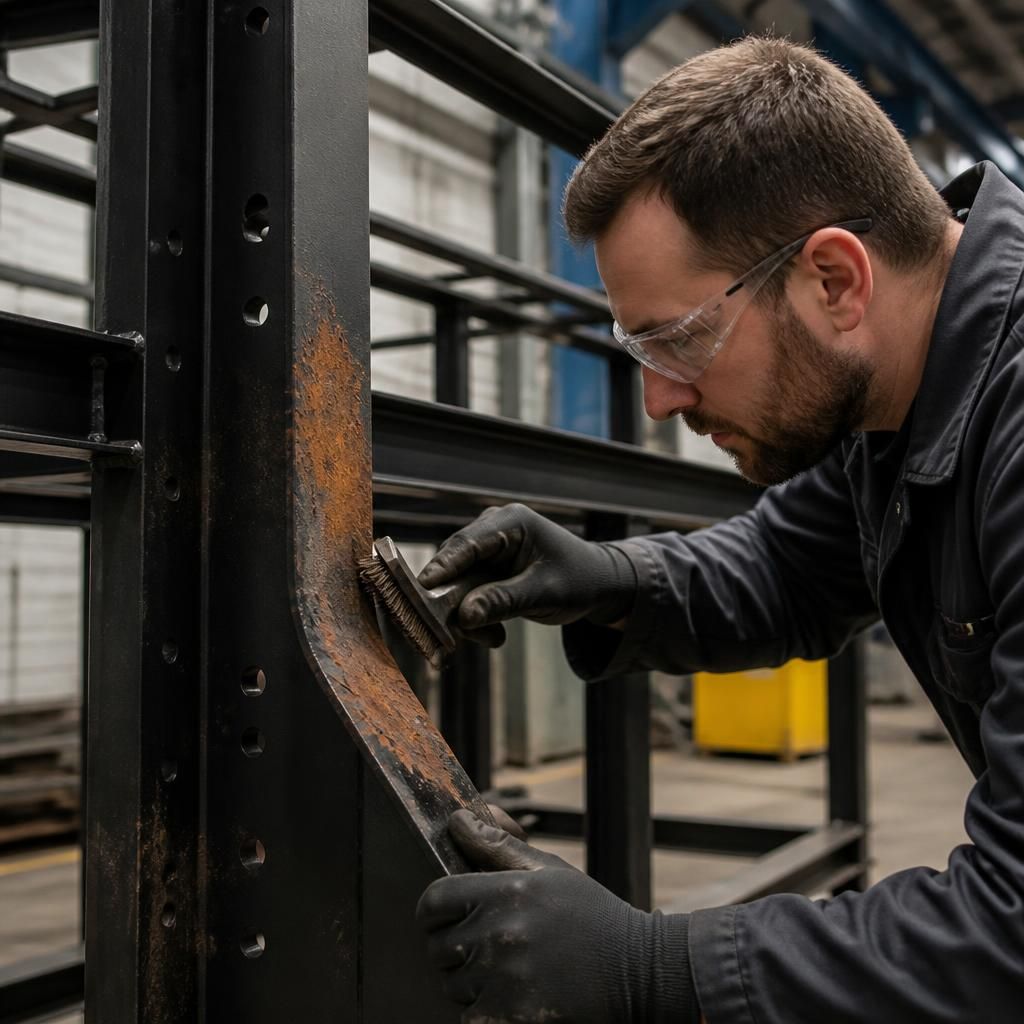
Powder-coated metal is most effectively repaired when the damaged area is accessible, free from contamination and attached to a sound metallic substrate. Powder coating is not a substitute for repairing timber, plastic, rubber, sealants or heavily degraded filler used within an assembly, so these materials may need to be removed or protected before treatment.
Where a component combines different materials, the interfaces deserve particular attention. Trapped moisture, movement between materials and concealed contamination can cause the coating to fail again even after visible corrosion has been removed. Separating removable fittings, masking non-metallic parts and specifying a finish suited to the exposed metal can make the repair more reliable than coating the assembled item as a single surface.