

How long does it take to repair and recoat a powder-coated metal component affected by rust and corrosion?
There is no fixed timescale for repairing and recoating a powder-coated metal component affected by rust and corrosion. The work typically involves assessment, removal of failed coating and corrosion, surface preparation, repair and application of new powder coating, with the overall duration depending on the component’s condition, size, quantity and required finish.
The time required is determined mainly by the condition and complexity of the component rather than by powder coating alone. A sound, accessible part with limited corrosion can move through the work more simply, while concealed corrosion, failed repairs, difficult geometry or a demanding specification can add preparation, treatment and inspection stages.
After the component has been examined, the coating system and preparation method need to be selected. Removing an existing powder coating may involve abrasive blasting, chemical stripping or another controlled process, depending on the substrate and the need to preserve dimensions. Intricate sections, enclosed areas, threaded holes and tightly assembled features require more careful handling than open, easily accessible surfaces.
Corrosion can also extend beneath apparently intact coating. If this is found, the affected areas may need additional cleaning, corrosion treatment or metalwork before recoating. Weld repairs, filling, straightening and the removal of sharp edges must be completed before the surface can be accepted for powder application. Each additional operation has to be finished and checked before the next stage begins.
Powder coating itself is not simply an application step. The part must be correctly masked, loaded and prepared for the specified coating system. The powder then requires controlled heating to cure it, followed by cooling before it can be handled, packed or inspected. Large, thick or thermally complex components may need particular care to achieve the required cure throughout the part without affecting dimensions or sensitive features.
Specification can affect the programme as well. A single coating may be more straightforward than a multi-stage finish involving primer, topcoat, contrasting areas or precise masking. Colour changes, special nylon or protective coating systems, textured finishes and requirements for coverage in difficult areas can introduce further handling and inspection points. Any need to confirm thickness, adhesion, appearance or coverage adds time before the component is released.
Batch size and production planning are also relevant. Processing several similar components together can make preparation and application more consistent, but the complete batch still has to pass through the same cleaning, coating, curing and quality-control stages. Mixed parts with different sizes, materials, colours or masking requirements may need to be handled separately.
Collection and delivery arrangements can affect the overall elapsed time independently of the workshop work. Components should be securely prepared for transport, and any agreed packaging or return requirements need to be considered when planning the job. The most useful timescale is therefore based on the date the parts, drawings and coating requirements are available, not just on the time spent spraying powder.
A reliable estimate should be confirmed after reviewing the component or clear photographs, together with its dimensions, quantity, existing coating, corrosion extent, repair requirements, preferred colour or finish and any critical tolerances. For a Midlands business sending industrial parts for treatment, providing this information at the outset helps identify whether the work is a straightforward recoat or a more involved corrosion-repair project. The final programme should allow for preparation, any necessary metal repairs, coating and curing, inspection, packaging and transport rather than treating application alone as the full repair time.
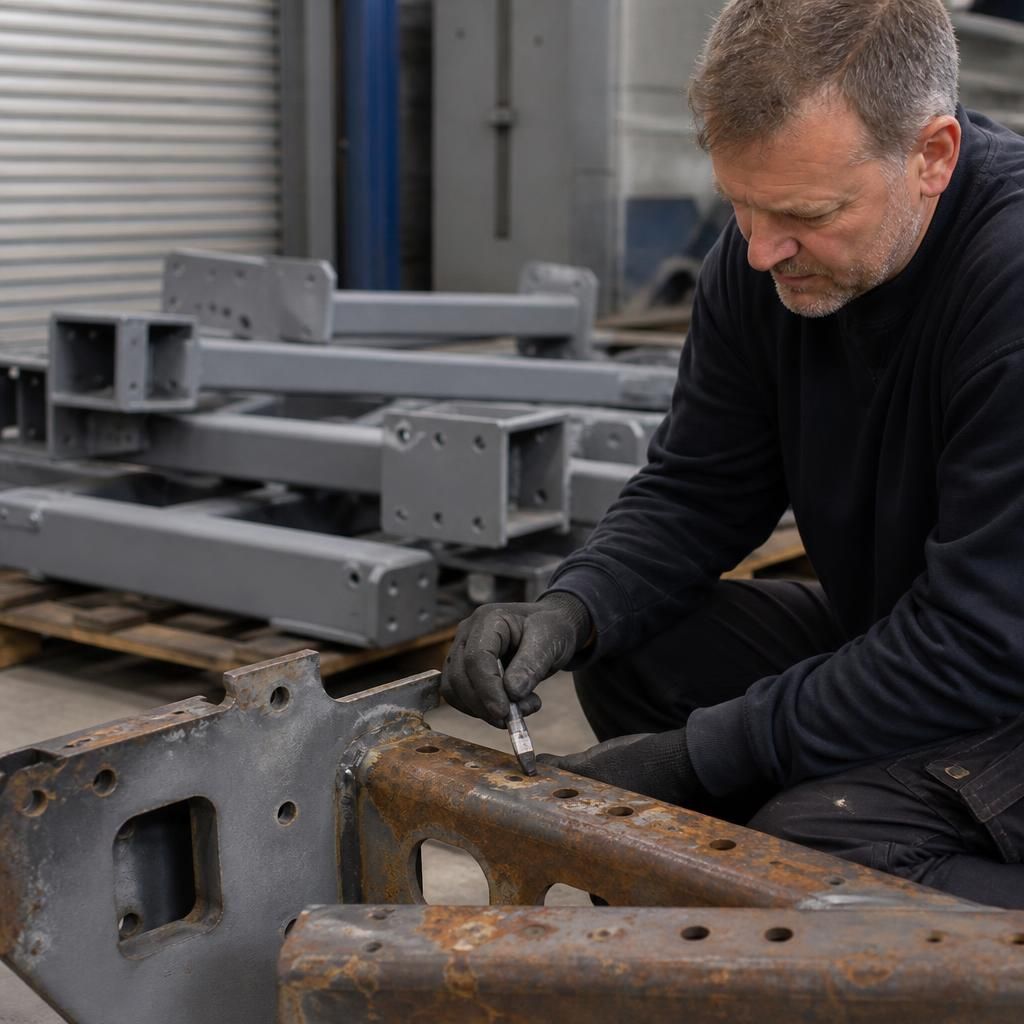
The main timing distinction is whether the component needs a coating renewal or restoration of the underlying metal. If corrosion has reduced a section, altered a fit, damaged a thread or affected a welded area, the repair method may need to be confirmed before recoating can proceed. This is why a programme based only on the visible surface can change once the failed coating has been removed.
For clearer planning, ask for the work to be considered in stages: assessment of the exposed substrate, agreement of any structural or dimensional repair, preparation, recoating and final release. This separates the predictable coating operations from any uncertainty caused by hidden damage.