

How does the quality of the initial powder coating influence the ease and effectiveness of repairs for rust and corrosion issues?
High-quality initial powder coating provides strong adhesion, even coverage and a properly cured barrier, so corrosion is less likely to spread beneath the finish and repairs can remain localised. Poor adhesion, contamination, uneven coverage or incomplete curing can allow hidden corrosion and coating failure, making repairs more extensive because the affected coating must be removed and the metal thoroughly corrected before recoating.
The quality of the original powder coating has a direct effect on how accurately a rust repair can be diagnosed, isolated and blended into the surrounding finish. A well-specified and properly applied coating usually allows the repairer to work to a defined area and select a compatible recoating system. An inferior or unsuitable original finish can make it difficult to establish where the coating failure ends, whether corrosion has reached the substrate, and how the repaired section should be finished.
It influences the extent of the repair. A sound original coating generally separates the visible defect from unaffected areas, allowing the damaged section to be removed without unnecessarily stripping the entire component. If the original coating is poorly bonded in adjoining areas, brittle, excessively thin or incompatible with the metal and service conditions, lifting may continue beyond the visibly rusty area. The repair must then extend further to reach a stable boundary, increasing preparation requirements and making a localised finish more difficult.
It affects inspection and diagnosis. Consistent coating thickness and a uniform surface make changes such as blistering, flaking, staining and bubbling easier to interpret. These signs can indicate different stages of corrosion or moisture ingress, and they need to be distinguished from superficial damage. Where the original finish is irregular or contains application defects, visual assessment becomes less reliable. The component may require more extensive stripping and inspection before the repair specification can be confirmed.
The original specification determines recoating compatibility. Powder coatings are available in different resin types, performance grades, colours, gloss levels and textures. A repair coating must be suitable for the component’s environment and compatible with the remaining sound finish, or the affected area may need to be removed back to bare metal. A high-quality initial coating is more likely to have been applied to a known specification, making it easier to identify an appropriate repair system and avoid an unsuitable layer being applied over the existing finish.
Compatibility is particularly important where the component is exposed to moisture, industrial contaminants, road salt, chemicals, abrasion or outdoor weathering. The first coating may have been selected for a specific operating environment, so a repair based only on colour matching may not provide the same level of functional protection. The repair assessment should consider the coating’s purpose as well as its appearance.
It affects the visual quality of the completed repair. A consistent original surface gives the coater a more predictable surrounding area against which to match colour, gloss and texture. This is important for visible panels, fabricated assemblies and components where a patch with a different sheen or texture would be noticeable. Ageing, ultraviolet exposure, cleaning and general wear can also change the appearance of the original finish, meaning that an exact match to a new powder may not be possible even where the original colour reference is known. The quality of the initial coating does not remove this ageing effect, but a uniform and well-documented finish makes the matching decision more controlled.
It reduces the risk of damage during preparation. Repair preparation may involve mechanical removal, abrasive treatment or complete stripping, depending on the condition of the coating and the substrate. If failure is limited and the surrounding coating is stable, preparation can be concentrated on the affected area. If the original finish is already failing or has weakly attached layers, more aggressive removal may be needed. That can expose previously hidden defects, alter sharp edges and remove material from delicate features, all of which may affect the final appearance and the suitability of the component for recoating.
The design and condition of the component also determine how much benefit can be gained from a good initial coating. Water traps, unsealed joints, damaged edges, incomplete drainage and contact between dissimilar metals can create corrosion conditions that coating quality alone cannot eliminate. A repair assessment should therefore examine the component’s geometry and use, not just the visible rust. Where the original design allows moisture to remain trapped, correcting or protecting that area may be necessary to prevent a repeated failure.
Records from the original coating process can improve the repair decision. Useful information includes the coating type, colour reference, intended film build, substrate, pretreatment method and service environment. These details help establish whether the existing finish can be retained around the repair and whether the replacement coating should follow the original specification or provide a different level of protection. When records are unavailable, the repairer may need to rely on inspection and testing rather than assume that the visible finish identifies its composition.
For manufacturers and fabricators, the practical lesson is that initial coating quality should be assessed as part of the repair cost and method, not treated only as an appearance issue. A well-executed original coating can support a more targeted repair, more reliable material selection and a closer visual blend. A defective, unsuitable or poorly documented finish may require wider removal, additional substrate correction and a revised coating specification. The final repair should address both the immediate corrosion and the reason the original protection was no longer effective.
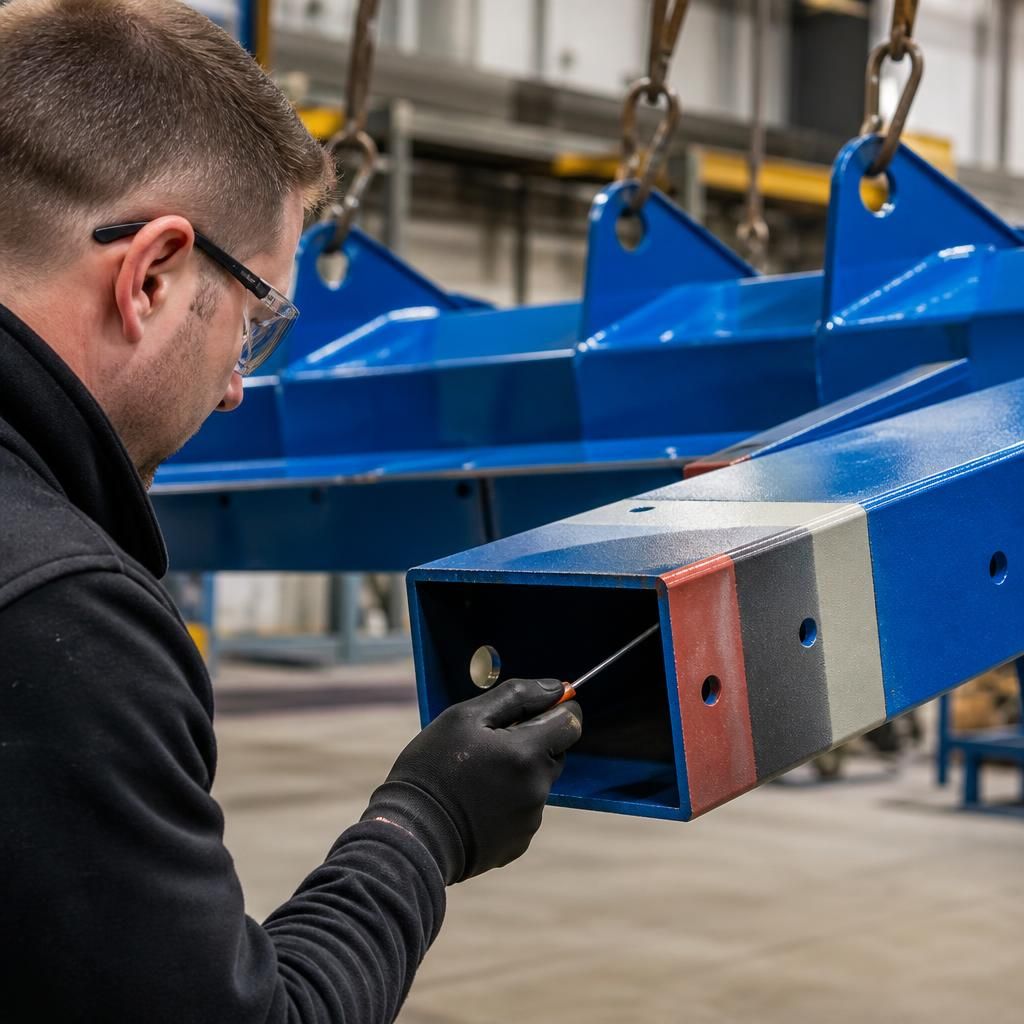
The initial coating system may consist of more than a single visible powder layer. Some components use a primer beneath the topcoat to improve corrosion protection, particularly where the metal faces demanding environmental conditions. If rust repair removes this system down to the substrate, the replacement work must restore the appropriate layer structure rather than simply apply a new topcoat over the prepared area.
This distinction affects the effectiveness of the repair. Retaining a sound primer and surrounding coating can simplify local treatment, while damage through the full system requires suitable substrate preparation and rebuilding of the protective layers. Assessing the original coating system therefore helps determine whether a cosmetic recoat is appropriate or whether the repair must recreate the component’s functional corrosion protection.
Assess Your Initial Coating and Rust Repair Requirements
Provide details of the component, its operating environment and any available original coating records for a specialist assessment of the repair requirements. This helps establish whether the existing finish can be retained and what repair route is appropriate.