

How do I maintain powder-coated metal to prevent future rust and corrosion?
Maintain powder-coated metal by cleaning it with a mild detergent and soft cloth, rinsing away residues, and drying it thoroughly to prevent moisture and contaminants from attacking the finish. Inspect regularly for chips, scratches, bubbling, or exposed metal, and arrange prompt preparation and recoating of damaged areas before corrosion spreads beneath the coating.
Maintaining powder-coated metal against future rust and corrosion requires more than preserving the visible finish. The most effective approach is to control exposure, prevent mechanical and chemical damage, keep water from being trapped against the component, and ensure that any coating failure is assessed before corrosion reaches the substrate.
Control the operating environment. Identify the conditions affecting each component and adjust protection accordingly. Coastal air, road salt, industrial pollutants, fertiliser, chemical vapours and persistent condensation can all increase corrosion risk. Components exposed to these conditions may need more frequent assessment and a coating system selected for the specific environment rather than a standard decorative finish.
- Prevent contact with standing water, salt deposits, acids, alkalis, solvents and aggressive process chemicals where possible.
- Provide suitable ventilation around enclosed or partially enclosed components so condensation can dissipate.
- Keep metal parts away from areas where water, debris or chemicals collect beneath them.
- Review protection after any change in the component’s location, use or surrounding process.
Protect the coating from impact and abrasion. Powder coating is durable, but repeated contact with tools, lifting equipment, sharp edges, vibration or abrasive materials can damage the film. Use suitable packing and handling methods when components are moved, stacked or installed. Avoid dragging coated parts across hard surfaces, and isolate contact points that could rub through the coating during service.
Pay particular attention to edges, corners, drilled holes, cut-outs and fixing points. These areas are more vulnerable because the coating may be thinner, interrupted or exposed to mechanical stress. During installation, avoid over-tightening fixings and prevent tools from slipping across the finished surface. Any alteration made after coating, such as drilling, cutting or welding, creates an unprotected area that should be properly prepared and protected.
Prevent water traps and crevice corrosion. Moisture held in joints, overlaps, seams, hollow sections and poorly drained profiles can remain hidden while corrosion develops underneath or beside the coating. Components should be positioned so water can run off rather than collect. Drain holes must remain clear, and seals, joints and interfaces should be checked for gaps that allow moisture to enter but not escape.
Where dissimilar metals meet, consider the possibility of galvanic corrosion, particularly in the presence of moisture or salt. Suitable isolation washers, sleeves, sealants or compatible fixings can reduce direct contact and limit the flow of corrosive activity between the materials.
Use compatible maintenance materials. Do not assume that a solvent, adhesive, sealant or touch-up product is suitable simply because it does not immediately mark the finish. Check its compatibility with the powder coating and the service environment before application. Abrasive pads, wire brushes and harsh solvents can roughen, soften or remove the coating, leaving a less protective surface even when the damage is not obvious.
Minor coating damage should not be concealed without preparation. A durable repair normally requires removal of loose coating and corrosion, sound preparation of the exposed metal, and selection of a compatible repair or recoating system. The repair should also address the cause of the damage, such as trapped moisture, a sharp contact point or chemical exposure; otherwise the same failure may recur around the repaired area.
Keep a condition record for important components. For production equipment, fabricated assemblies and installed metalwork, record the component location, coating system where known, exposure conditions and previous repairs. Compare later inspections with the earlier condition rather than relying only on memory. This helps identify recurring problems, such as corrosion concentrated around a particular joint, fixing or drainage point.
Arrange a specialist assessment when corrosion appears beneath the coating, when blistering or delamination is extensive, or when the base metal has begun to pit, deform or lose section. Local touch-up may be unsuitable if the coating has failed across a wider area. In that situation, the correct maintenance decision may involve stripping, corrosion removal, preparation and full recoating rather than repeatedly treating visible spots.
A planned maintenance regime therefore combines environmental control, careful handling, sound component design, compatible materials and documented condition checks. These measures preserve the coating’s protective role and help identify when professional repair or recoating is needed before rust compromises the metal itself.
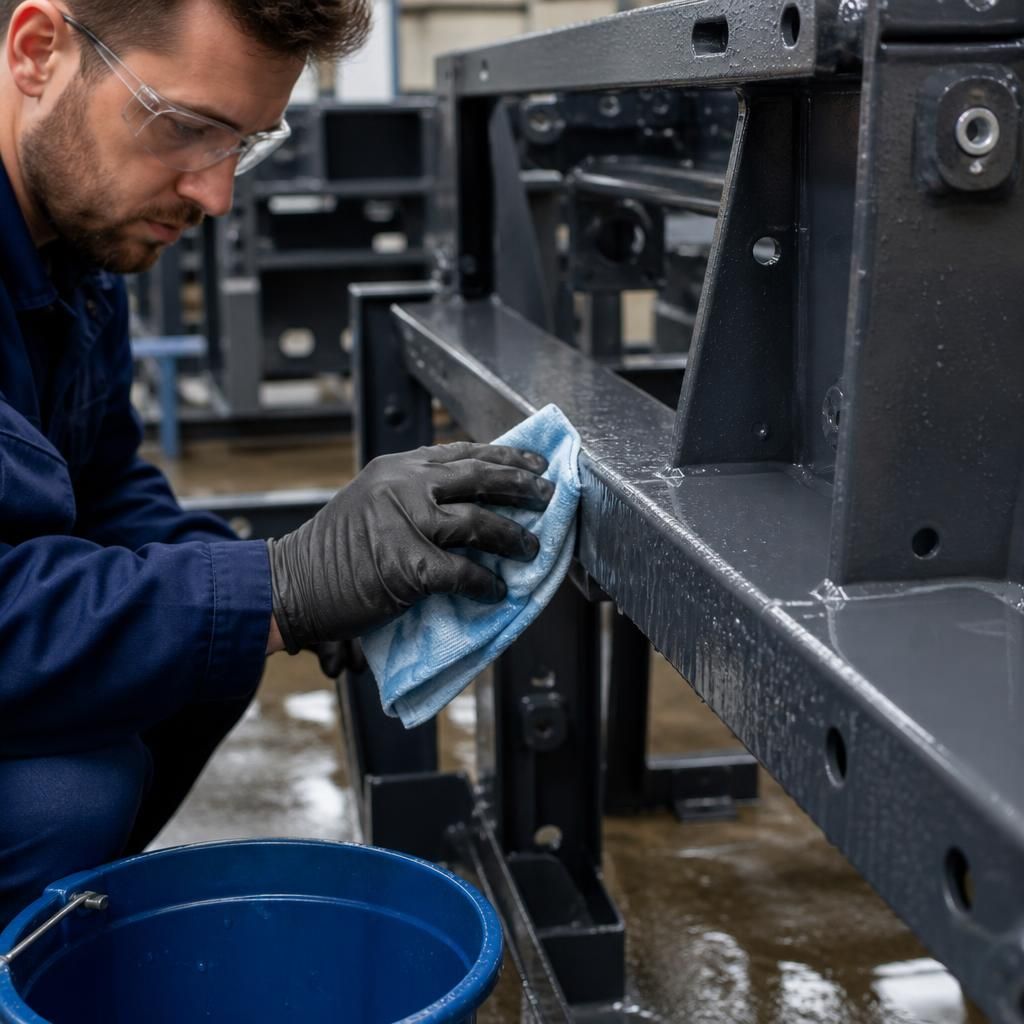
Cleaning technique matters because trapped grit can abrade the powder-coated surface during wiping. First remove loose dirt with clean water, then wash using a diluted mild detergent and a soft, non-abrasive cloth or sponge. Work from the cleanest areas towards the dirtiest, changing the water when it becomes contaminated. Rinse thoroughly so detergent and loosened particles are not left on the finish, then dry the component with a clean cloth.
Avoid dry scrubbing, wire brushes, abrasive pads and forceful water jets directed at joints, seals or coating edges. These methods can mark the coating or drive moisture into interfaces where it is difficult to detect. If dirt remains after gentle washing, treat it as a potential contamination or coating issue rather than increasing the cleaning force.
Discuss maintenance for your powder-coated metal components
If your powder-coated metal shows recurring coating failure, bubbling or exposed substrate, arrange a specialist assessment to determine whether local preparation or complete stripping and recoating is appropriate. Provide details of the component, its operating environment and any previous repairs so the required maintenance can be evaluated accurately.