

What safety precautions should be taken when removing powder coatings from metal surfaces?
Removing powder coatings safely requires a documented risk assessment, suitable PPE, effective ventilation and controls for dust, fumes, heat and chemical exposure. Isolate the work area and equipment, follow the stripping product’s safety data sheet, use extraction where required, and ensure operators understand the hazards of the chosen mechanical, thermal or chemical method.
Safe powder-coating removal depends on controlling the particular hazards created by the coating, the metal substrate and the chosen stripping process. Mechanical abrasion, chemical stripping and heat can each create different risks, so precautions should be selected before work begins rather than applied as an afterthought.
Confirm what is being removed before starting. Identify the coating system and inspect the component for more than one finish, repair material, sealant, adhesive or contamination. Older coatings may contain hazardous pigments or other substances that require additional controls. If the coating composition is uncertain, treat the residue cautiously and obtain suitable information or arrange appropriate testing before disturbing a large area.
Inspect the metal itself for sharp edges, burrs, cracks, corrosion, trapped liquids and enclosed sections. Hollow components can retain stripping chemicals, dust or moisture, while seams and cavities may release residue later in the process. Drain, open or otherwise manage enclosed areas where appropriate, and consider how the item will be supported without allowing it to move unexpectedly.
Control the workpiece and surrounding equipment. Secure the component on a stable support that can withstand the forces, heat or chemicals involved. Large or awkward parts may require mechanical handling equipment and a planned lifting method. Keep hands away from pinch points, rotating tools and edges, and do not hold small components directly while using powered abrasion equipment.
Protect nearby machinery, electrical equipment, finished surfaces and drainage points from dust, spent abrasive and liquid stripper. Establish a clear boundary around the work and prevent unauthorised people from entering it. Warning signs and physical barriers are particularly important where the work produces airborne residue, intense heat, strong odours or slip hazards.
Use mechanical tools carefully. Select tools and abrasive grades that remove the coating without unnecessarily cutting into the substrate. Excessive pressure can cause kickback, tool breakage, sharp projections or distortion of thin metal. Check discs, wheels, hoses, guards and electrical leads before use, and stop if a tool vibrates abnormally or the coating begins to smear rather than detach.
Do not use compressed air to blow powder or debris from clothing, skin, machinery or the work area. It can spread contamination and drive particles into the air or into the eyes. Use a suitable industrial vacuum or a controlled cleaning method designed for the material instead. Dusty residues should be collected in a way that avoids creating a secondary cloud.
Abrasive blasting requires particular care because the abrasive, coating residue and substrate may all become airborne. Confirm that the abrasive is suitable for the equipment and the metal, inspect hoses and connections, and prevent uncontrolled discharge from the blast stream. Spent abrasive and removed coating should be contained and classified correctly rather than swept into general waste without consideration of its contents.
Take additional precautions with chemical strippers. Read the product safety data sheet and product instructions for storage, compatibility, application and disposal. Keep chemicals in labelled containers and never decant them into unmarked bottles. Do not mix stripping products, solvents, cleaners or rinse agents unless the supplier’s instructions specifically permit it, as incompatible substances can react or produce hazardous vapours.
Use trays, bunding or other suitable containment to prevent spills reaching floors, drains or soil. Check that the container, brush, pump, hose and work surface are compatible with the stripper. Apply only the amount needed for the task, keep containers closed when not in use, and remove contaminated materials using a controlled waste procedure. Chemical residue may remain in seams and recesses, so the component should be rinsed, neutralised or otherwise treated only in accordance with the product instructions.
Do not eat, drink or smoke in the stripping area. Prevent contaminated gloves or clothing from contacting clean surfaces, vehicle controls, telephones and door handles. Wash hands and exposed skin using the recommended method after handling the component, waste or equipment; aggressive solvents should not be used as skin cleaners.
Manage heat-related hazards. Thermal removal can ignite combustible materials, damage seals and fittings, and release decomposition products from the coating. Remove flammable items from the area and check the component for trapped oils, solvents or residues before applying heat. Use temperature control rather than an improvised flame where possible, and monitor the metal so that it is not heated beyond what the component, coating-removal process or adjacent materials can tolerate.
Allow heated parts to cool in a designated location before handling, washing or moving them. Heat may remain in thick sections and enclosed areas after the surface appears safe. Keep suitable fire-control equipment accessible and maintain a clear route for dealing with an ignition or other emergency.
Prevent slips, trips and handling injuries. Spent coating, abrasive, stripper and rinse liquid can make floors and access routes hazardous. Deal with leakage promptly using the procedure appropriate to the substance, and keep hoses, power leads and tools arranged so they do not create trip points. Use assistance or lifting equipment for heavy components rather than attempting an unstable manual lift.
After removal, inspect the part before it leaves the controlled area. Look for sharp edges, softened sealants, trapped chemical, damaged threads, distortion, exposed corrosion and areas where the coating remains. Do not pass a component to another process until residue has been removed or clearly identified and the surface is safe to handle.
Prepare for exposure or other incidents. Workers should know the location of first-aid supplies, eyewash facilities, fire equipment, spill materials and emergency exits. Procedures should cover chemical splashes, eye injuries, cuts, burns, inhalation of dust or fumes, fire and uncontrolled spills. Any incident involving suspected exposure should be dealt with according to the relevant safety data sheet and workplace emergency arrangements.
Only people who understand the equipment, the coating-removal method and the associated hazards should carry out the work. Training should include correct tool use, chemical handling, waste segregation, contamination control and what to do when the coating or substrate differs from expectations. If the process generates uncertain residues, requires specialist blasting or involves a component with unknown history, stop and obtain competent advice before continuing.
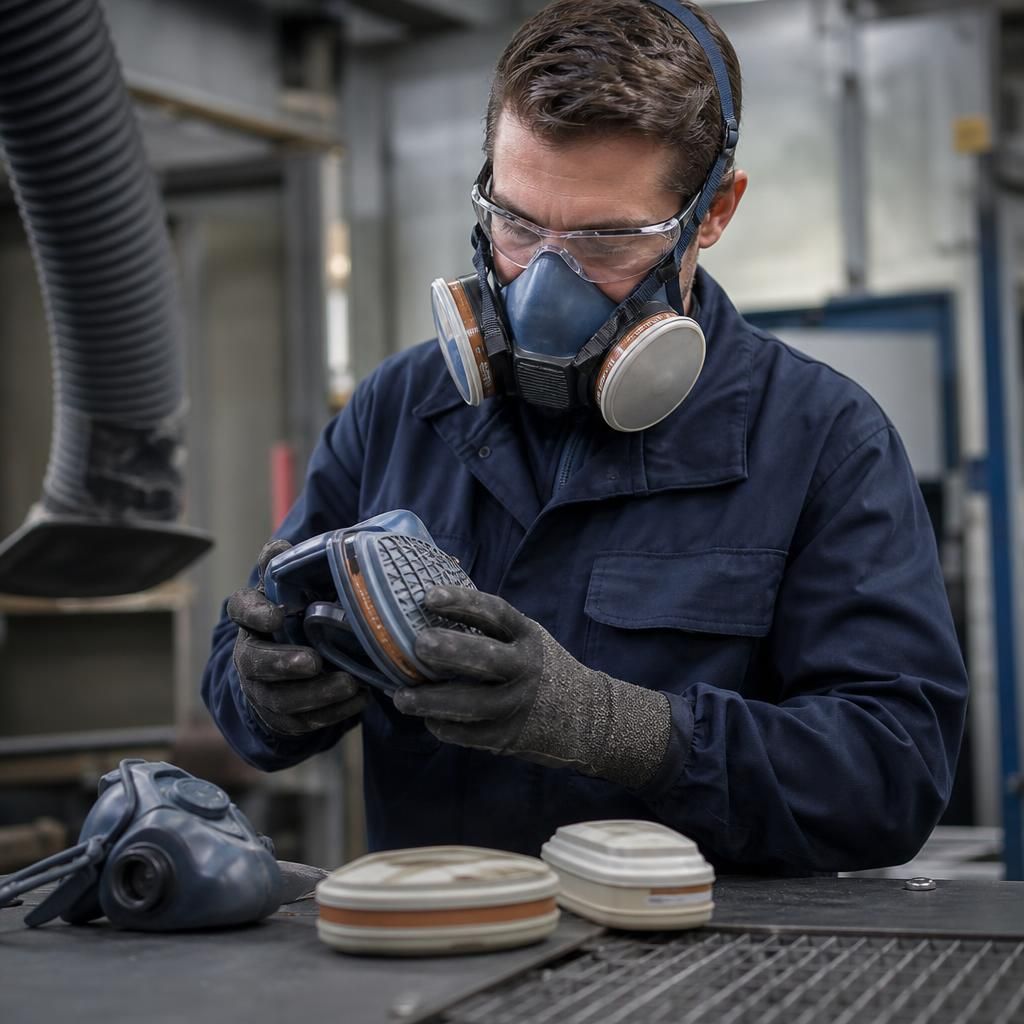
Respiratory protective equipment (RPE) should be selected for the specific dust, vapour or fume produced by the removal method, rather than treated as a universal precaution. It should complement local extraction and other controls, not replace them. The correct respirator and filter must be identified from the risk assessment and relevant safety data, with consideration given to the coating, stripper and process.
Operators using tight-fitting RPE need a suitable face-fit test for the exact mask type and must be clean-shaven where the seal contacts the face. Filters and masks should be inspected, stored and replaced in accordance with the manufacturer’s instructions. If the hazard is uncertain, work should stop until a competent person confirms the required protection.
Discuss Your Powder-Coating Removal Requirements
If the coating, substrate or removal method is uncertain, discuss your powder-coating removal requirements with our team before work begins. We can help identify the information needed to plan a suitable and controlled approach for your metal components.