

What factors should be considered when choosing between mechanical and chemical stripping for powder coating removal?
Choose between mechanical and chemical stripping by assessing the metal substrate, coating condition, component geometry, required surface finish, project scale, cost and environmental controls. Mechanical methods suit accessible, robust parts, while chemical stripping can be preferable for intricate components or where abrasive action could damage the substrate.
The choice between mechanical and chemical stripping should be based on how the coating is bonded, how the component must be treated afterwards and what risks the process introduces to the part, operators and waste stream. Mechanical stripping removes the coating through physical force, whereas chemical stripping softens or dissolves the coating so it can be separated from the substrate. In practice, the best option is often determined by the required end condition rather than by removal speed alone.
Identify the required result before selecting a method. A component may need to be completely bare, locally cleared for welding or repair, or simply freed from loose and failed coating before preparation and recoating. Mechanical methods can be suitable when only defined areas need to be exposed. Chemical treatment may be more appropriate where the complete coating must be removed from recesses, enclosed sections or complex profiles. Removing more coating than the repair requires can add processing, handling and waste without improving the finished result.
Consider the coating system itself. Powder coatings differ in resin chemistry, film thickness, cure and service history. A coating that fractures readily may respond well to abrasive action, while a strongly bonded, flexible or multi-layer system may resist mechanical removal and cause excessive tool use. Chemical products are also selective: a formulation that attacks one coating system may have limited effect on another. Small-scale testing or a representative sample can establish whether the coating lifts, softens, breaks down or merely becomes smeared before the full batch is processed.
Check for features that can retain treatment residues. Chemical stripping requires particular care with seams, threaded holes, folded edges, drain points and hollow sections. Stripper trapped in these areas can interfere with subsequent preparation, painting or welding, and may continue to cause corrosion if it is not removed and rinsed correctly. Mechanical methods avoid liquid retention, but abrasive media, dust or fragmented coating can collect in the same kinds of recesses. The design therefore affects not only removal but also inspection and cleaning afterwards.
Assess how the component will be handled. Large or awkward parts may be difficult to position safely for grinding or blasting, particularly where access is limited. Chemical processing can reach surfaces without requiring a tool to contact every area, although the component must be compatible with immersion, wet handling or the application of a stripping paste. Lifting points, drainage, containment and the ability to inspect all faces should be considered before work begins.
Protect functional surfaces and features. Mechanical action can alter sharp edges, lettering, machined faces, mating surfaces and fine details if excessive pressure or an unsuitable abrasive is used. Chemical products may affect certain non-metallic inserts, sealants, lubricants or attached materials. These areas should be identified in advance, with masking, removal or a controlled local treatment used where necessary. The decision should account for the whole assembly, not just the exposed metal.
Compare process control requirements. Mechanical removal is controlled through factors such as tool type, abrasive selection, pressure, working distance and operator technique. Chemical removal depends on the product, application method, contact time, temperature where relevant and the completeness of rinsing or neutralisation. In both cases, inconsistent control can leave patches of coating or create a surface that needs further correction. A defined inspection standard helps determine when the part is ready for the next stage.
Review the condition of the exposed metal. Stripping can reveal pitting, corrosion, previous repairs, weld defects or damage that was hidden by the coating. If the component is being repaired, the removal method should allow these defects to be inspected without masking them with residue or introducing avoidable surface damage. Where the metal is already thin or locally weakened, the process should be chosen to avoid removing sound material along with the coating.
Include the next preparation stage in the decision. Bare metal normally needs suitable cleaning and preparation before a new powder coating is applied. Mechanical treatment may leave an anchor profile or loose debris; chemical treatment may leave residues, staining or a chemically active surface if rinsing and drying are inadequate. The stripping method is therefore only one part of the sequence. The selected process should be compatible with the planned preparation, primer or powder coating system.
Evaluate environmental and waste obligations. Mechanical removal produces dust, spent abrasive and removed coating that must be contained and disposed of appropriately. Chemical stripping creates spent solution, contaminated rinse water, sludge or coating residues, and may require controlled storage, handling and disposal. The relevant safety data, waste classification and site controls should be established before work starts. The method with fewer visible residues is not automatically the method with the lower environmental burden.
Use a trial where the consequences of error are significant. A controlled test can compare coating removal, substrate condition, residue, edge definition and the effort needed for final preparation. It can also show whether a combination of methods is justified, such as chemical treatment to release coating from intricate areas followed by gentle mechanical cleaning. The final choice should then be recorded with the process controls and inspection requirements needed to reproduce the result across the remaining components.
For industrial metalwork, mechanical stripping is generally favoured where the part is robust, accessible and suited to physical abrasion. Chemical stripping becomes more attractive where access, detail or the risk of mechanical marking makes abrasive treatment unsuitable. Neither method is universally preferable: substrate compatibility, coating behaviour, component design, downstream preparation, handling arrangements and waste controls should be considered together before the work is commissioned.
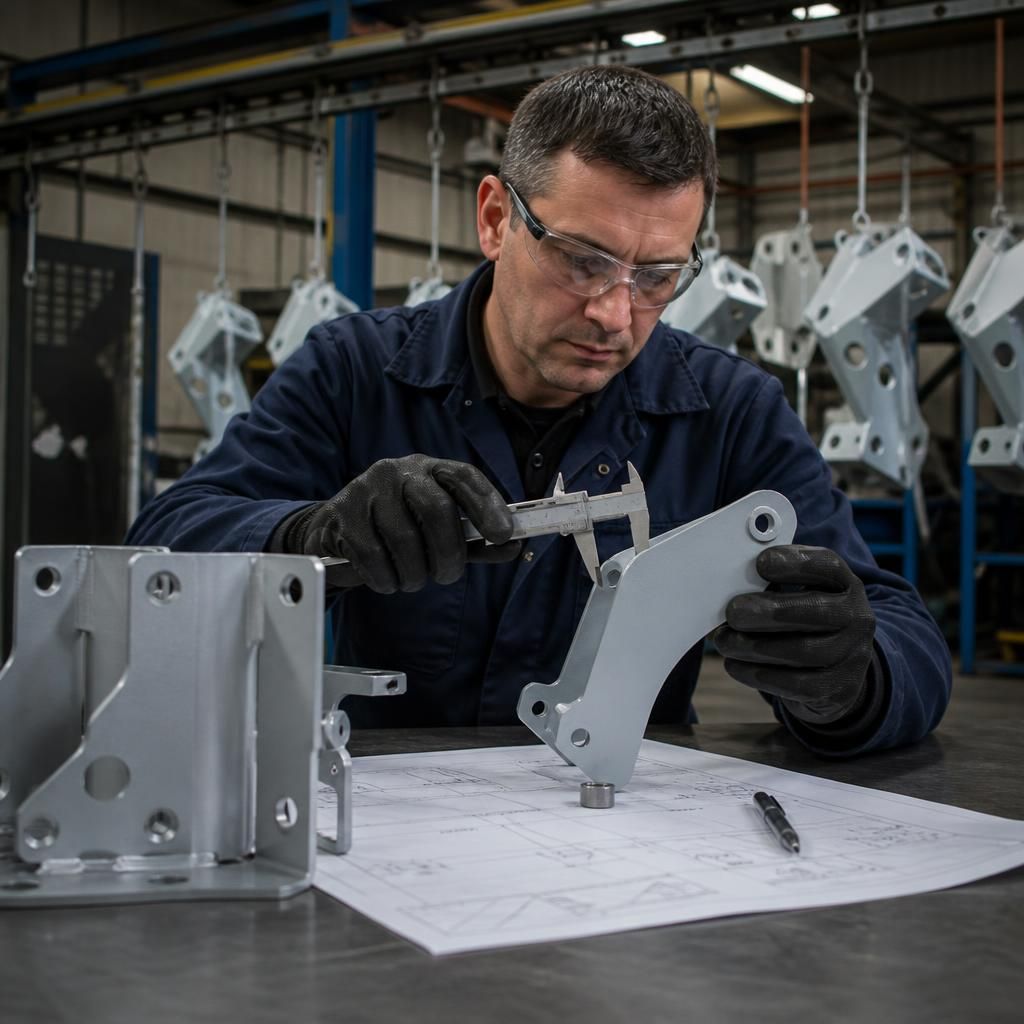
Specification and quality requirements can determine whether mechanical or chemical stripping is acceptable, even when both methods can remove the coating. Engineering drawings, repair procedures or customer requirements may define limits for surface marking, dimensional change, residual contamination and the condition required before recoating or welding.
This is particularly important for components with close-fitting interfaces, defined surface profiles or documented manufacturing controls. The selected method should produce an inspectable result that can be recorded and repeated, rather than relying solely on visual confirmation that the powder coating has been removed. Where the component forms part of a controlled production process, the removal method should be agreed with the relevant quality or engineering contact before processing begins.
Discuss the right stripping method for your component
Discuss your component’s coating, substrate and required post-stripping condition with the powder coating team before commissioning removal work. They can help identify whether mechanical or chemical stripping is better suited to the part and its subsequent repair or recoating process.